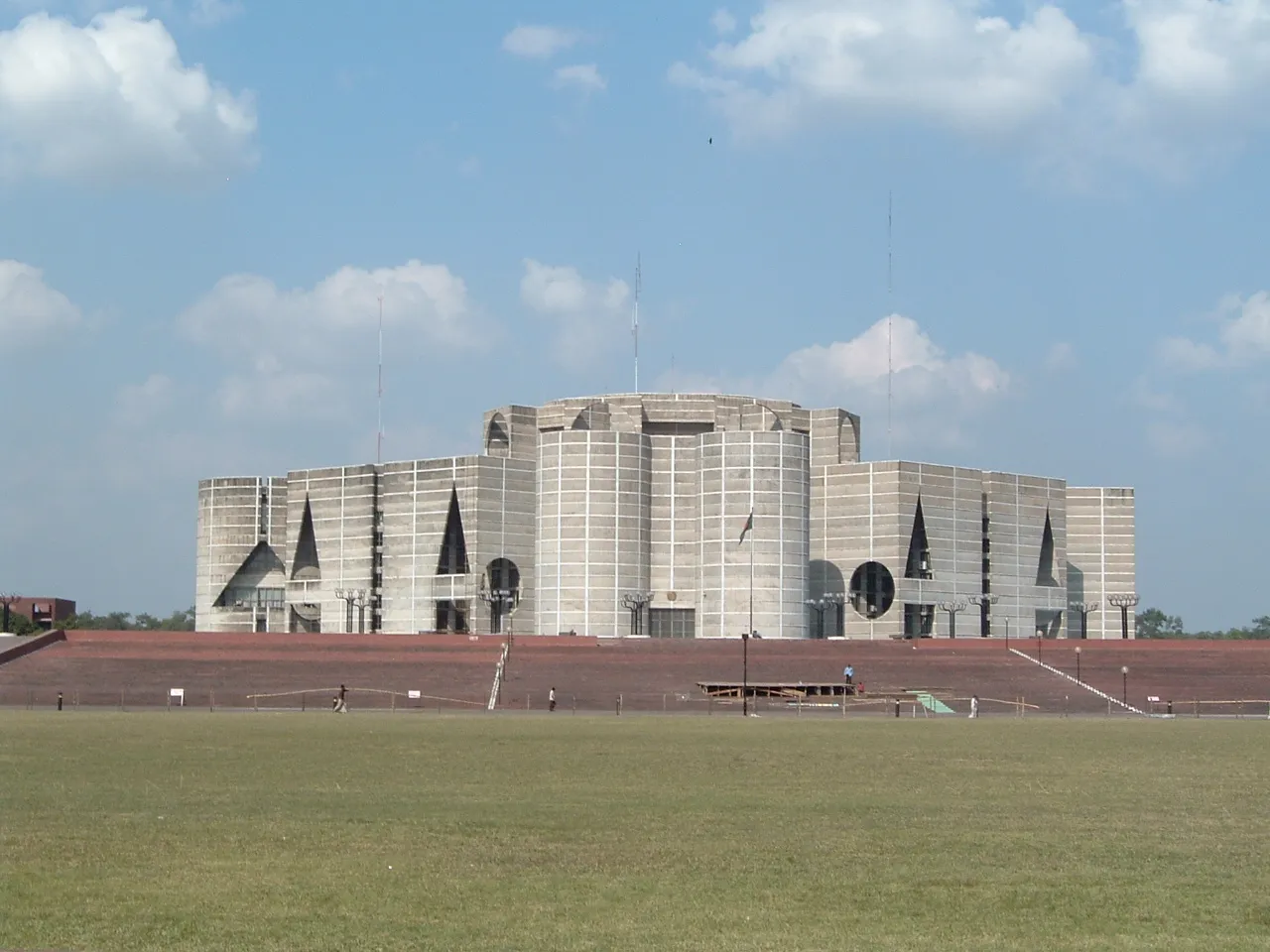
Bangladesh's parliament voted on Thursday to elect a new president, in the country's first contested vote for the post in 35 years, Al Jazeera reported. The 349 eligible members of the Jatiya Sangsad cast secret ballots in the chamber, choosing between two candidates for a role that is largely ceremonial but has carried outsized symbolism in the country's turbulent recent politics.
The governing Bangladesh Nationalist Party nominated Mirza Fakhrul Islam Alamgir, its 78-year-old secretary-general and a serving minister. Against him, an opposition alliance led by Jamaat-e-Islami put forward Oli Ahmad, an 85-year-old retired colonel, decorated 1971 Liberation War veteran and chairman of the Liberal Democratic Party. With the BNP holding 247 of the chamber's seats to the alliance's 90, Alamgir entered the vote as the overwhelming favorite; the opposition cast its candidacy as a matter of democratic principle rather than expectation.
Why a contested vote matters
Every presidential election since October 1991 has been uncontested, with the post filled by consensus or a single nominee of the ruling party. That a second name appeared on the ballot at all reflects how much Bangladesh's politics have been remade in two years.
The vote was triggered when President Mohammed Shahabuddin resigned last month, citing ill health. Shahabuddin's term spanned the most volatile stretch in the country's recent history: the student-led uprising of 2024 that ended Sheikh Hasina's 15-year rule and sent her into exile in India, the interim administration of Nobel laureate Muhammad Yunus that followed, and the BNP's return to power in February's general election, which made Tarique Rahman, son of former prime minister Khaleda Zia, the country's prime minister.
A ceremonial office with consequential moments
Bangladesh's constitution concentrates executive power in the prime minister; under Article 48(3), the president must act on the prime minister's advice in almost everything, with independent discretion only in appointing the prime minister and the chief justice. But those two exceptions, plus the president's role in dissolving parliament and in states of emergency, mean the office matters precisely at moments of crisis, as 2024 demonstrated when the presidency became the constitutional hinge for Hasina's departure and the interim government's installation.
The winner will also inherit the traditional duties of the head of state at Bangabhaban palace: signing legislation, receiving envoys and granting clemency, functions that make the officeholder the formal face of a republic still repairing its institutions.
The optics of normality
For the BNP government, staging a contested, secret-ballot election, even one whose result was not in doubt, offered a chance to draw a contrast with the uncontested selections of the Hasina era, when the presidency was a reliable extension of the ruling Awami League. For the Jamaat-led opposition, fielding a celebrated war veteran served notice that it intends to compete for every institution ahead of the next political cycle.
Analysts cautioned against reading too much into a vote whose result was determined by parliamentary arithmetic. But in a country where the last two years have run through mass protest, an ousted prime minister, an interim technocracy and a landmark election, a boring, procedural transfer of a ceremonial office is itself a kind of news: the machinery of the state, for once, turning without a crisis.