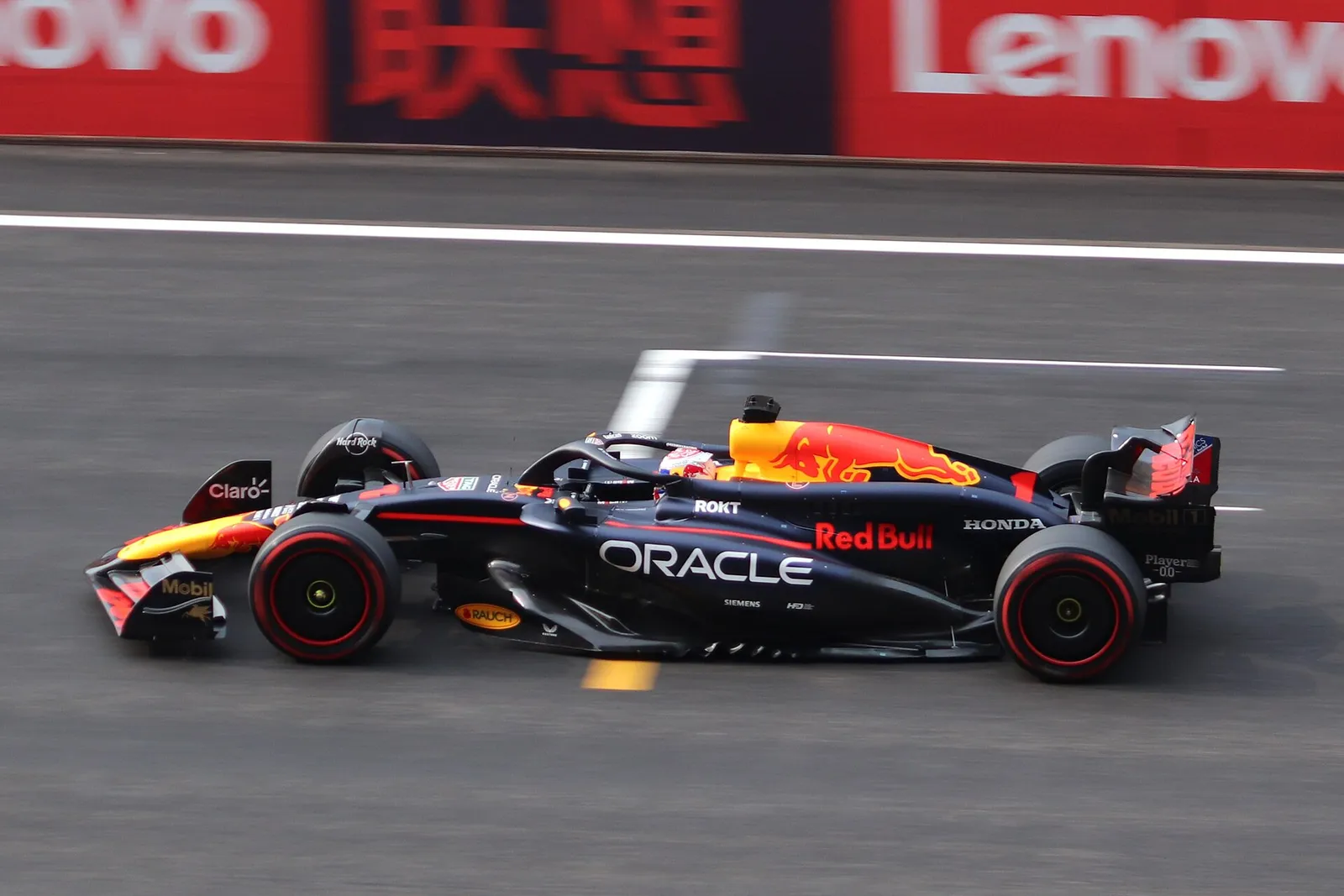
Max Verstappen will remain a Red Bull driver until at least the end of 2030. The team confirmed the contract extension on the eve of the Dutch Grand Prix at Zandvoort, RacingNews365 reported, extending a deal that had been due to expire at the end of 2028 and ending a saga that has hung over the driver market for two seasons.
By 2030, Verstappen will have spent fifteen full seasons with the team that promoted him to Formula 1 as a teenager in 2015, a span with few precedents in the sport's modern era.
Why now
The timing carries weight on two counts. The announcement lands at Verstappen's home race, in front of the orange-clad crowds of what is scheduled to be Zandvoort's final grand prix, and it comes with Red Bull working to recover ground in the first season of Formula 1's new regulations, which reset the sport around new power units this year.
Verstappen's previous contract contained performance-related clauses that made his future genuinely uncertain as Red Bull slipped in the pecking order, and he has been among the loudest critics of the 2026 rules themselves. His decision to commit anyway is a bet on the team's trajectory under Laurent Mekies, the team principal who took over in the wake of Red Bull's 2024-25 upheavals. "Getting to work with Laurent now for over a year has also been great, I see a clear vision he has for the team," Verstappen said.
The market settles
The extension closes the most consequential open question in the driver market. Mercedes flirted publicly with Verstappen across two seasons, with George Russell acknowledging last year that the champion was "on the radar" at Brackley, and Aston Martin's Honda-powered project was regularly floated in the paddock as a landing spot. Both teams, and Ferrari and McLaren behind them, must now build their plans for the rest of the decade without the driver everyone would sign, as BBC Sport notes.
For Red Bull, retaining Verstappen is close to existential. The team built its post-2021 dominance around him, he has taken the overwhelming share of its wins in that period, and its new in-house power-unit program, the biggest gamble of the regulation change, needed a driver worth building around. Keeping the sport's benchmark driver through 2030 gives that project both its yardstick and its payoff.
The stakes of the commitment
There is risk on both sides of the signature. Verstappen is wagering the prime years of his career on Red Bull mastering an engine formula it has never built before; Red Bull is wagering an enormous salary and the shape of its team on a driver who has shown he will say publicly when the project falls short, as he did after this season's reliability failures. What the deal buys both parties is certainty: no more silly-season sagas, no more exit-clause arithmetic every summer.
It also frames the rest of the decade. Verstappen turns 33 in 2030, the age at which the sport's greats have historically still been winning championships. If Red Bull gives him a car, the contract signed this week is long enough to chase the records that remain; if it does not, Formula 1's next great transfer story now has a fixed date.