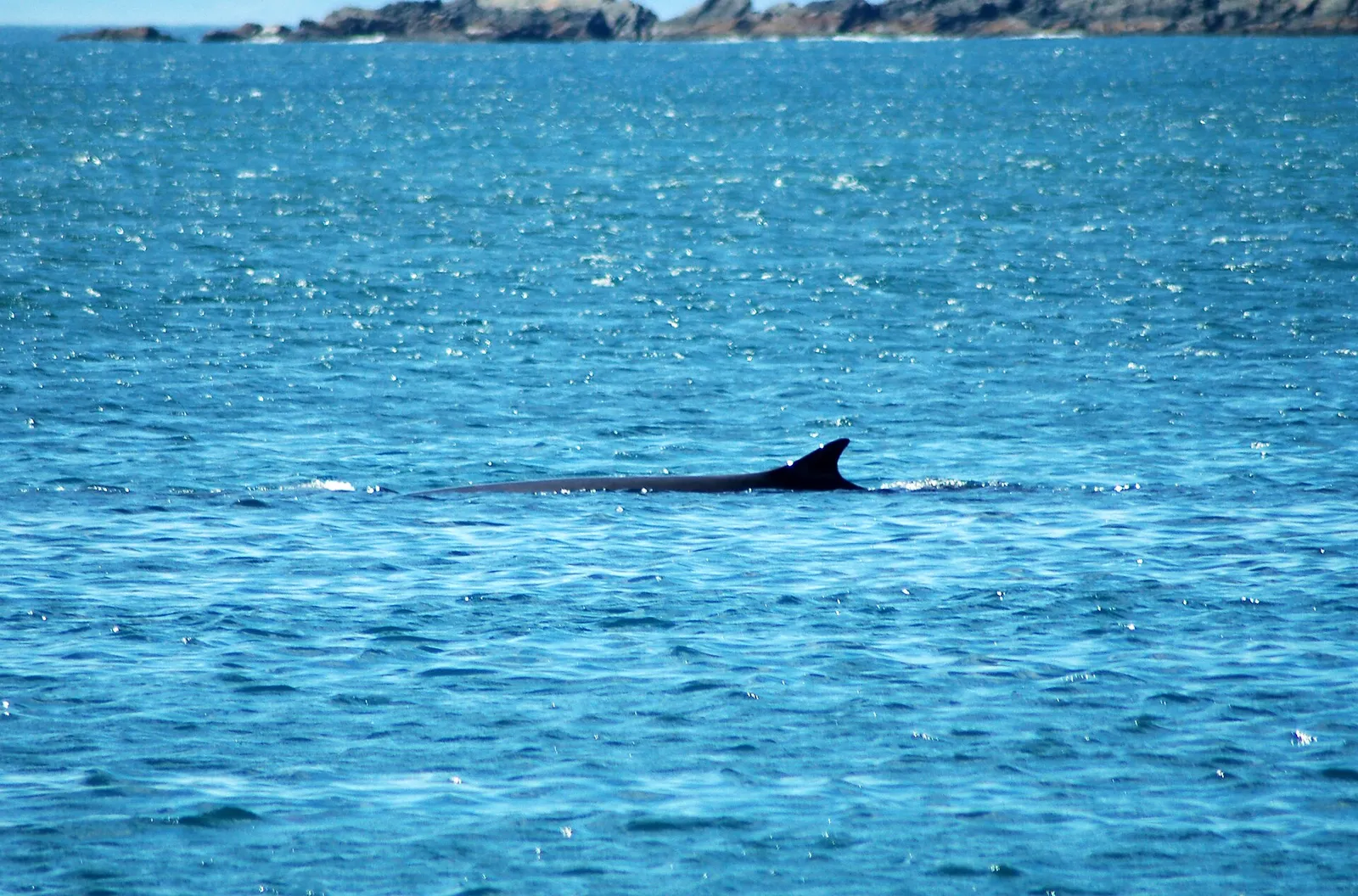
Something extraordinary is happening along Greenland's eastern coast. In fjords and channels that sea ice once kept off-limits for most of the year, baleen whales are arriving in numbers with no modern precedent: researchers estimate roughly 6,000 fin whales, 4,000 humpbacks and 4,500 minke whales now spend the summer feeding there, according to a study led by Mads Peter Heide-Jørgensen of the Greenland Institute of Natural Resources.
The team documented feeding aggregations of 20 to 50 humpbacks at a time along the Blosseville Coast, and calculates that the visiting whales consume on the order of a million tonnes of capelin and krill during their roughly four-month seasonal stay. Waters around Greenland have warmed by about 1C since 2000, the researchers note, and as the ice edge retreats, prey, and the giants that eat it, are moving in behind it.
An ocean rearranging itself
The whales are responding to what scientists describe as a full ecological regime shift. Sea ice is central to how the Arctic ocean works: it shades the water, structures the food web, and for some species acts as shelter. Winter sea ice extent has declined about 13 percent per decade since 1979, and total ice volume has fallen by more than half since the early 1980s.
For fast, open-water hunters like fin and humpback whales, that loss reads as opportunity. For the Arctic's ice-adapted specialists, it is the opposite. A study published this year, based on more than 700 whaling logbooks from 1700 to 1900, found that bowhead whales survived the commercial whaling era largely because summer sea ice created refuges that whaling ships could not enter. That refuge is now disappearing: the same research projects that suitable bowhead habitat will shrink by 64 to 75 percent by the end of the century under moderate to severe warming scenarios.
The catch beneath the boom
The influx of whales looks like abundance, but researchers warn the foundation under it may be eroding. A University of Edinburgh-led study published this spring found that the Arctic Ocean appears to have crossed a chemical tipping point around 2009: as ice disappears from shallow shelf seas, more sunlight reaches the seafloor, accelerating a process called benthic denitrification that strips nitrate, a nutrient phytoplankton need, from the water. Nitrate levels in water flowing out of the Arctic have declined steadily since.
Less nitrate tends to favor smaller, less nutritious plankton, which means less energy moving up the food chain toward fish, seabirds and, ultimately, whales. On that reading, today's feeding frenzies off East Greenland could prove to be a transitional feast: whales exploiting a food web in flux, before the productivity that sustains it thins out.
What it means for Greenland
For Greenlandic coastal communities, the whales' arrival is already changing daily life, bringing both new whale-watching potential and new pressure on the fish stocks and waters that hunters and fishers depend on. It also brings traffic: Arctic shipping roughly doubled between 2013 and 2022 as routes opened, raising the risks of ship strikes and underwater noise in waters that whales are only now colonizing.
The scientists behind the East Greenland survey are careful about what their numbers do and do not show. The whales are not a sign of a healthy Arctic; they are a sign of a different one, arriving faster than anyone predicted. The open question, which the nitrate research sharpens, is whether the new Arctic that is drawing the giants in can keep feeding them.