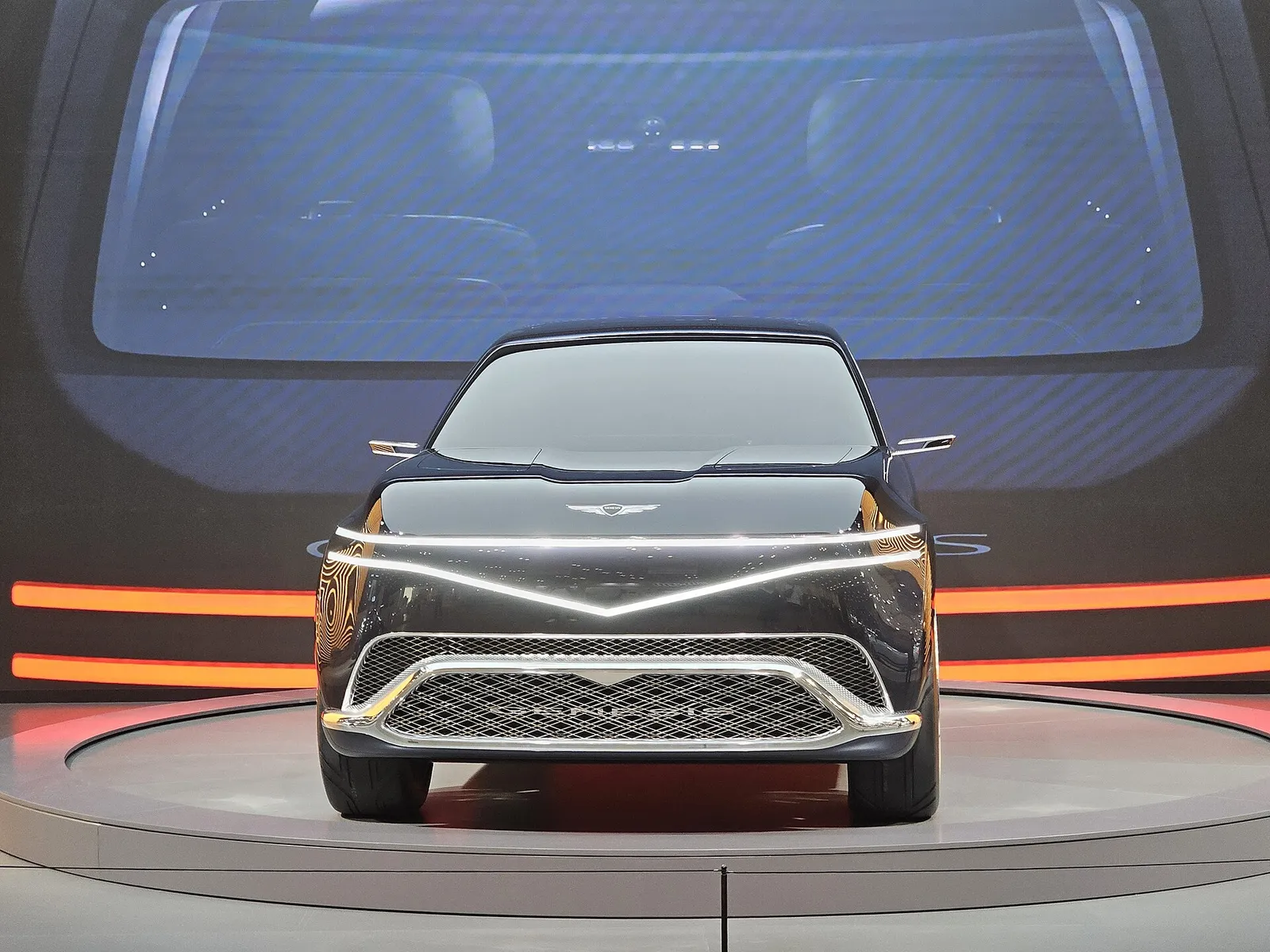
Genesis, Hyundai Motor's luxury division, has revealed its new flagship: the GV90, a full-size, three-row electric SUV that the Korean group is aiming squarely at the Mercedes-Benz EQS SUV, BMW's largest electric models and Cadillac's Escalade IQ. The company confirmed the production model ahead of a formal debut on September 9, with US sales expected to begin next year.
The GV90 is the production version of the Neolun concept, a design study inspired by Korea's moon-jar porcelain, and it keeps the concept's most theatrical feature: rear-hinged coach doors that open without a central B-pillar, a flourish usually found on Rolls-Royces. Power-operated rear doors and a flat floor are designed to let passengers step, rather than climb, into a cabin offered in six- and seven-seat layouts.
What is under the skin
The GV90 is the first vehicle on the group's new eMP electric platform, an 800-volt architecture that Genesis says charges faster and travels further than the E-GMP hardware underneath today's Hyundai, Kia and Genesis EVs. Reports based on regulatory filings and leaks point to a battery of roughly 120 kilowatt-hours, dual motors producing between about 430 and 520 horsepower depending on trim, and a range of around 300 miles, along with a 27-inch dashboard display. Genesis has not yet published final specifications or US pricing; Korean reports suggest the range will start near the equivalent of $65,000 at home, with expectations that US flagship trims will push well into six figures.
The SUV will be built at Hyundai's new dedicated EV plant in Ulsan, South Korea.
A calculated bet at the top of the market
The GV90 arrives at a complicated moment for luxury EVs. Genesis once planned to go all-electric with every new model from 2025; it has since pulled back to a mixed lineup, and the GV90 is the only pure EV among the five models the brand plans to launch this cycle, alongside hybrids and an extended-range electric vehicle. That mirrors the wider industry, where EV growth has slowed in the US and premium buyers have proven attached to choice in powertrains.
Still, the segment the GV90 enters is one of the industry's most profitable, and Genesis has a record of undercutting German rivals on price while over-delivering on equipment, a formula that took the brand from a curiosity to more than 200,000 annual global sales in under a decade. A three-row flagship EV with showpiece doors is as much a statement about the brand's ambitions as a product: Genesis wants to be cross-shopped with Bentley and Rolls-Royce customers' second car, not just with Lexus.
The competition it walks into
The GV90 will face the Mercedes EQS SUV and electric GLS-class successors, BMW's iX and coming i7-derived SUVs, Cadillac's Escalade IQ and Vistiq, Rivian's R1S and the Range Rover Electric, a field where brand prestige has so far mattered as much as engineering. Whether affluent buyers will pay six figures for a Korean flagship remains the live question; the GV90's answer, doors that bow outward like a limousine's, a screen the width of the dashboard and a price likely below its German rivals, will be tested when it reaches showrooms next year.