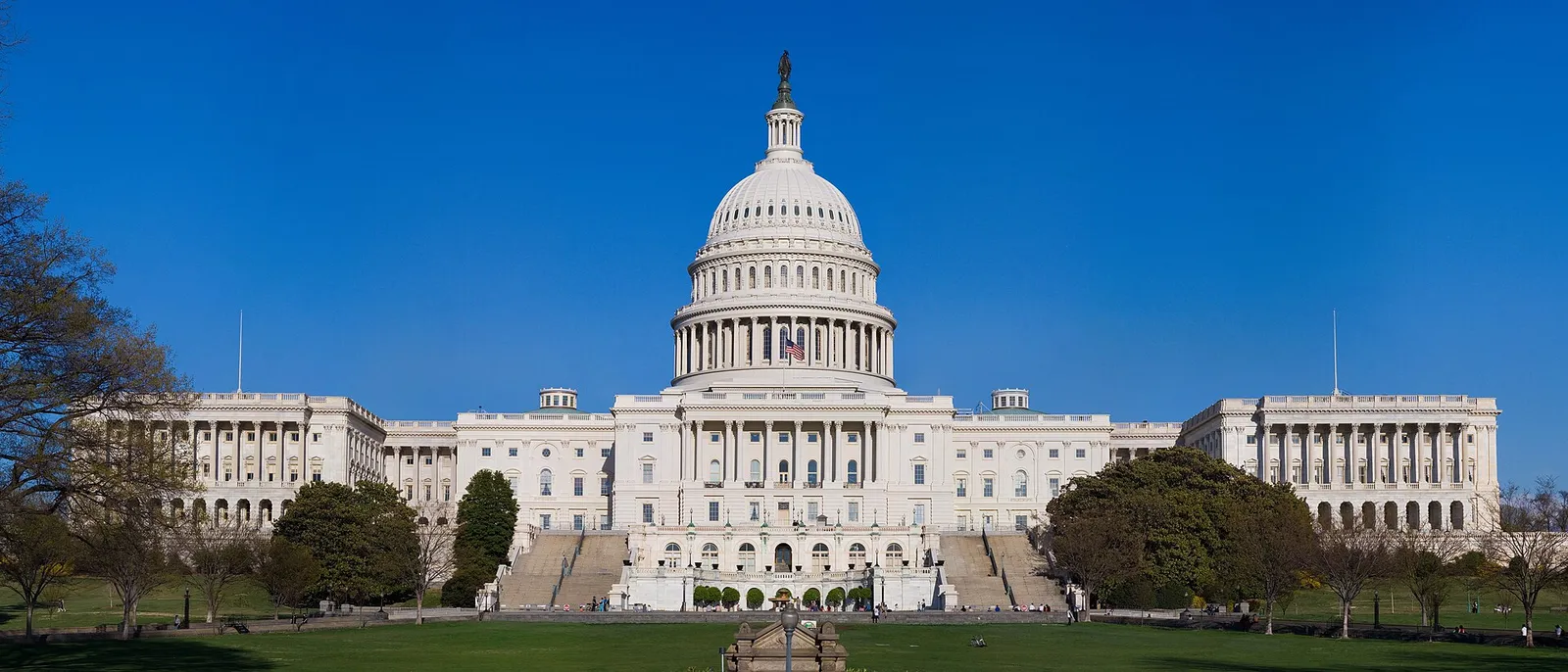
The US House of Representatives has passed a $1.15 trillion defense authorization bill, the annual legislation that sets Pentagon policy and spending, Al Jazeera reports. The vote, on Wednesday, was 216 to 212, and split almost entirely along party lines.
The vote and the money
The headline is the size of the bill and the narrowness of its passage.
According to Al Jazeera, the measure is the 2027 National Defense Authorization Act, or NDAA. It passed 216-212, with six Democrats voting in favor and seven Republicans against, an unusually tight margin for a bill that is normally treated as must-pass. On spending, it raises the military budget from $900 billion the previous year toward the $1.5 trillion that President Trump has requested, with this bill setting the level at $1.15 trillion.
That increase is the core of the bill, and it is the first reason it is contested: a large rise in military spending at a time when, as Al Jazeera notes, some lawmakers are pointing to cuts in social programs.
The contested provisions
Beyond the topline number, several specific provisions drew the opposition, and notably that opposition came from both sides of the aisle.
Al Jazeera reports that the bill expands US military technological cooperation with Israel, through a section it identifies as Section 219. The Republican representative Thomas Massie, who opposed the bill, objected to that provision in strong terms, saying it merges "our military technology and supply chains with Israel's" and calling it "a betrayal of our sovereignty." That is a criticism from the right, on grounds of national independence rather than foreign policy alignment.
From the other side, the Democratic Senate leader, Chuck Schumer, criticized the bill as a "permission slip" for the administration's war with Iran, according to Al Jazeera, tying his objection to the ongoing conflict that newsparlor has reported on in recent days.
The bill also, Al Jazeera reports, contains the SAVE America Act, which places new restrictions on voting requirements, and includes aid for Ukraine. That combination, military spending, a voting-law change, Israel cooperation and Ukraine aid bundled into one measure, is part of why it drew resistance from lawmakers who might have supported a narrower defense bill.
We are attributing these characterizations to the politicians who made them. Supporters of the bill, who carried it through the Republican-controlled House, present it as a necessary increase in military capability in line with the administration's stated priorities; its critics, from both parties, object on the varied grounds above.
What happens next
Passing the House is only the first step, and the harder one may be still to come.
Al Jazeera reports that the bill's passage through the Senate is uncertain, and that Senate Democrats had previously blocked debate on the NDAA, citing its cost against the backdrop of social-program cuts and the unpopular war with Iran. The NDAA is usually one of the few bills Congress reliably passes each year; that it is facing this much resistance, and passed the House by just four votes, is itself the story. For a global audience, the significance is twofold: the scale of US military spending it proposes, and the fact that the traditional bipartisan consensus behind funding the American military is, this year, visibly strained.