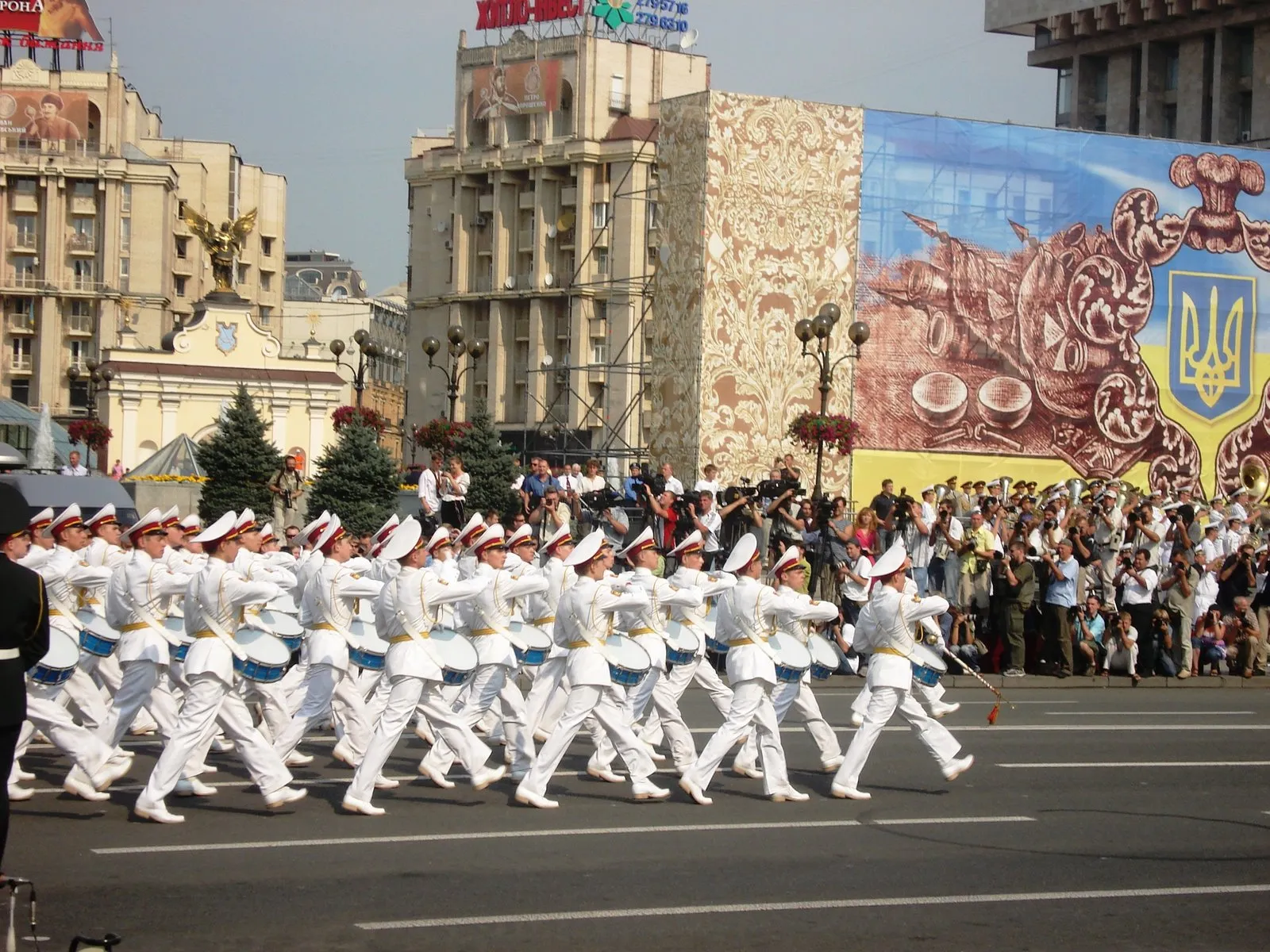
President Volodymyr Zelenskyy has replaced Ukraine's most senior military officer, in a leadership change that followed days of public protest, Al Jazeera reports. The commander-in-chief, Oleksandr Syrskyi, has been replaced by General Mykhailo Drapatyi.
What happened, and when
The sequence matters, because the military change did not happen in isolation.
According to Al Jazeera, the defence minister, Mykhailo Fedorov, was dismissed on July 16. That dismissal triggered protests in Kyiv and other cities, as Fedorov was a popular figure. Days later, on July 20, Zelenskyy replaced Syrskyi as commander-in-chief with Drapatyi. So within a single week Ukraine changed both its civilian defence minister and its top military commander, against a backdrop of public demonstrations.
The dispute in the open
What makes this notable is not just the reshuffle but the visible friction behind it.
Al Jazeera reports that the outgoing Fedorov criticised Syrskyi, the military chief, accusing him of having "split the country." That is unusually blunt language between senior figures in a country at war, and it points to a real disagreement within the leadership rather than a routine personnel rotation. The protests, in turn, show that the discord reached the public: citizens took to the streets over the removal of a minister, which is not something that happens over a purely administrative change.
We are reporting the shape of the dispute rather than adjudicating it. The precise reasons for each decision, and the merits of the criticisms traded, are not fully set out in the available reporting, and we will not fill those gaps with speculation. What is clear is that the changes are connected, contested, and public.
Why it matters
For a country in the middle of a war with Russia, unity at the top is not a luxury.
A commander-in-chief runs the war effort, and a defence minister organizes the resources behind it. Changing both in a week, amid protests and open criticism between senior officials, is a sign of strain in the machinery that Ukraine depends on to keep fighting. It does not, on its own, tell us the war's direction has changed, and Ukraine has reorganized its command before during this conflict. But it is a visible crack in the wartime consensus that Ukraine has largely maintained in public, and that is why it registers well beyond Kyiv.
The next thing to watch is whether the protests subside now that the leadership has been reshaped, or whether the discontent that put people on the streets over Fedorov's removal persists. That will indicate whether this was a contained reshuffle or the start of a broader political strain inside a country that has spent years presenting a united front.