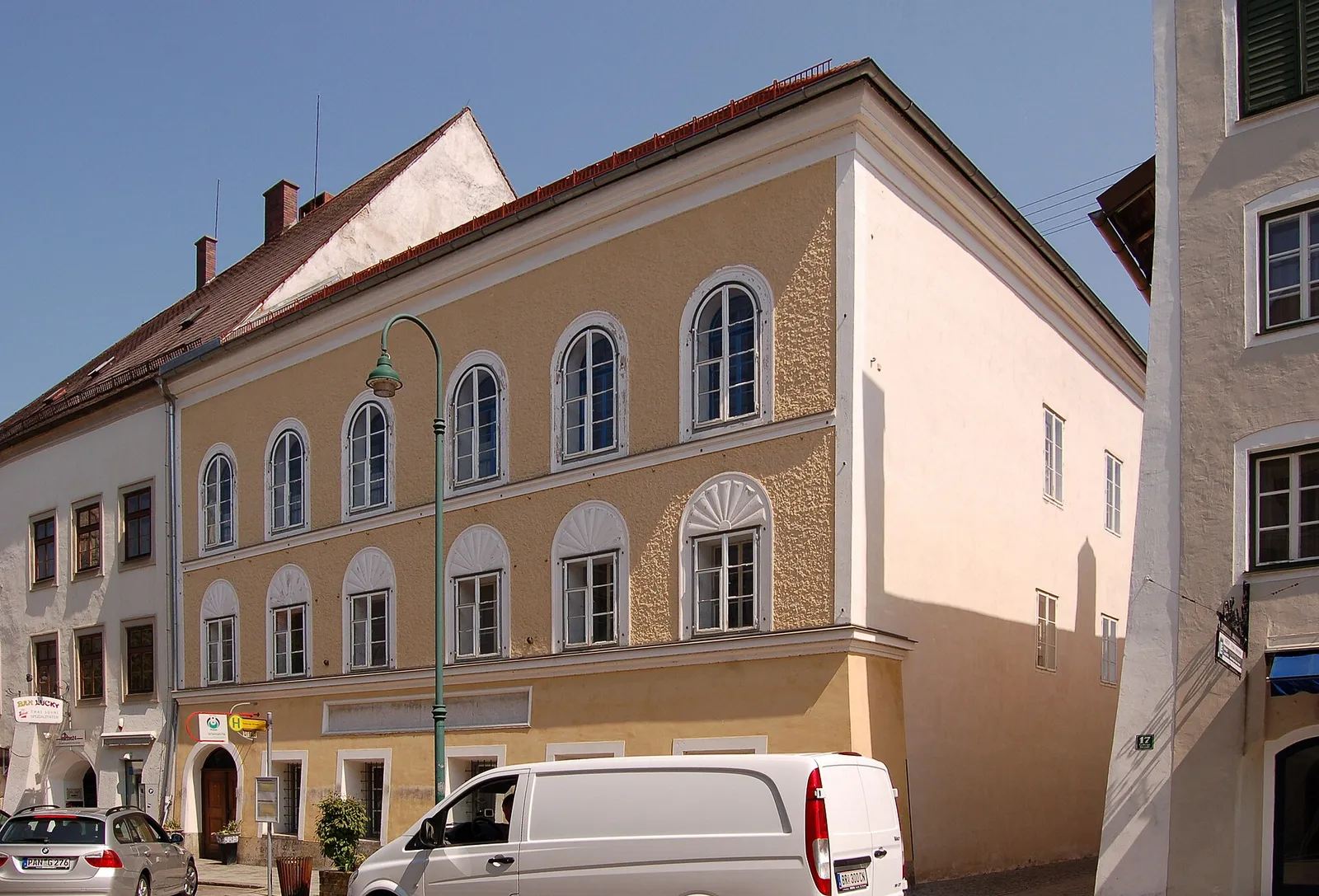
The house in Braunau am Inn, on Austria's border with Germany, where Adolf Hitler was born in 1889 has reopened as a police station, Al Jazeera reports. It is the resolution of a problem that has troubled Austria for decades: what to do with a building that some wished to treat as a place of pilgrimage.
The long road to a decision
This did not happen quickly, and the timeline shows how difficult the question was.
According to Al Jazeera, Hitler was born in the house on April 20, 1889, and his family left weeks later. Under Nazi rule the building was turned into an art museum styled as the "Fuehrer birth house." In the decades since, the Austrian state wrestled with how to neutralize it. The government bought the property in 2017, announced renovation plans in 2019, and the police station finally opened on July 16, 2026. The conversion cost around €20 million (about $22.8 million) and now houses district and local police.
The reasoning
The stated logic is specific: change what the building is, so it can no longer be what extremists want it to be.
The mayor of Braunau, Johannes Waidbacher, framed it as an act of civic responsibility, saying the transformation shows the community is "confronting its history, that it is assuming responsibility." A senior interior ministry official, Stephan Mlczoch, was more precise about the mechanism: "The aim was to prevent any association with Adolf Hitler, so as to strip it of that mystique." The reasoning is that a working police station is about the least romantic use imaginable, and that ordinary official function is itself a form of defusing.
The objection
Not everyone is convinced it will work, and the criticism is worth airing.
Al Jazeera reports that critics, among them Robert Eiter, argue the change neither erases the building's history nor will reliably deter those determined to visit. "Wikipedia won't change its entries," Eiter said, making the point that the site's identity persists in the record regardless of what occupies the ground floor. It is a reasonable challenge: repurposing a building changes its use, not its past.
The wider question
The Braunau house is one instance of a problem many countries share: how to handle the physical remains of a terrible history without either honoring them or pretending they did not exist.
Austria's answer here sits between two poles, demolition, which some had urged, and preservation, which risks veneration. Converting the house to mundane public use is an attempt at a middle path: keep the building, remove the aura. A memorial stone outside, taken from the Mauthausen concentration camp and reading "Never again fascism," remains in place on the pavement, a deliberate marker that the site is not being erased but recast. Whether that recasting succeeds in draining the place of its pull is, as the critics note, something only time will show.