
The war between the United States and Iran is showing up where wars usually reach ordinary people first: at the fuel pump. US petrol prices have climbed to an average of $4 a gallon, and crude oil has risen, as fighting disrupts shipping through the Strait of Hormuz, Al Jazeera reports.
The numbers
The moves are meaningful without yet being extreme, and it is worth being precise about them.
According to Al Jazeera's report of July 20, the average US petrol price reached $4 a gallon, up from $3.87 a week earlier. On the crude market, Brent, the international benchmark, was around $88 a barrel, having touched $91.42 on the Sunday; the US benchmark, West Texas Intermediate, was near $82. These are notable increases driven by the conflict, but they are not, on these figures, a runaway price shock.
The chokepoint
What makes the war matter so much to oil is geography, and one narrow stretch of water in particular.
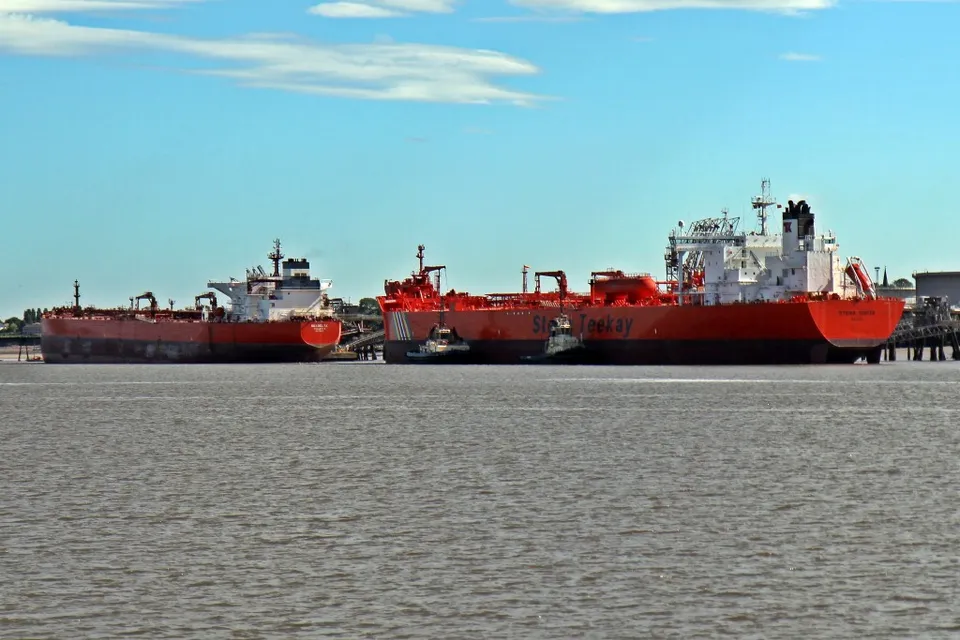
The Strait of Hormuz, between Iran and the Arabian Peninsula, normally carries about 20 percent of the world's oil supply. Al Jazeera reports that tanker traffic through it has fallen sharply: only around 30 vessels passed between July 17 and 19, with just eight on the Saturday and four on the Sunday. When a fifth of the world's oil moves through a single channel and the traffic through it collapses, the price of oil everywhere responds, regardless of where the crude is actually produced.
Adding to the pressure, Al Jazeera reports that Yemen's Houthis announced a naval blockade against Saudi Arabia and threatened to close Red Sea shipping if US attacks on Iranian energy infrastructure continued, widening the potential disruption beyond Hormuz itself.
Why it reaches far beyond the Gulf
Oil is the input to almost everything, which is why a regional war becomes a global economic story.
Higher crude prices feed through into the cost of transport, manufacturing and food, and into the petrol prices that households feel directly. David Meger, director of metals trading at High Ridge Futures, told Al Jazeera that "higher energy prices remain in focus as a re-escalation in the Middle East tensions adds to concerns."
The particular worry is timing. Inflation in the United States and elsewhere had been easing, and central banks had been expected to move toward cutting interest rates. A fresh energy-price surge cuts against that: Al Jazeera notes that elevated energy costs could push the US Federal Reserve toward raising rates later in 2026 rather than lowering them. That is the mechanism by which a war in the Gulf could reach a mortgage payment or a business loan far from it.
What to watch
The figures here are a snapshot of a moving situation, and the direction depends on the war.
If the fighting eases and traffic through Hormuz recovers, the price pressure could fade quickly. If the disruption to the strait deepens, or the Houthis' threatened Red Sea closure materializes, the increases reported so far could prove to be the early part of a larger move. Either way, the pump price is now one of the clearest gauges the rest of the world has of a conflict most of it is watching from a distance.