A king penguin at Edinburgh Zoo laid an egg on August 14, the first king penguin egg in Scotland in seventeen years. The mother is a penguin named Constance. The father is Sir Nils Olav III, the bird who holds an honorary rank in the Norwegian King's Guard and inspects them when they visit.
The egg has not hatched. King penguins incubate for roughly eight weeks, so if all goes well the chick would arrive in the autumn, and it would be the zoo's first since 2009. Nothing about that is guaranteed, and the zoo has been careful not to promise it.
Why so long between eggs
The seventeen-year gap is less surprising than it sounds, because king penguins are among the slowest breeders of any bird.
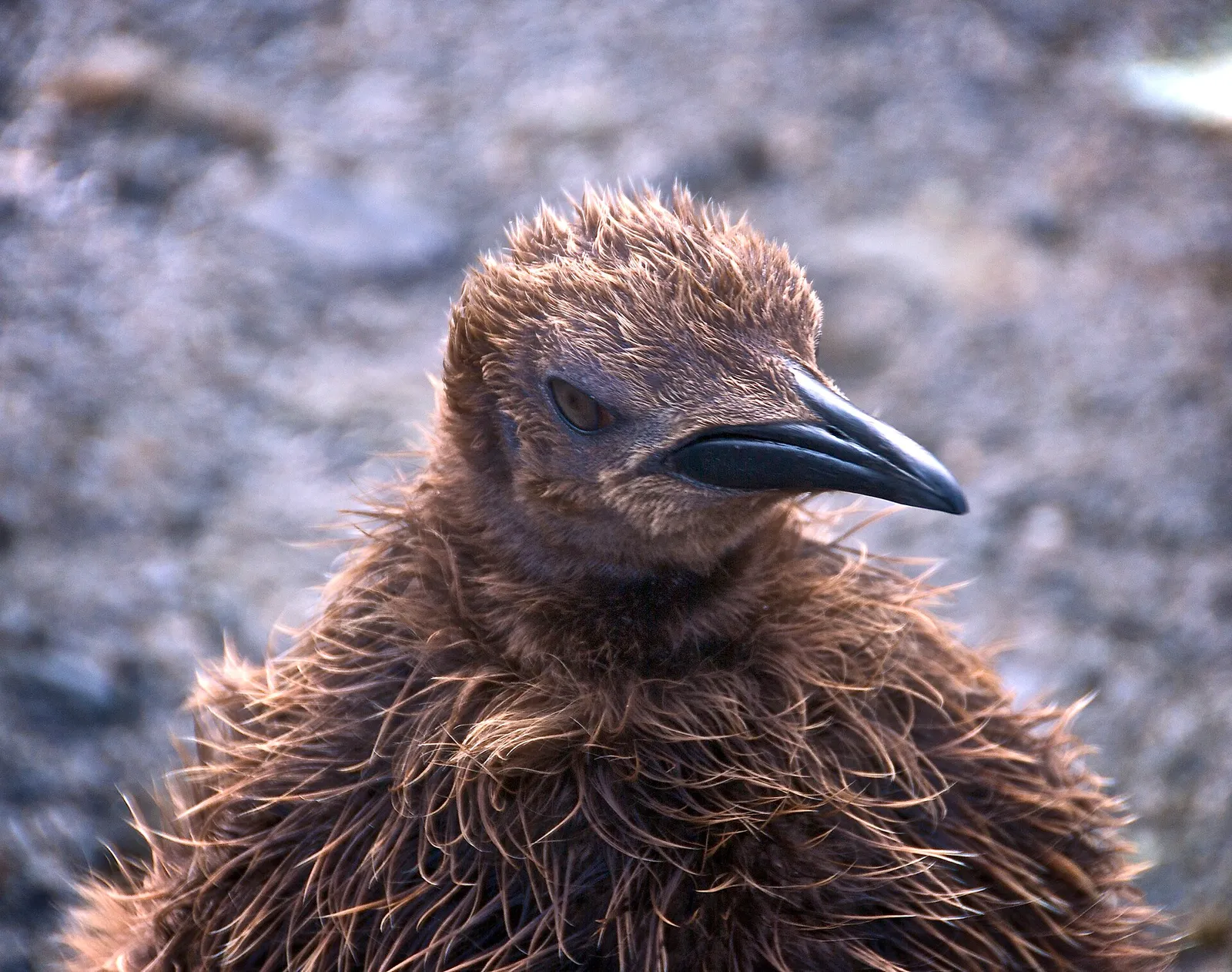
They lay a single egg and build no nest. The egg rests on the parents' feet, tucked under a fold of skin called a brood pouch, and the pair take turns carrying it, shuffling rather than walking. Both parents share incubation and then feeding, and the chick takes an extraordinarily long time to become independent: something in the region of ten to thirteen months, through a sub-Antarctic winter during which it is fed only intermittently while adults make long foraging trips.
The consequence is arithmetical. A cycle that long cannot be fitted into a calendar year, so a successful pair cannot breed annually. In the wild they manage roughly two breeding attempts every three years, and a pair that raises a chick successfully will start the next attempt late in the season, which lowers the chance that one succeeds. Colonies are therefore full of birds at different stages at the same time, which is why king penguin colonies never empty out the way other species' do.
In a collection holding a small number of birds, that life history means eggs are rare events rather than annual ones.
The birds and the ceremony
Edinburgh Zoo's association with the Norwegian King's Guard runs back to 1972, when the regiment adopted a king penguin at the zoo. The title has passed down a line of birds, each named Nils Olav, with promotions conferred at ceremonies when the Guard visits. Sir Nils Olav III was made a brigadier in 2023 and knighted in 2016 with the approval of the King of Norway. It is a genuinely odd piece of institutional tradition and the zoo has leaned into it for decades.
The zoo keeps a small group of king penguins alongside gentoos and rockhoppers, and its penguin colony is among the best known in Britain.
In the wild
King penguins are not currently a species of pressing conservation concern. The IUCN lists them as Least Concern, with a large population spread across sub-Antarctic islands including South Georgia, the Crozet and Kerguelen archipelagos and Macquarie Island.
That status is not the whole picture. King penguins feed largely on lanternfish and squid concentrated at the Antarctic Polar Front, a boundary between water masses that sits at a particular distance from their breeding islands. If that front shifts south as the Southern Ocean warms, the foraging trip from colony to feeding ground gets longer, and for a bird already stretching a breeding cycle over more than a year, the margin is thin. Research on the largest colonies has focused on exactly this question.
None of which is what a zoo announcement is about. But it is the reason a single egg on a pair of feet in Edinburgh is worth more than a photograph.