The Ebola outbreak in eastern Democratic Republic of Congo has passed 5,000 confirmed cases, and the epidemic is now killing people faster than any Ebola outbreak in the disease's recorded history. The United Nations put the toll at 5,021 confirmed cases and 2,325 deaths as of August 20, a rate the UN described as roughly one death every 30 minutes. Tallies published the same day by other organizations ran somewhat higher, a normal feature of an outbreak whose case data is being collected in an active conflict zone.
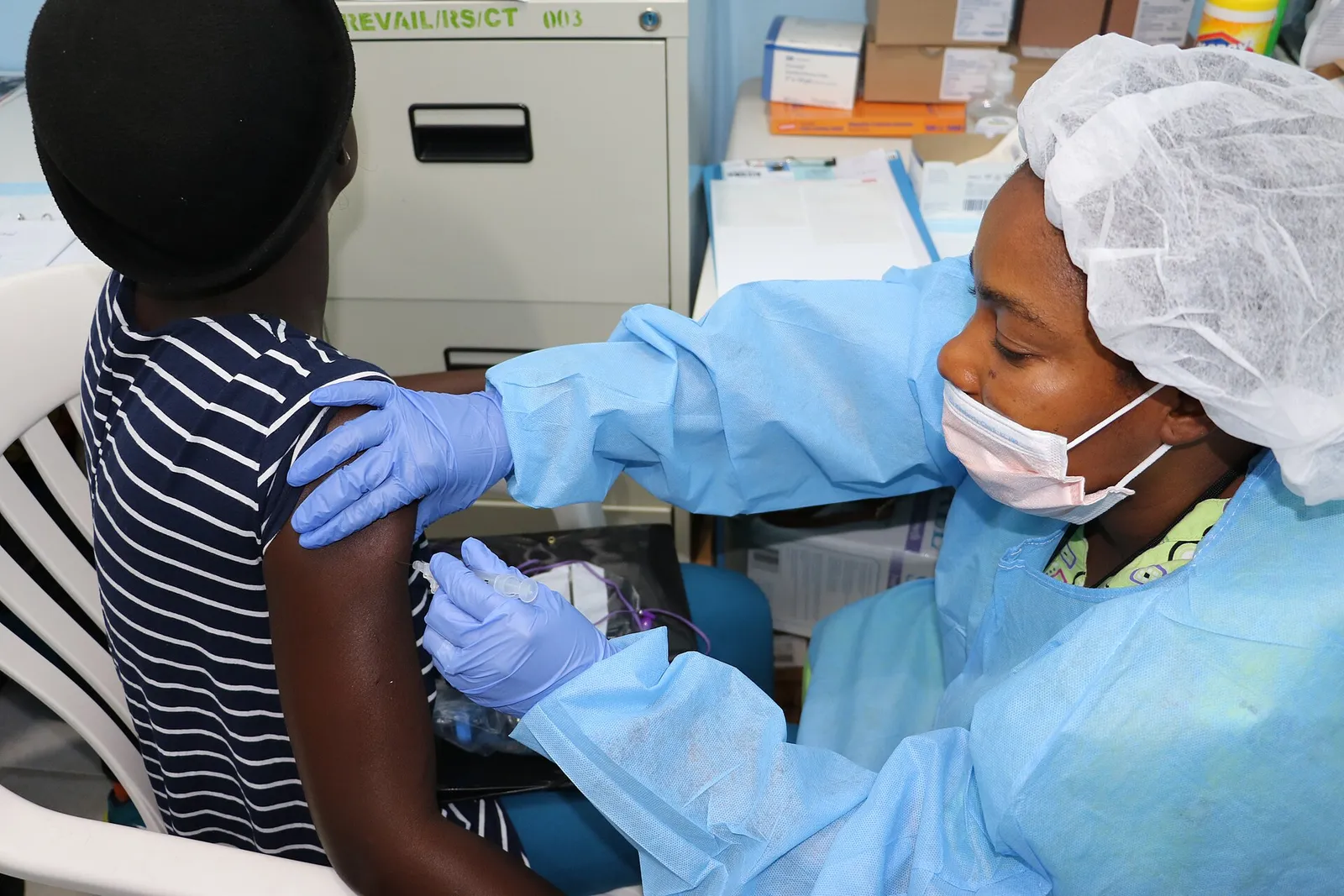
On Thursday the World Health Organization and its partners said 70,000 doses of the Ervebo vaccine would be released to the country, split between 20,000 doses for a late-stage clinical trial and 50,000 for front-line and health workers. WHO Director-General Tedros Adhanom Ghebreyesus called the decision an "important example of global solidarity in action".
The vaccine was made for a different virus
The complication sits at the center of the response. Ebola is not one virus but a family of them, and Ervebo is licensed against the Zaire strain, the one responsible for most of the large outbreaks of the past decade. This epidemic is caused by the Bundibugyo strain, a rarer member of the family, and no vaccine or treatment has been approved against it.
WHO has been careful about what it is claiming. The agency said that while it is not known whether Ervebo protects against Bundibugyo in humans, early laboratory and animal data "suggest it may provide some protection", and noted that serious side effects from the vaccine are very rare. That is the reasoning behind the split allocation: the 20,000 trial doses exist precisely because the answer is unknown, and the campaign is being designed to produce evidence rather than assume it.
The gamble is defensible and it is still a gamble. Ring vaccination, the strategy that helped end previous outbreaks by immunizing the contacts of confirmed cases and the contacts of those contacts, only works if the vaccine blocks transmission. Against this strain, that remains an open question.
An outbreak that outran the response
The epidemic is believed to have begun in February in the mining town of Mongbwalu and was officially declared on May 15, meaning it circulated for roughly three months before the response formally began. It has since reached six provinces in eastern DR Congo and is spreading about three times faster than the 2014-16 West African epidemic, which killed more than 11,000 people and remains the deadliest on record.
The case fatality rate is running at roughly 47.5 percent overall and as high as 70 percent in North Kivu. Health workers have been hit hard: more than 160 have been infected and about 40 have died, losses that compound in a system that had few specialists to begin with.
Why containment is so difficult here
The obstacles are largely the ones that made the 2018-20 outbreak in the same region so hard to end. Eastern DR Congo has been at war for years, and armed groups control or contest territory that surveillance teams need to reach. Contact tracing depends on communities trusting outsiders enough to name the people a patient met, which is a great deal to ask of populations that have been displaced repeatedly and have watched previous responses arrive and leave. Health workers are frequently unpaid or paid late, and safe burial teams, essential because Ebola victims are most infectious after death, have faced hostility before.
None of this is new information to the agencies involved, which is part of why the outbreak's speed is so significant. The response infrastructure being deployed was built for smaller and slower emergencies. Whether 70,000 doses of a vaccine designed for another strain can change the trajectory is the question the next several weeks will answer, and the trial being run alongside the campaign means that, at minimum, the world will know more about Bundibugyo than it does today.