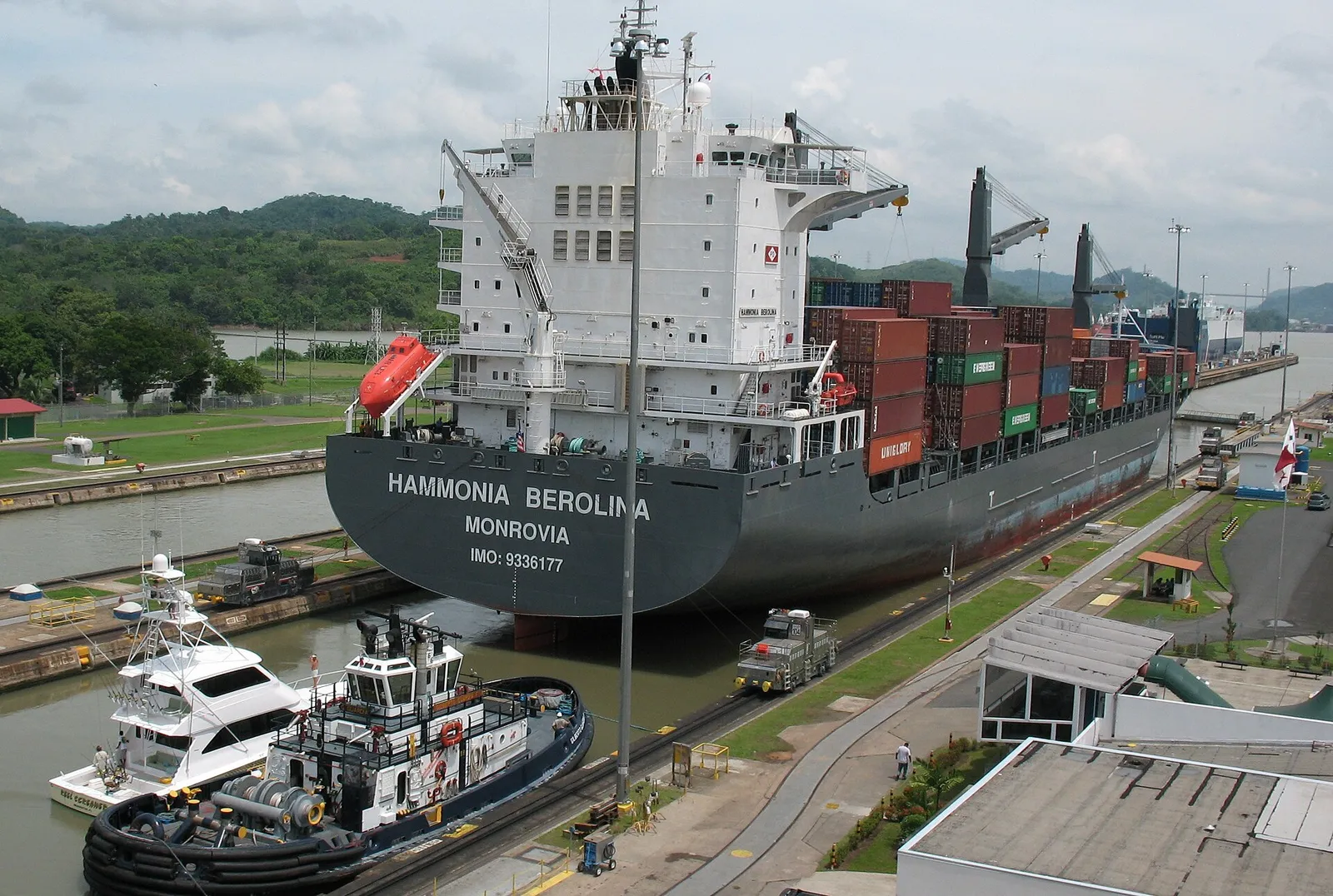
The Panama Canal Authority will reduce the number of ships it lets through each day in two steps next month, capping transits at 34 vessels from September 4 and 32 from September 15. The waterway can normally handle around 40 crossings a day and has been averaging 35 since June, so the deeper of the two cuts amounts to rationing roughly a fifth of its usual capacity.
The reason is water. The canal does not pump ships through with seawater; it lifts them over the isthmus using fresh water drawn from Gatun Lake, and every transit spills tens of millions of gallons of it into the sea. When the rain fails, the lake falls, and the canal has to choose between fewer ships and lighter ones. Rainfall between May and August ran 34 percent below the historical average, and water flowing into the canal's watershed was 44 percent below normal over the same period.
A forecast that argues for acting early
What makes this different from an ordinary dry spell is what forecasters expect next. El Nino, the periodic warming of the central and eastern tropical Pacific, tends to suppress rainfall across Central America, and the event now developing is unusually strong. The UK Met Office has said it may be the strongest in living memory. In the United States, NOAA put the odds of the event reaching historic strength between October and December at 69 percent, with most models pointing to sea-surface temperature anomalies above 2 degrees Celsius in the key monitoring region of the Pacific.
The timing is awkward. El Nino's influence usually peaks in the Northern Hemisphere autumn and winter, which is also when Panama's dry season begins. The canal authority has warned that the strength of the coming event could cut rainfall and inflows further through what is left of the rainy season, leaving less stored water to draw down through 2027.
The last drought is still fresh
Canal managers are working with a recent and painful precedent. The 2023 drought cut traffic through the waterway by roughly 36 percent, forcing shipowners to lighten loads, bid at auction for scarce slots, or take the long way around southern Africa or through the Suez Canal. Because the Panama Canal carries about 5 percent of global maritime trade, the disruption reached container rates and delivery schedules well beyond the Americas.
Panama Canal Administrator Ricaurte Vasquez said the "experience of 2023 and 2024 has prepared us well for what we know", framing the early restrictions as an attempt to manage the decline in an orderly way rather than improvise once the lake is already low. Announcing modest cuts weeks in advance lets carriers redraw schedules rather than discover at the last minute that their booked slot has gone.
What it means beyond Panama
For now the restrictions are far milder than those of two years ago, and shipping lines have more warning. But the canal's constraint is structural rather than temporary: it is a freshwater system in a region that a warming climate is making less reliably wet, serving ships that have grown steadily larger and thirstier. Panama has studied new reservoirs and water-saving basins for years, and none of them can be built between now and the dry season.
The practical question over the coming months is whether 32 transits a day proves to be the floor or the first step. If the strongest forecasts are borne out, the authority will face the same choice it faced in 2023, with the same two levers: fewer ships, or ships that carry less. Either way the cost lands on the same place, in freight rates that eventually reach the price of goods on the other side of the ocean.