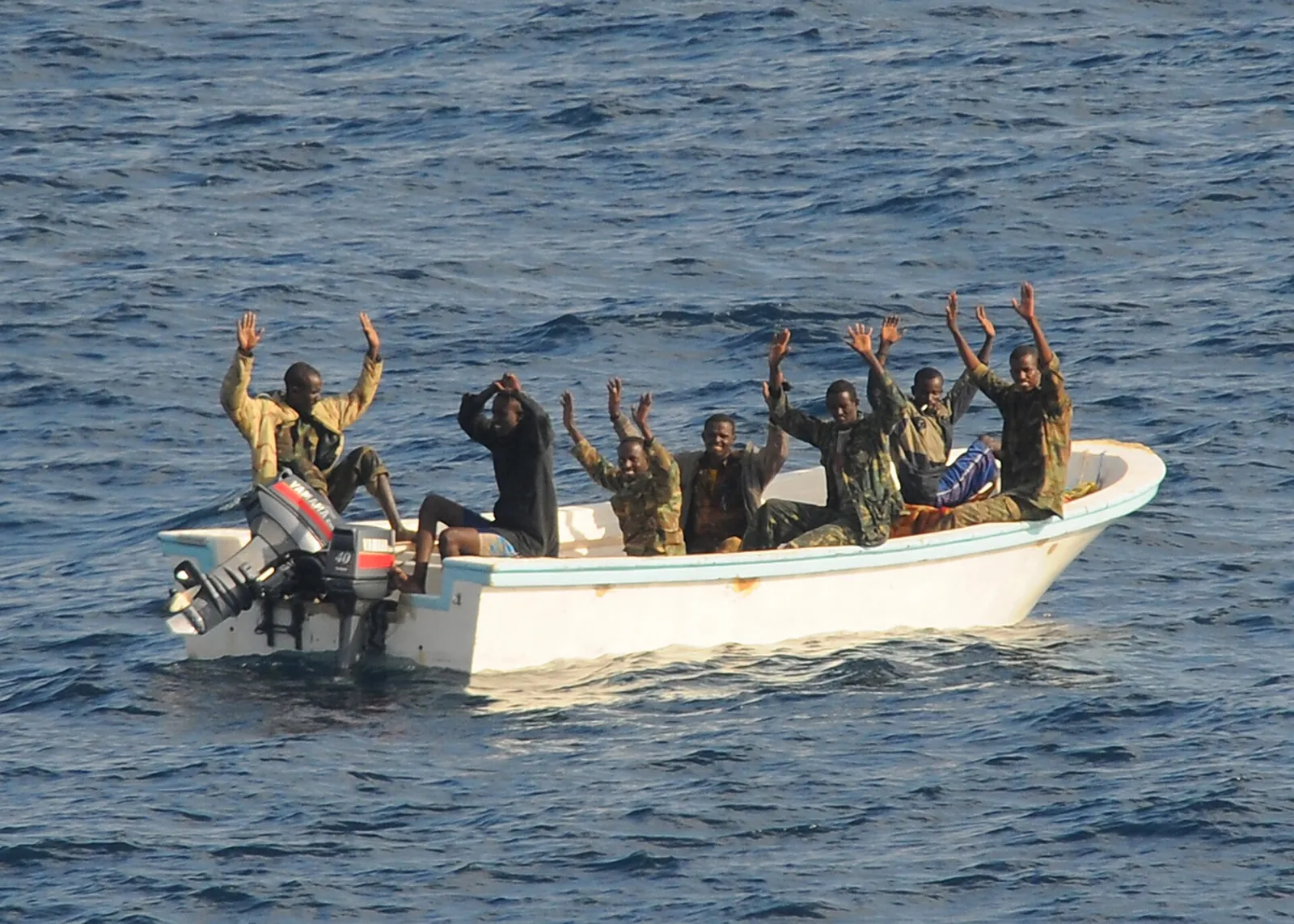
For more than a decade, Somali piracy was the rare security problem the world seemed to have solved. In 2026 it has come roaring back. Since April, pirates operating off the Horn of Africa have seized a series of merchant vessels, including the oil tanker Honour 25, taken with 17 crew aboard, the cement carrier Sward, steered toward the Somali coast after its hijacking in late April, and the tanker Eureka, for which ransom demands reportedly ran as high as $10 million. At one point this summer, monitors counted a half-dozen captured vessels held off the Puntland coast, and a Spanish frigate had to drive off an armed assault on the Maltese-flagged tanker Hellas Aphrodite.
The revival is no mystery to maritime analysts. It is, CNBC reports, a direct byproduct of the US-Iran war reshaping the region's waters.
The warships went north
The piracy epidemic of 2008-2012 was crushed by concentration of force: at its peak, a coalition of dozens of nations kept roughly 25 to 30 warships rotating through the region, and attacks collapsed from 237 in 2011 to a handful by 2013. That naval presence, thinned over the years, has now been pulled decisively toward the war. Escorting convoys past Houthi missiles in the Red Sea and enforcing the blockade of Iranian ports has consumed the very frigates and patrol aircraft that once watched the Somali basin, analysts told Al Jazeera. The EU's Operation Atalanta continues its patrols, but its handful of ships is stretched across missions from protecting food-aid deliveries to shadowing the war's spillover.
More targets, sailing slower and closer
The war has simultaneously multiplied the pirates' opportunities. With the Strait of Hormuz effectively strangled and the Houthis blockading the Red Sea, hundreds of merchant ships have been rerouted around the Cape of Good Hope or into the western Indian Ocean, corridors that pass through or near the pirates' operating areas. Tankers full of high-priced oil, sailing without naval escort, are the richest targets these groups have seen in fifteen years; most of the ships seized this year have been carrying petroleum products.
The pirates have dusted off their old playbook and updated it. Hijacked dhows and fishing boats serve as motherships, extending attacks hundreds of miles offshore. Ransom negotiation, the industry that once funneled hundreds of millions of dollars into Puntland's coastal economy, has resumed, and officials in the region claim smuggling networks connected to the wider war are supplying pirate cells with equipment, an assertion difficult to verify independently.
Shipping adapts, again
The commercial response echoes the last crisis: rerouting, citadel drills, razor wire, and a rush back to private armed guards, which by 2012 rode on some 80 percent of Gulf of Aden transits and remain the single most effective deterrent, since no ship carrying an armed team has ever been successfully hijacked by Somali pirates. War-risk and kidnap-and-ransom insurance premiums for the region are climbing, layering yet another cost onto supply chains already paying for the longer routes the war has forced.
A solvable problem, if anyone has ships to spare
The bleak irony, analysts note, is that the world knows exactly how to stop Somali piracy; it has done it before. Sustained patrols, prosecution pipelines and onshore development broke the last wave. What is missing in 2026 is not knowledge but capacity: every navy that once had a frigate to spare for the Somali basin now has somewhere more urgent to send it. Until the war that pulled the warships north ends, the pirates are betting, so far correctly, that no one is coming.