The drone was not in the air. That is the first thing to understand about Thursday's incident in the Black Sea: the object a Romanian F-16 destroyed was a maritime drone, an uncrewed surface vessel, of the type both sides in the war in Ukraine have used to attack shipping and coastal infrastructure.
A merchant ship radioed at 06:28 local time to report a drone loitering a few hundred meters from the works at Neptun Deep, Romania's offshore gas project in its exclusive economic zone, roughly 80 nautical miles east of Constanta. Several hundred people were working on the platform. The drone was destroyed around midday.
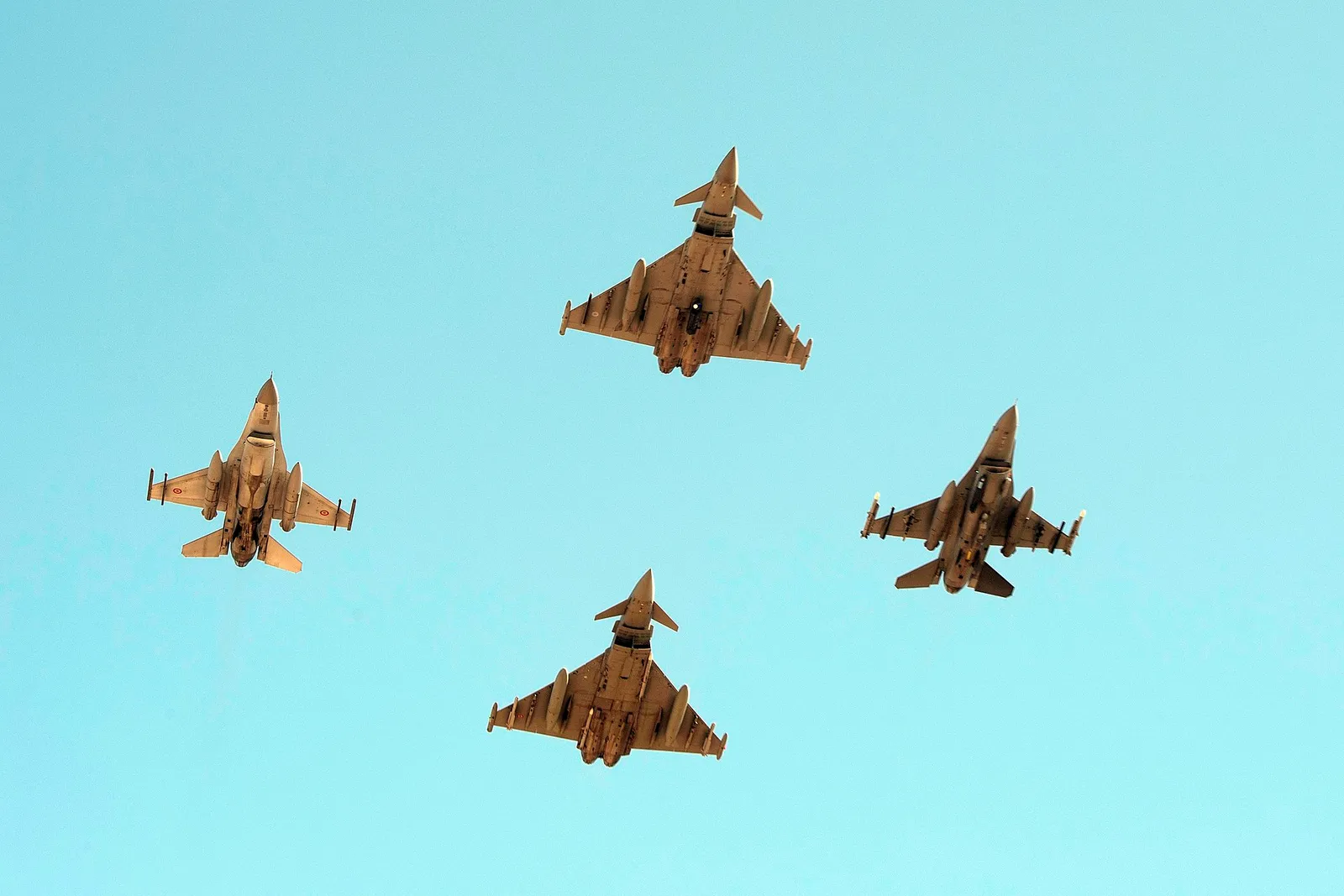
Defense Minister Radu Miruta said that "a maritime drone was destroyed by the Romanian Army using the onboard cannon of a Romanian F-16 aircraft" in the area of the Neptun Deep platform. President Nicusor Dan congratulated "the pilots of the two Romanian F-16 fighter jets on the successful mission". Using a fighter's gun against a small surface target is an unusual engagement, and it reflects the specific problem: a missile fired near an occupied gas platform carries risks of its own.
Why this platform
Neptun Deep is not an ordinary offshore field. It is operated by OMV Petrom and the state-owned Romgaz, and when it comes online it is expected to make Romania the European Union's largest gas producer, with production due to begin in 2027.
That is the context in which an attack on the works has to be read. The project is one of the more consequential pieces of the European effort to replace Russian pipeline gas with supply from inside the bloc. Damage to it, or simply a demonstration that it can be reached, has value well beyond the platform itself.
Attribution, carefully
President Dan attributed the incident to Russia, condemning what he called the intensification of "irresponsible incidents on the part of the Russian Federation". That is the position of Romania's head of state. Romania's defense ministry described what was destroyed and where, and reporting indicates Romanian authorities established through contact with Kyiv that the drone was not Ukrainian.
Nobody has published physical evidence tying the drone to a particular launch point, and readers should hold the attribution as the Romanian government's assessment rather than as an established fact.
Not an isolated event
Thursday was busy in more than one domain. The previous week, two Gerbera-type drones were destroyed by Romanian Army divers in the same area, and on the same day as the Neptun Deep engagement an aerial drone crossed into Romanian airspace near Galati and came down on unpopulated ground.
Romania is one of three NATO members with a Black Sea coastline, and it shares a long land border with Ukraine along the Danube delta, where Ukrainian port facilities have been struck repeatedly. Debris and stray drones have landed on Romanian territory throughout the war.
The defense ministry asked NATO to transfer operational command of the response to Romanian forces for the incident. There is no indication Romania invoked Article 4 of the North Atlantic Treaty, the provision allowing any member to call for formal consultations when it considers its security threatened.
What is actually new here
Drones reaching Romanian territory is not new. What is new is the target. Previous incidents have largely involved aerial drones straying across a border during strikes on Ukrainian ports, with debris landing in fields. This was a surface vessel carrying explosives, positioned next to a working offshore platform with hundreds of people on it, in Romania's own economic zone.
That is a different category of problem, and it is one NATO's southeastern members have been raising for some time. Offshore energy infrastructure is fixed, valuable, hard to defend and full of people, and the weapons now available to reach it are cheap.