The work is patient and unglamorous: walking riverbanks in search of small holes in the mud, and tending rafts that float on the current. But it is steadily turning around the fortunes of one of Britain's most endearing — and most threatened — animals.
A collapse
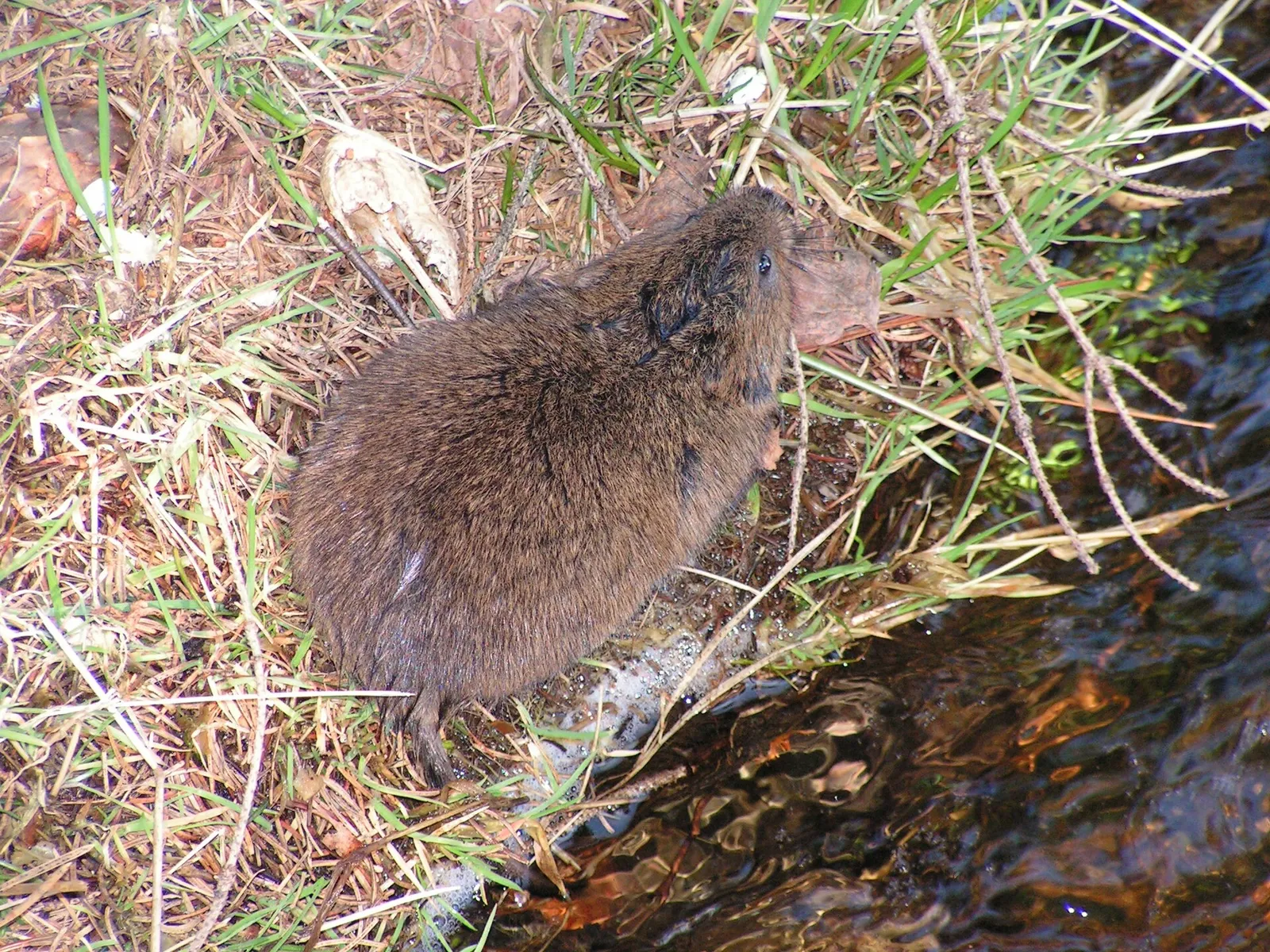
The water vole, immortalized as Ratty in Kenneth Grahame's "The Wind in the Willows," has suffered one of the steepest declines of any British mammal. Populations crashed by roughly 90% in the closing decades of the 20th century, and the animal has vanished from the great majority of waterways where it once lived, as National Geographic has reported. The chief cause is not, as is often assumed, the loss of habitat, but a predator the voles never evolved to face.
The mink problem
That predator is the American mink, brought to Britain for fur farming and established in the wild after escapes and releases from the mid-20th century onward. Slim enough to follow a water vole down into its burrow, the mink is a uniquely lethal threat, and its spread tracked the voles' disappearance closely.
"Poles and holes"
The fightback, in Norfolk and Suffolk, pairs old-fashioned fieldwork with a clever piece of kit. Volunteers survey the banks for the tell-tale signs of voles — burrows about the width of a tennis ball, latrines of droppings, and piles of grass cut at a neat angle. Alongside them, the Waterlife Recovery East project has deployed hundreds of floating "smart" rafts that detect and trap mink and can alert handlers automatically, allowing a small team to police a vast network of rivers.
The results have been striking. Across a core area of more than 2,000 square miles, the project reported that mink had been all but eliminated — by 2023 barely any were being caught — clearing the way for water voles to recolonize, naturally and through reintroductions.
Why a small rodent matters
Water voles are protected under British law, and their presence is a useful shorthand for the health of a river: it signals clean water, well-vegetated banks and a functioning ecosystem. Reintroduction efforts in places such as Cornwall, Yorkshire and the Lake District have shown that, once the mink are gone, the voles can return — and as they burrow and graze, they help shape the riverbank in ways that benefit other wildlife too.
The recovery is far from complete; Britain's water vole population remains a fraction of its former size, and the effort leans heavily on volunteers and sustained funding. But after decades in which the species seemed to be sliding inexorably toward local extinction, the patient work of poles and holes has turned a story of loss into one of cautious hope. Conservation bodies such as the People's Trust for Endangered Species run national surveys that anyone can join — proof that saving a vanishing mammal can begin with a walk along the river.