
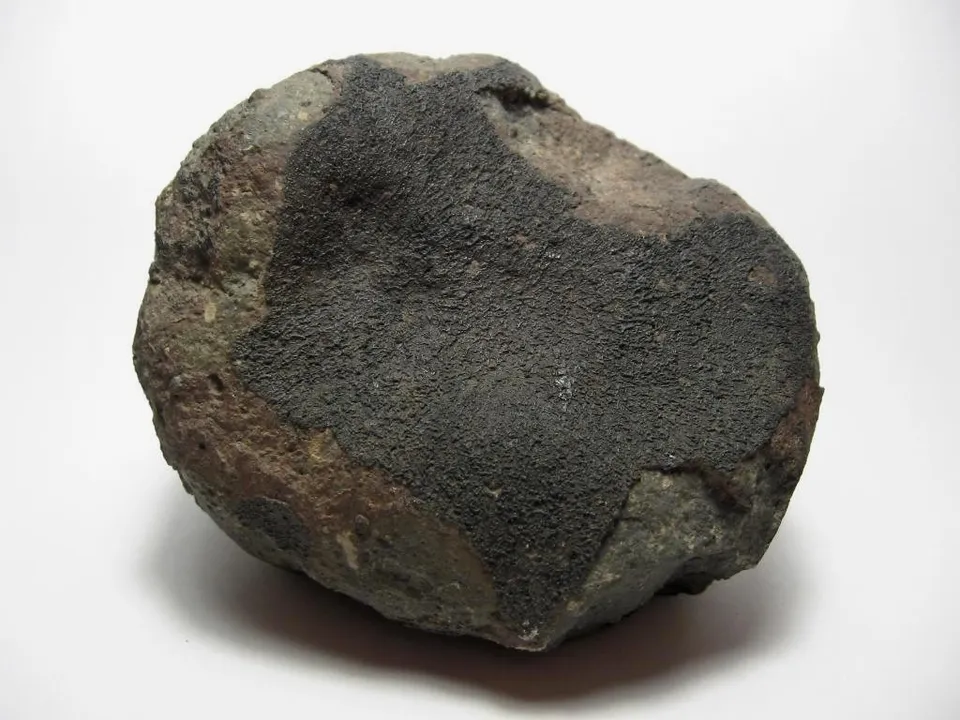
When a rock from space smashed through the roof of a house in Hillsborough, New Jersey, in July 2024, it looked at first like a freak accident. To scientists, it turned out to be a rare gift: one of the most pristine meteorites of its kind ever studied.
Because the meteorite was recovered within hours and quickly sealed away from moisture and air, it escaped the contamination that usually degrades such rocks over months or years on the ground. That head start let researchers examine its ancient chemistry in unusually fine detail, NASA said.
A primitive relic of the early solar system
The Hillsborough meteorite is a carbonaceous chondrite, a class of rock counted among the most primitive material in the solar system, little changed since the planets formed some 4.5 billion years ago. It is only the second witnessed fall of its particular, rare subtype, making it especially valuable, according to reporting on the study.
Water, salt and the chemistry of life
Peering inside, researchers found evidence that liquid water once moved through the meteorite's parent asteroid. Trapped in microscopic cracks were salty mineral deposits, left behind as ancient brines evaporated, suggesting that salt-rich water was more widespread on early asteroids than had been appreciated.
Just as striking, the rock contained amino acids and other complex organic molecules, the kind of carbon-based building blocks associated with life, alongside carbon and nitrogen chemistry similar to samples returned from the asteroids Ryugu and Bennu by recent space missions. Scientists think the briny conditions could have helped such organic chemistry develop, hinting at how asteroids became carriers of prebiotic ingredients.
Delivering the ingredients to Earth
The study, led by the meteor astronomer Peter Jenniskens of NASA's Ames Research Center with an international team, reinforces a compelling idea: that asteroids were not inert lumps of rock but active little worlds, reshaped by water and chemistry. When some of them struck the young Earth, they may have delivered carbon, nitrogen and the molecular raw materials from which life could later be built.
In that sense, the humble rock that crashed uninvited into a New Jersey home is a kind of time capsule, preserving processes that unfolded billions of years ago and across the solar system, and offering scientists another piece of the long puzzle of where life's ingredients came from.