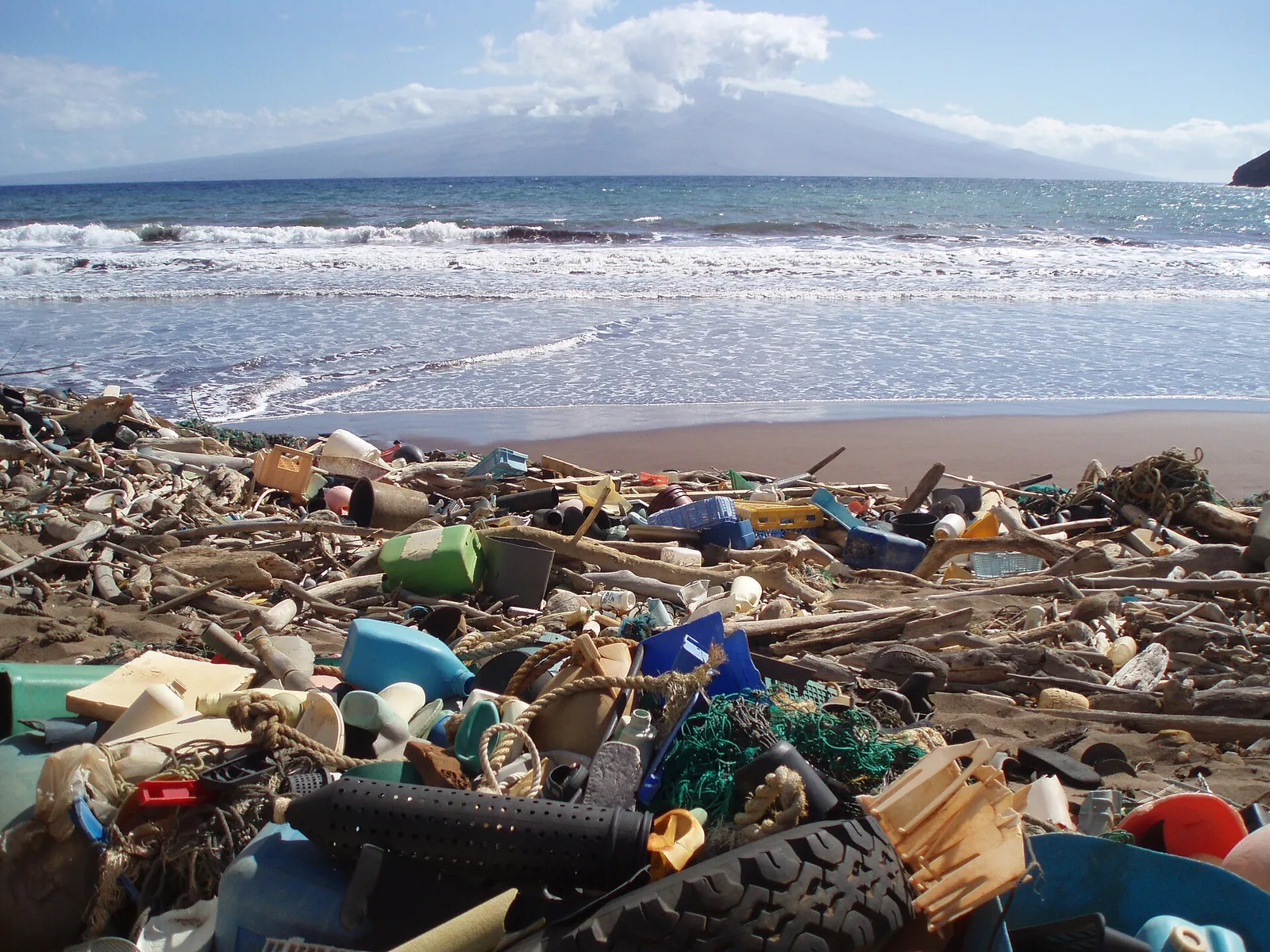
Hawaii sits in the path of a vast river of plastic. Debris drifts across the Pacific to its shores, and abandoned fishing gear — "ghost nets" — snags on its reefs. Now researchers are trying to put some of that waste underfoot, mixing it into the asphalt of the islands' roads.
Nets to roads
The work is led by the Center for Marine Debris Research at Hawaiʻi Pacific University, whose director, the environmental chemist Jennifer Lynch, runs a program nicknamed "Nets-to-Roads." Teams forecast where ocean debris will wash up, collect it, and sort the haul — focusing on polyethylene, the durable plastic in milk jugs and fishing-net fibers — before processing it into pellets that can replace some of the petroleum-based polymers normally used to toughen asphalt. The center pulls roughly 200 tons of plastic from the ocean each year, and its separate Bounty Project has removed 84 tons of large derelict fishing gear from the Pacific, according to the American Chemical Society, which featured the work at its spring 2026 meeting.
A test strip on Oahu
In 2025, in partnership with the state transportation department, the team paved sections of a residential road on Oahu — one with conventional asphalt and others using recycled plastic, including material salvaged from ocean nets, Science News reported. The researchers say the plastic binder lets the road flex slightly under heavy vehicles without cracking and has a higher melting point than standard asphalt, which can help resist rutting in the heat.
The microplastic question
The obvious worry is that a plastic road might shed microplastics into the environment — a problem that would defeat the purpose. So the team tested for it. Over months of laboratory analysis, they reported that the recycled-plastic pavement did not release more polymer than conventional pavement, with particles from ordinary tire wear far outweighing any plastic traced to the road itself. Lynch has nonetheless urged continued caution about plastics' broader health effects, and the team plans to keep monitoring.
Promise and limits
The appeal is clear: a use for waste that is otherwise expensive to landfill, and that harms reefs and wildlife if left at sea. But scientists are careful not to oversell it. Long-term durability still needs testing, and Hawaii's tropical conditions — heavy rain and ground movement from volcanic activity — differ from the mainland sites in places like Missouri and Texas that have experimented with plastic-modified asphalt using land-based waste. Plastic roads are not a fix for ocean pollution, which ultimately requires using and discarding less plastic in the first place. But as a way to divert some of what has already escaped into the sea, Hawaii's experiment offers a rare piece of good news from the front line of the plastics crisis.