A team of archaeologists says it has found and documented an ancient Maya city so remote, and so thoroughly reclaimed by jungle, that it appears to have escaped the looting that has stripped many other sites. They have named it Minanbé — "there is no path," in the Yucatec Maya language.
A city in the forest
The site sits within the Calakmul Biosphere Reserve in the Mexican state of Campeche, in a stretch of dense forest without logging tracks or trails, HeritageDaily reported. It was identified by a Mexican-Slovenian team led by the archaeologist Ivan Šprajc, of the Research Centre of the Slovenian Academy of Sciences and Arts, whose surveys of the central Maya lowlands have spanned three decades.
The researchers say airborne LiDAR — a laser-scanning technique that maps the ground beneath the tree canopy — first revealed an urban centre of roughly 15 hectares. Ground exploration, reached only after cutting through miles of forest, then confirmed plazas, palace-like and ceremonial buildings, residential terraces and an extensive system of channels and wetlands for managing water.
What they found
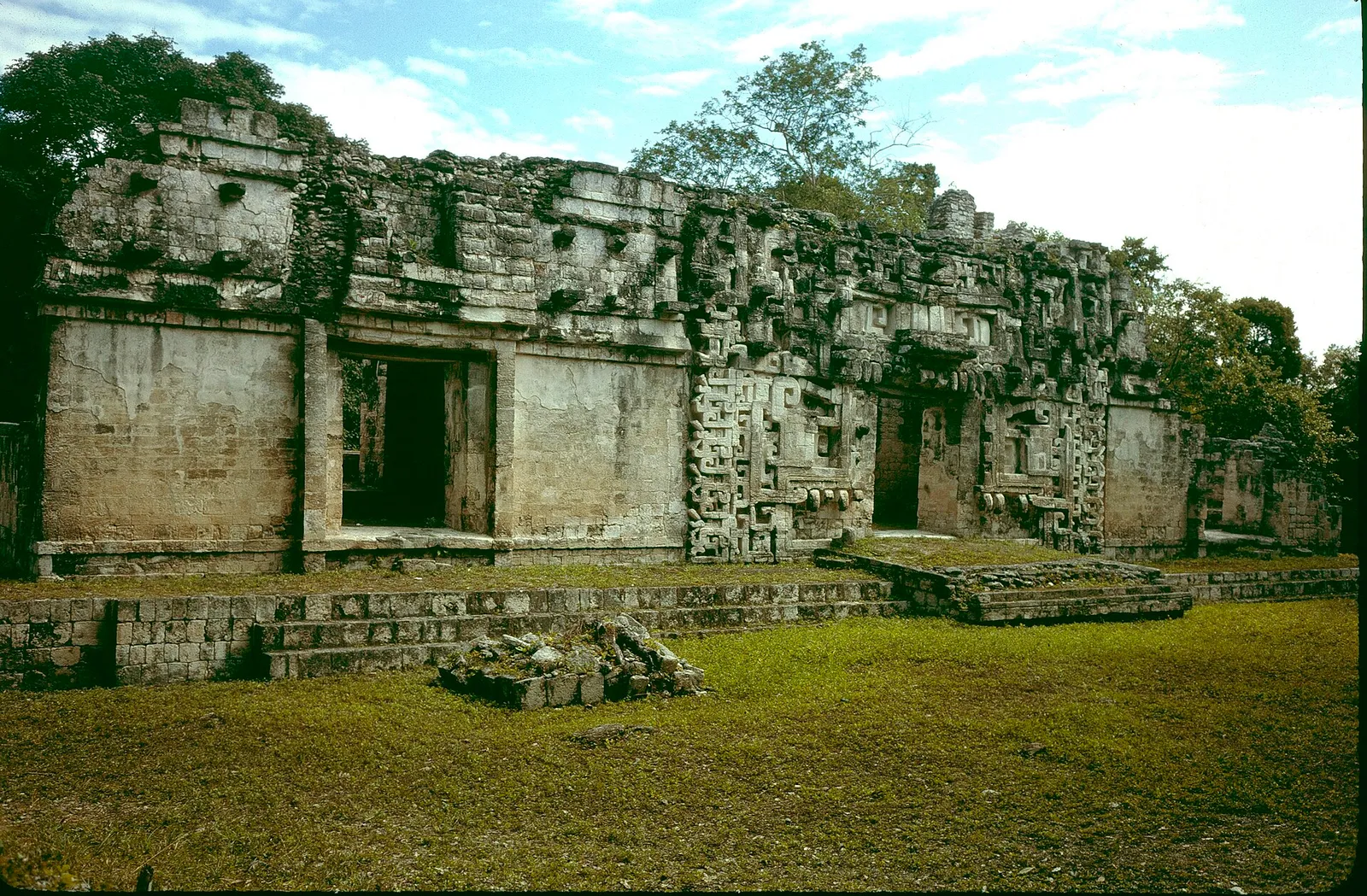
At the heart of the site stands a temple pyramid rising more than 13 metres, built in the Río Bec architectural style associated with the region. The team also documented a series of carved stone monuments — stelae and altars — several bearing hieroglyphic inscriptions and imagery of the city's rulers.
According to Smithsonian Magazine, one carved stela bears a date corresponding to 849 CE, placing it firmly in the Late Classic period, while an altar depicting a ruler carries inscriptions from the late seventh century — evidence, the researchers say, of a long period of occupation. What has struck the team most is the site's condition: Šprajc has said it is the first city his team has found in recent years with no signs of looting, its monuments left where they fell.
Why it matters
Minanbé's dates place it in the twilight of Maya power in the lowlands, in the century or so before many of the region's great cities were abandoned around 900 CE — a decline whose causes archaeologists still debate. Researchers hope that an unlooted city, with its inscriptions and architecture intact, can offer fresh evidence about how such places functioned in their final generations.
The find also underscores how much may remain hidden. As LiDAR surveys extend across the lowlands, specialists expect more sites to emerge from the forest, each with the potential to refine — or complicate — the story of one of the ancient Americas' most studied civilizations. For now, the work at Minanbé is being carried out with the involvement of Mexico's authorities, and much of the city still awaits detailed study.