A plan to build one of Scotland's largest artificial-intelligence data centres in Lanarkshire has run into growing local opposition and hard questions about its central selling point: that it will be powered by clean energy.
The project
The site, developed by the Scottish operator DataVita near Airdrie in North Lanarkshire, has been designated one of the UK government's "AI Growth Zones," a status meant to speed planning and attract investment. Backers say it represents billions of pounds of private investment and would create several thousand jobs in construction, operations and energy, and would eventually house around 500 megawatts of computing capacity for AI, Data Center Dynamics reported.
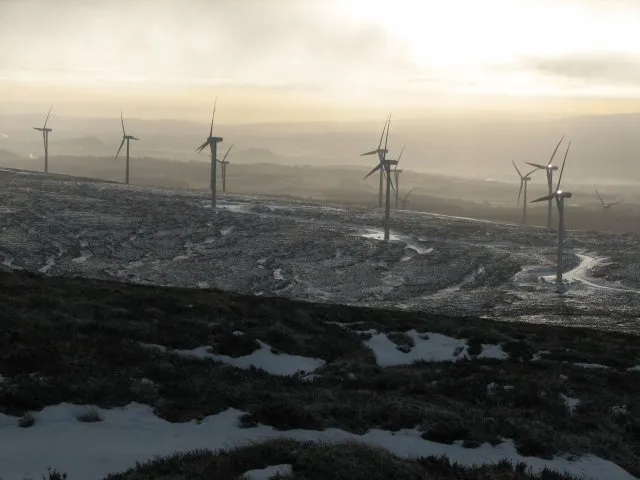
Central to its pitch is energy. The developer says the facility would be supplied by dedicated wind and solar farms, backed by large-scale battery storage, and would be "grid positive," exporting surplus clean power. It also points to efficient, closed-loop cooling designed to use very little water.
Why residents are worried
In villages around the site, that vision has met scepticism. Residents have raised concerns about the sheer scale of the development, much of it on green-belt land, and about noise, water and power use from a facility running around the clock, The Scotsman reported. Some have complained that the window to lodge formal objections is short, and campaign groups have called for a pause on large "hyperscale" data centres in Scotland while their impact is assessed.
The renewables question
The sharpest challenge is to the green-energy promise itself. Data centres need constant, uninterrupted power, and cannot simply switch off when the wind drops or the sun sets. Critics argue that when renewable output falls, such sites must draw from the national grid, which still relies on gas at times of low wind, undercutting claims of round-the-clock clean power unless matched by firm, dispatchable supply.
There are also concerns about scale. Campaigners, including the group Action to Protect Rural Scotland, have calculated that the data centres now in Scotland's planning pipeline would together demand more electricity than the country's peak winter usage, raising questions about grid capacity. A Scottish Green MSP, Ariane Burgess, has pressed ministers for clarity on what counts as "green" for these projects and how the grid would cope. Adding to the strain, the Torness nuclear plant, a major source of steady baseload power, is due to close later this decade.
The developer's and government's case
Supporters counter that the project is exactly the kind of infrastructure the country needs to compete in AI, and that its design is among the most efficient in the sector. The Scottish and UK governments have backed AI Growth Zones as a strategic priority, arguing they will bring investment and skilled jobs and can be delivered responsibly. The developer maintains its renewable and water commitments are genuine and achievable.
An unresolved test
Whether the green promises hold will depend on things not fully within any one company's control: how quickly new wind and solar capacity is built, whether the grid can be connected and expanded in time, and how regulators weigh competing demands for power. For now, the Lanarkshire scheme has become a test case for a wider dilemma, how a country with abundant wind but a stretched grid can host the energy-hungry data centres that AI requires without breaking its own climate promises, or, as one local phrase in the debate has it, trading substance for "smoke and mirrors."