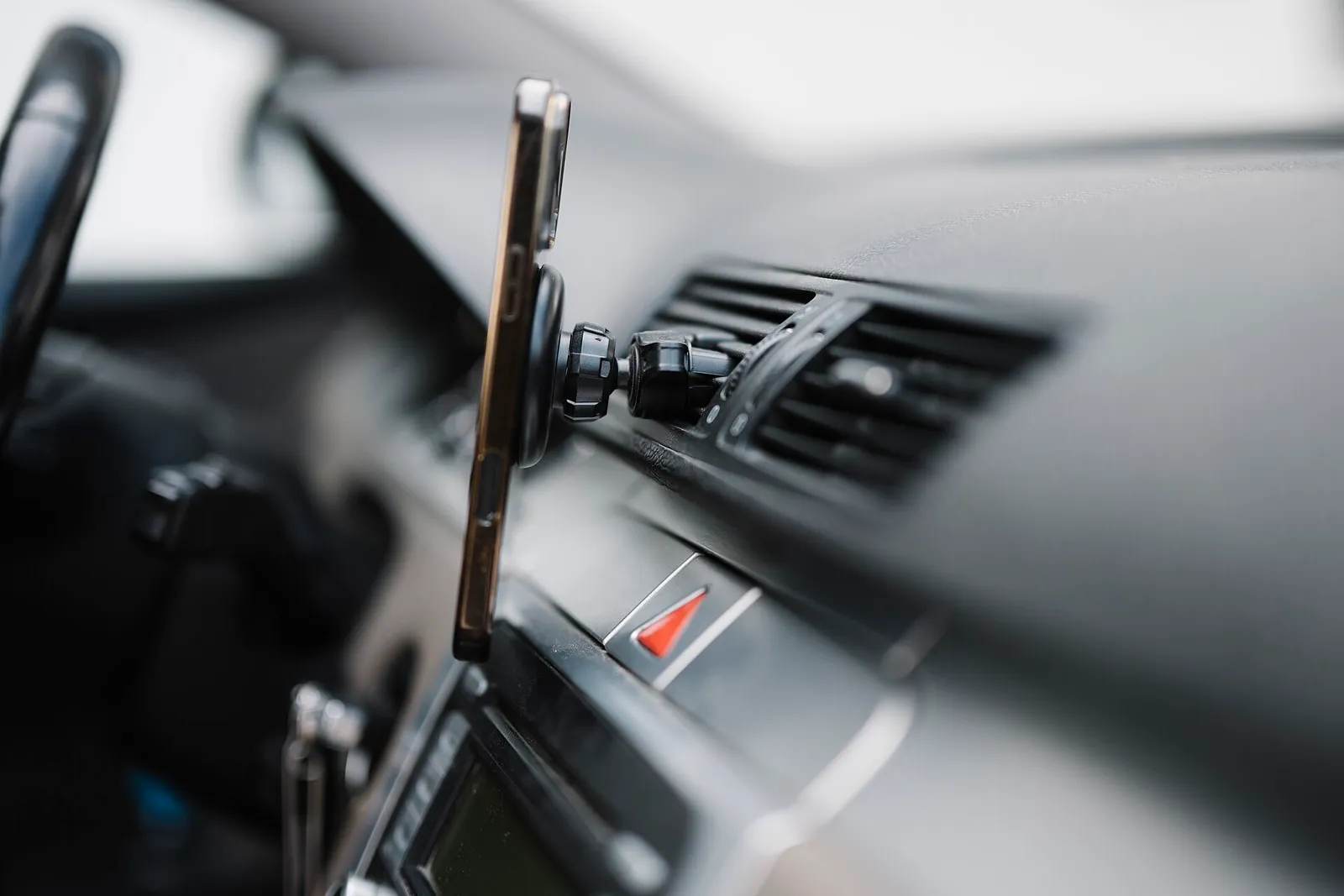
Modern cars increasingly come with a companion smartphone app that can show where the vehicle is parked, lock or unlock the doors, and flag its location on a map. It is easy to assume that, if the car were stolen, the same app would help get it back. Experts say that assumption is one drivers should not rely on, the BBC has reported.
Built for convenience, not recovery
Manufacturers' connected-car apps are designed primarily as convenience features — remote locking, climate control, finding your car in a large parking lot. They are not marketed, or engineered, as security systems that guarantee a stolen vehicle can be traced and recovered.
Crucially, seeing a dot on a map is not the same as getting a car back. An app does not automatically summon the police; the owner still has to report the theft and, in practice, hand any location information to officers who must then decide how to act. That process takes time — and time is exactly what a car thief needs.
How thieves defeat tracking
The bigger problem is that the tracking can simply be switched off. Connected-car apps depend on the vehicle's cellular and satellite-positioning signals, and those can be blocked or cut. Organized thieves are known to use signal-jamming devices, to disconnect a car's power, or to move a stolen vehicle quickly into an enclosed space — a metal container or an underground garage — where signals cannot get out.
Professional theft rings, in particular, work fast and assume a car will be tracked. Within minutes, a vehicle can be rendered invisible to its own app, stripped for parts, or prepared for export before an owner has even noticed it is gone.
What experts recommend instead
Security specialists and police tend to point drivers toward dedicated aftermarket tracking devices linked to a professional monitoring service — systems whose whole purpose is theft recovery, and whose operators are set up to work directly with law enforcement when a vehicle goes missing. That combination of a purpose-built tracker and an around-the-clock response is generally regarded as far more effective than a factory app checked by a worried owner on a phone.
Beyond electronics, the advice is unglamorous but familiar: physical deterrents such as steering-wheel locks, keeping electronic keys in signal-blocking pouches to guard against "relay" attacks, and parking securely. The point is layering — no single measure is foolproof, and thieves adapt.
The takeaway for drivers
None of this means connected-car apps are useless. They can provide a last-known location, help a driver confirm a car has actually been taken, and support a police report. But treating the app as a safety net that will reliably recover a stolen vehicle is a mistake.
The sober message from those who study car crime is to understand what the technology in the glovebox app can and cannot do — and, for anyone genuinely worried about theft, to back it up with tools built for the job rather than trusting a feature designed mainly to make everyday driving a little more convenient.