Stretching across nine South American countries, the Amazon is a forest of superlatives — and one that scientists increasingly describe as a planetary asset under strain. Its fate, researchers say, is bound up not only with the future of the region but with the global climate and water cycles that sustain life far beyond its borders.
A forest the size of a continent
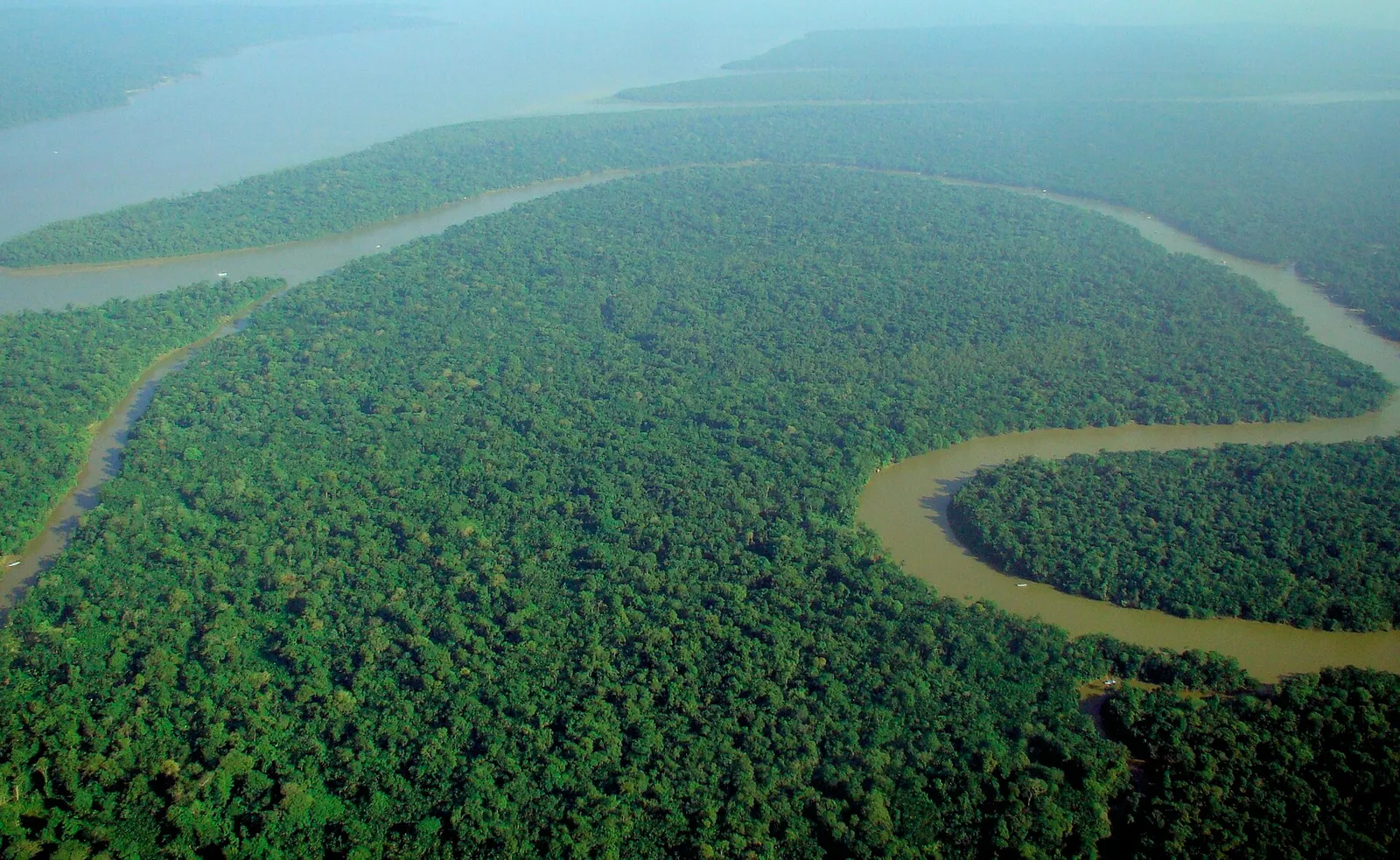
The Amazon is the largest tropical rainforest on Earth, covering roughly 5.5 to 6 million square kilometers. It spans nine countries and territories, with about 60 percent lying in Brazil, followed by Peru and Colombia, and smaller shares in Bolivia, Ecuador, Guyana, Suriname, Venezuela and French Guiana, according to the World Wildlife Fund. The wider Amazon basin drains an area of around 7 million square kilometers, and the river system carries more water than the next several largest rivers combined.
Roughly a tenth of life on Earth
The Amazon is among the most biodiverse places on the planet. WWF estimates it is home to about 10 percent of all known species on Earth, including more than 1,400 mammals, some 1,500 birds and roughly 2,500 fish species, alongside tens of thousands of plant species. New species are still catalogued regularly. That concentration of life is one reason conservationists treat the forest as irreplaceable: a loss here cannot be recovered elsewhere.
Carbon store and 'flying rivers'
The Amazon plays an outsized role in the global carbon and water cycles. Its forests and soils hold a large share of the planet's land-based carbon, making the region a critical buffer against climate change. The forest also drives weather: through transpiration, it releases enormous volumes of water vapor that form atmospheric currents known as "flying rivers." According to the World Economic Forum, these moisture flows carry rainfall across the basin and toward southern South America, helping water farmland in Argentina, Paraguay, Uruguay and southern Brazil.
The carbon picture, however, is no longer simple. For decades the Amazon was treated as a net carbon sink, absorbing more than it released. A 2021 study published in the journal Nature by Luciana Gatti and colleagues, based on nearly 600 aircraft measurements between 2010 and 2018, found that southeastern Amazonia has shifted to acting as a net carbon source. The authors linked the change to deforestation, fire, warming and a more intense dry season, with the eastern Amazon hit harder than the west — a finding the US National Oceanic and Atmospheric Administration summarized as deforestation and warming flipping part of the forest "from carbon sink to source." Scientists caution this applies to specific, hard-hit regions rather than the whole basin, and debate continues over the Amazon's overall carbon balance.
The 'tipping point' debate
Much of the concern centers on the idea of a tipping point — a threshold beyond which large areas of rainforest could degrade into drier savanna or shrubland. The Brazilian Earth-system scientist Carlos Nobre is among the most prominent voices on the hypothesis.
Nobre and colleagues have revised their warnings over time. As reported by Yale Environment 360, early work suggested savanna conversion if deforestation passed about 40 percent of the original forest; later analyses, accounting for interactions between deforestation, fire and warming, lowered the estimate to roughly 20 to 25 percent of forest loss combined with significant additional warming. The science is not settled: some researchers question whether a single basin-wide tipping point exists at all, while still warning the forest is degrading. newsparlor takes no position; the figures above are contested projections, not certainties.
The people of the forest
The Amazon is not wilderness alone. It is home to hundreds of Indigenous peoples and many local and traditional communities, living across thousands of recognized Indigenous territories. Research consistently finds that Indigenous-managed lands tend to show lower deforestation rates, and many Indigenous leaders have become central figures in debates over the forest's future. How to balance development, livelihoods and conservation remains a deeply contested question across the nine Amazon nations — one with consequences, scientists stress, that reach the entire planet.