The US government has set up a panel of scientists to take a more rigorous look at reports of unexplained things in the sky — the sightings popularly known as UFOs, and now officially called unidentified anomalous phenomena, or UAP. Despite some of the excitable framing around it, the effort is being cast as a scientific and national-security exercise, not a search for aliens.
What was announced
A UAP science advisory council has been formed to advise US agencies on how to study such sightings, DefenseScoop reported. It brings together researchers from a range of fields — including physics, oceanography, data science and others — to analyze available data and recommend how better evidence might be gathered.
The council is chaired by the Harvard astrophysicist Avi Loeb, a prominent and, to some of his peers, polarizing figure known for arguing that the possibility of extraterrestrial technology should be taken seriously, PBS NewsHour reported. The group is to work with unclassified data and has said it intends to share findings publicly.
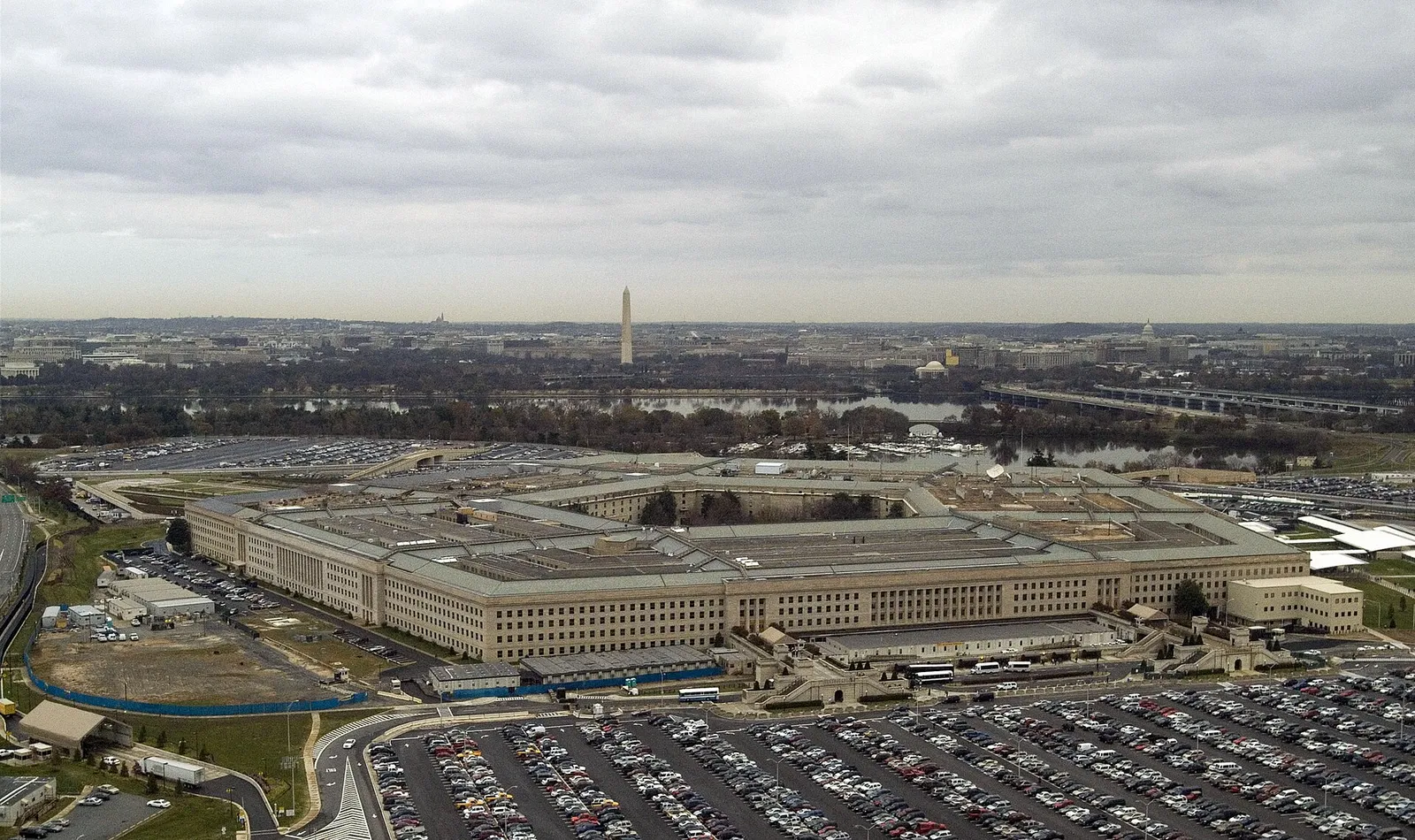
The panel is one part of a broader, years-long shift in how the US government treats the subject — from something largely dismissed to a topic handled by dedicated offices, including the Pentagon's All-domain Anomaly Resolution Office (AARO) and studies involving NASA.
Studying the unexplained — not confirming aliens
The crucial context is what the official investigations have actually found. Both NASA and the Pentagon have said there is no evidence that UAP are of extraterrestrial origin.
NASA's independent study, published in 2023, concluded there was no evidence that the phenomena are alien in nature, while stressing that poor-quality data makes many sightings hard to analyze. The Pentagon's AARO has likewise said it has found no evidence of extraterrestrial beings, activity or technology, and that the cases it manages to resolve typically turn out to have ordinary explanations — balloons, drones, satellites, birds or conventional aircraft, often misjudged in size, distance or speed.
The point of a science panel, its backers argue, is precisely to bring that kind of disciplined analysis to a field long dominated by grainy videos and speculation: to work out what can be explained, flag the small number of cases that genuinely can't, and improve how data is collected in the first place.
A divided reception
The council's creation has drawn skepticism from within science. Some researchers have questioned the choice of leadership and worry that giving a prominent platform to more speculative ideas could blur the line between careful inquiry and hype. Others argue that applying serious scientific scrutiny to UAP is overdue, and that the real value lies in better instruments and open data rather than in any particular theory.
Loeb himself has said the panel intends to start from the assumption that sightings are human-made or natural before considering more exotic possibilities — an approach in keeping with the scientific principle of favoring the simplest explanation.
Why it matters
Stripped of the tabloid framing, the initiative reflects a genuine tension: there is real interest, including in the military and Congress, in explaining sightings that pilots and sensors sometimes record, both for flight safety and to rule out foreign surveillance. At the same time, officials have been careful not to feed expectations of alien contact that the evidence does not support.
For now, the science panel's task is narrow and earthbound: to look hard at the data, say clearly what is and isn't known, and resist the pull — in either direction — of a subject that has always invited more belief than proof.