
If you have ever wondered how you would cope with a year cut off from the world, NASA has an unusual proposition. The US space agency is recruiting volunteers to live for roughly 12 months inside a simulated Mars base — a way of testing, here on Earth, how humans withstand the strain of a real mission to the Red Planet, Scientific American reported.
Mars, built in Houston
The experiment is run under a program called CHAPEA — short for Crew Health and Performance Exploration Analog — at NASA's Johnson Space Center in Houston, according to the agency. Volunteers live inside "Mars Dune Alpha," a roughly 1,700-square-foot habitat that was 3D-printed to resemble the kind of base astronauts might one day build on Mars, with areas for sleeping, working, exercising and growing food.
A crew of four shares the space for the duration of the mission. The point is not comfort but realism: the habitat is deliberately spare, and daily life is shaped by the same limits a Mars crew would face.
Life inside the simulation
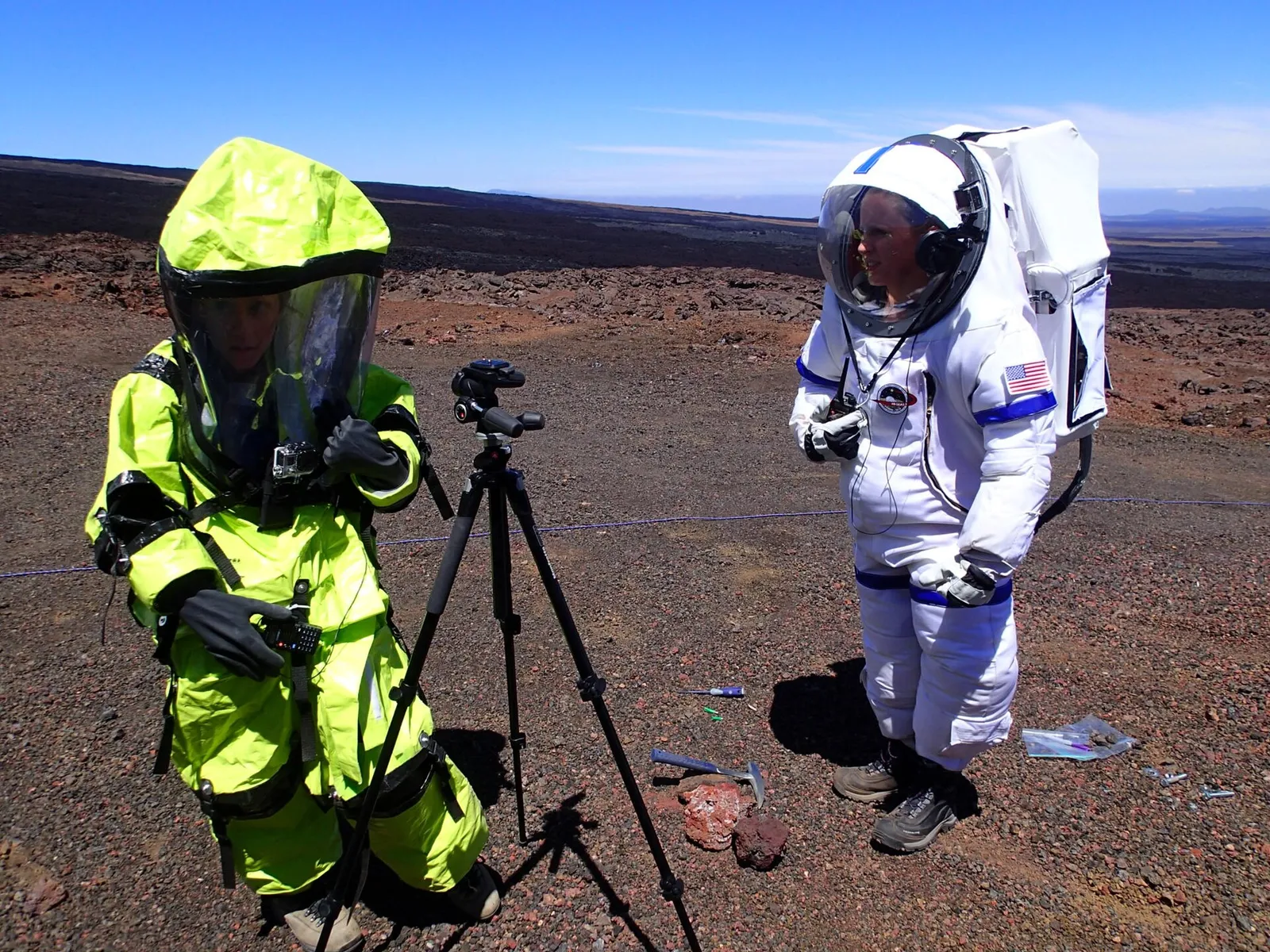
Those constraints are what make the exercise scientifically useful. Participants carry out simulated tasks, including "Marswalks" in spacesuits, tend crops, maintain equipment and cope with resource shortages and deliberately engineered problems. Crucially, their communications with the outside world are subject to a delay of around 22 minutes each way — the real lag caused by the vast distance between Earth and Mars, which makes anything like a normal back-and-forth conversation impossible.
The result is a controlled way to observe how isolation, confinement and stress affect people's minds, bodies and ability to work as a team over many months.
Who can apply
NASA is selective about who it lets in. Applicants generally need to be US citizens or permanent residents, within a set age range, non-smokers, and proficient in English. Beyond that, the agency looks for a background in science, technology, engineering or mathematics — typically a relevant graduate degree with professional experience, or an equivalent mix of education, work or piloting experience — and candidates must pass thorough medical and psychological screening. It is, in effect, a stripped-down version of the astronaut selection process.
Why NASA is doing this
The purpose is to reduce the enormous risks of a real crewed Mars mission before anyone leaves Earth. A round trip to Mars would keep a crew away for a very long time, in cramped quarters, far from rescue and unable to talk to home in real time. Understanding how people fare under those conditions — who thrives, what breaks down, how teams hold together — is information NASA wants to gather on the ground, where the stakes are lower and the lessons can still be applied.
CHAPEA is not the agency's first such effort; an earlier CHAPEA crew completed a full year inside the habitat, and the program has continued with further missions, building a store of data on the human side of deep-space travel.
A hard year, for a reason
For the volunteers, the appeal is a chance to contribute directly to the goal of putting humans on Mars — and, perhaps, the sheer challenge of it. For NASA, each mission is another piece of a long puzzle: rockets and habitats can be engineered and tested, but the human beings inside them are harder to model. Locking a few willing people in a mock Martian base for a year is, oddly enough, one of the more grounded ways to prepare for one of humanity's most ambitious journeys.