She painted the same things over and over — a moon, a bare tree, a cat, an owl, a lone woman who was usually a version of herself — and she called herself the queen of it all. Decades after her death, Gertrude Abercrombie is being rediscovered, and a major touring exhibition is making the case that this singular Chicago artist deserves a wider audience.
A comprehensive retrospective
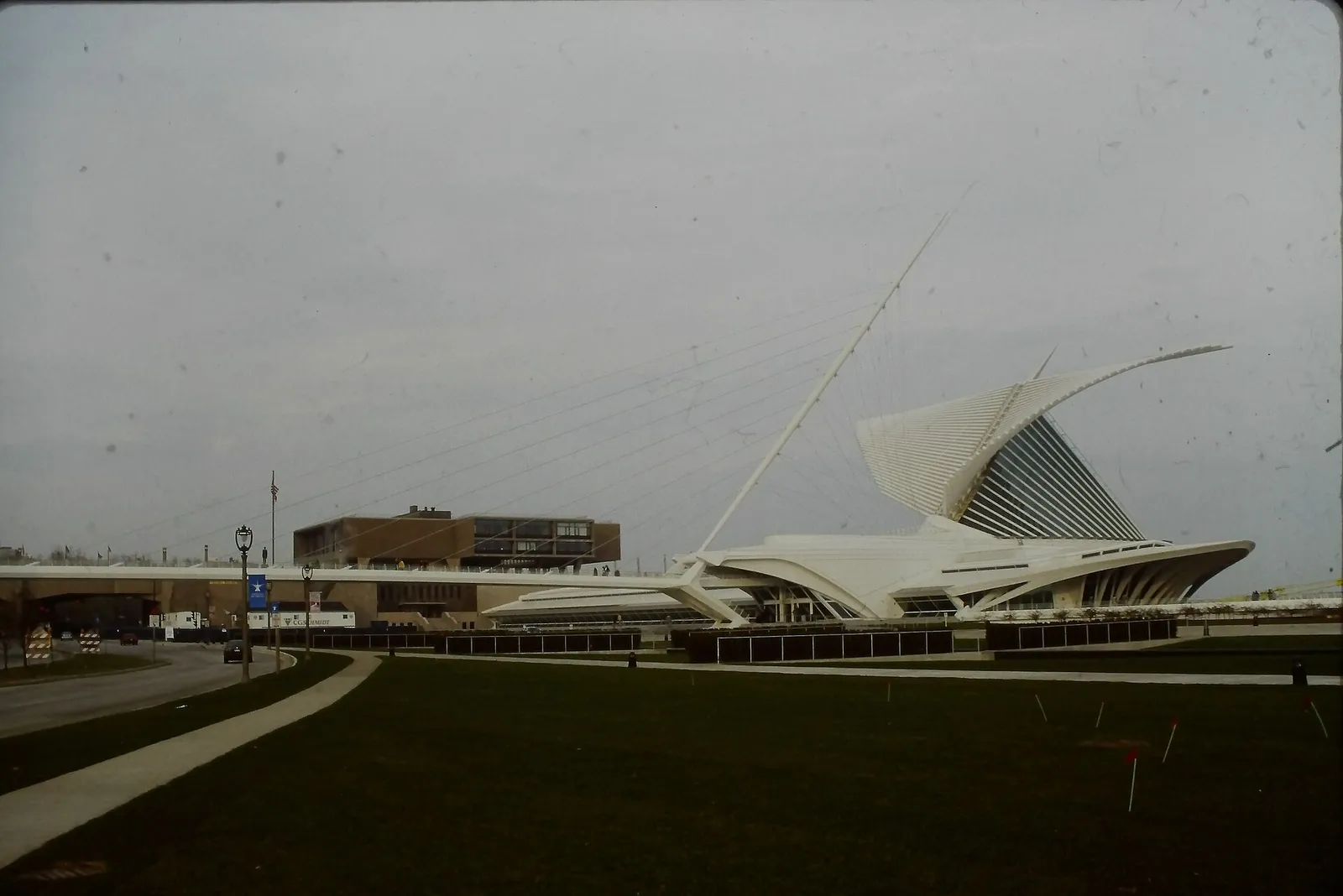
The exhibition, Gertrude Abercrombie: The Whole World Is a Mystery, is billed as the most comprehensive survey of her work ever assembled, bringing together nearly 80 paintings from museums and private collections, according to the Milwaukee Art Museum, where it is on view from March 27 through July 19, 2026 — its only Midwest stop. Co-organized by the Carnegie Museum of Art and the Colby College Museum of Art, the show has traveled nationally as part of a broader revival of interest in an artist long treated as a regional footnote.
The work
Abercrombie, who lived from 1909 to 1977, made small, meticulous, strangely quiet paintings. Her palette is muted, her spaces sparse, and her recurring symbols — moons, doors, shells, owls, cats, forking paths and a solitary female figure — recur like the props of a private mythology. "It is always myself that I paint," she once said, and her canvases read as a kind of running self-portrait: enigmatic, melancholy, and touched with dry humor.
Though she is often described as a surrealist, she worked largely apart from the movement's European centers, developing her own idiom in the American Midwest. That independence is part of what has drawn new admirers, who see in her work a personal vision that resists easy categorization.
Queen of a Chicago salon
Abercrombie was as celebrated in her lifetime for her presence as for her paintings. From her home in the Hyde Park neighborhood of Chicago, she presided over a lively bohemian salon, styling herself "the queen" of the scene. Her house became a gathering place for artists, writers and, above all, musicians.
Her ties to jazz were deep and genuine. She counted Dizzy Gillespie, Charlie Parker, Sarah Vaughan and Sonny Rollins among her friends and guests, and her circle linked the visual-art world to the music that was reshaping American culture at mid-century. That connection — the painter of silent, moonlit rooms who kept company with the loudest innovators in jazz — is central to the mystique now being revisited.
Why the revival now
Interest in overlooked 20th-century women artists has grown steadily, and Abercrombie has been a natural beneficiary: distinctive, prolific and quotable, with a biography that blends the eccentric and the poignant. In Milwaukee, the retrospective is paired with a companion display exploring her connections to regional artists, underlining how a figure once seen as a local curiosity is being reframed as a distinctive American voice.
For a painter who insisted the whole world was a mystery, the timing has a certain fitting irony: the woman who made a career of quiet, private images is, at last, being looked at closely by a very public crowd.