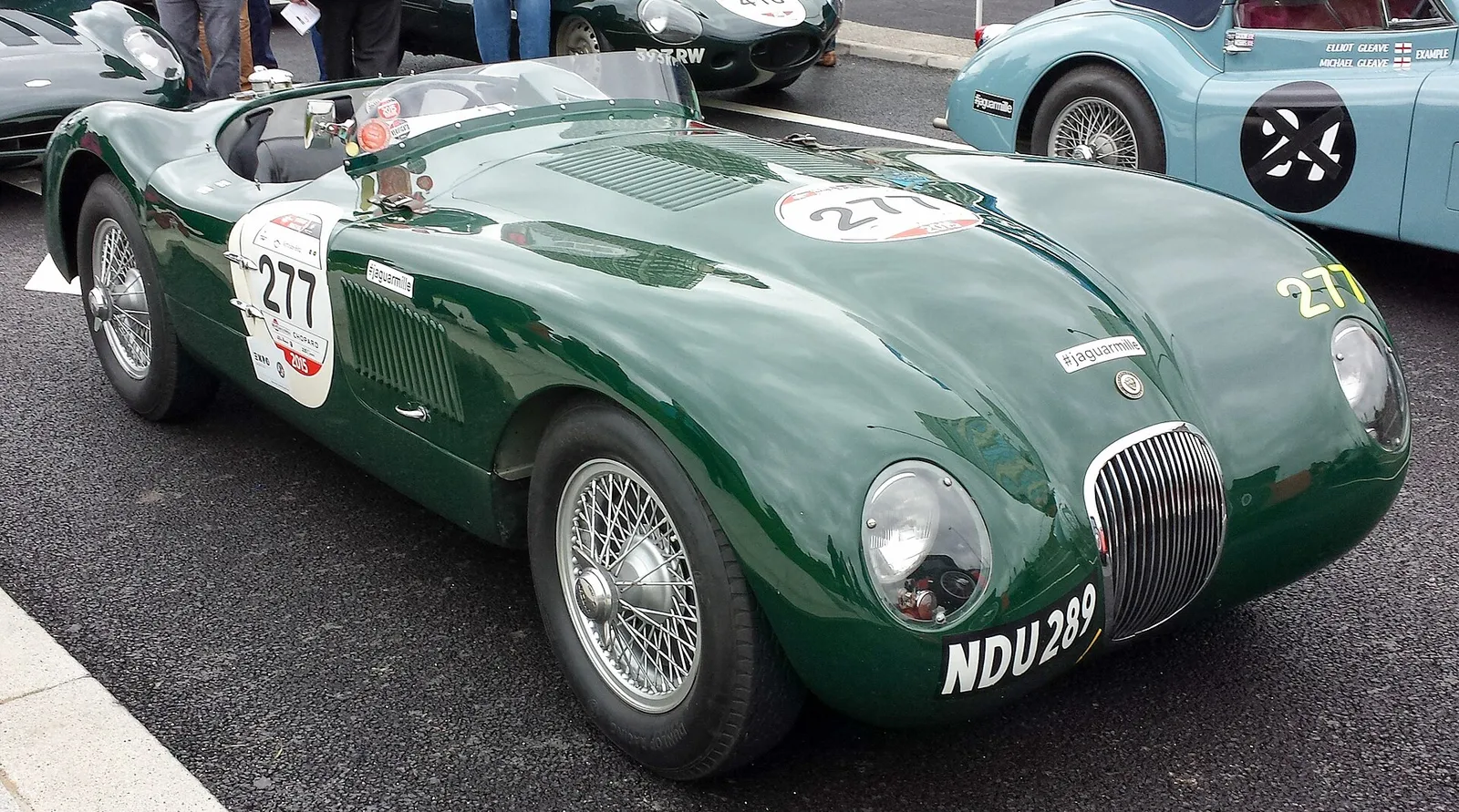
For most of its history, Jaguar has been shorthand for a certain kind of beauty: long bonnets, flowing curves and the low, sculptural elegance of cars like the E-Type. Now the British marque is tearing up that playbook. As it relaunches as an all-electric luxury brand, Jaguar is trading its curves for something far more angular and confrontational — a gamble that has divided admirers and critics alike.
A dramatic new concept
The clearest statement of the new direction is the Type 00, a concept car Jaguar unveiled at Miami Art Week in December 2024, as the company announced. Long, low and deliberately theatrical — shown in vivid "Miami Pink" and "London Blue" — the Type 00 is meant to embody a design philosophy Jaguar calls "Exuberant Modernism": bold shapes, strong lines and a refusal to blend in with the wave of smooth, aerodynamic electric cars now on the road.
The concept followed a wholesale rebrand, including a new logo, launched under the slogan "Copy Nothing" — a phrase drawn from Jaguar's founder, Sir William Lyons, who said a Jaguar should be "a copy of nothing."
Curves out, boldness in
The shift in styling is stark. Where classic Jaguars leaned on sensuous, rounded forms, the new look emphasizes dramatic proportions and sharp, sculptural surfaces. Supporters see a brand willing to take a genuine risk in a market where many electric cars look interchangeable, arguing that standing out is exactly the point for a luxury maker.
Critics are less convinced. The 2024 rebrand — with abstract, model-free advertising imagery — drew a wave of online mockery, and some longtime enthusiasts fear Jaguar has severed itself from the heritage that made it desirable in the first place. The debate cuts to a familiar tension for luxury brands: how far to reinvent without alienating the customers who valued the old identity.
The business behind the redesign
The redesign is not just an aesthetic choice; it is a survival strategy. Jaguar has been repositioning sharply upmarket, aiming to become a maker of expensive, low-volume electric cars rather than chasing the mainstream. As part of that reset, it wound down its older model range, effectively stepping back from the market to relaunch — a bold and risky pause that leaves little room for the reinvention to fail.
Jaguar has said its first new production car will be an electric four-door grand tourer, built in the United Kingdom, with the reimagined lineup arriving from around 2026. That car, and the reaction it draws, will be the real test of whether the "Copy Nothing" bet pays off.
A high-stakes gamble
Jaguar's move is far bolder than the cautious, evolutionary electrification most rival luxury brands have pursued. If the reinvention lands, the company could establish itself as one of the more distinctive names in high-end electric cars. If it misfires, the dramatic break with its past could prove costly for a brand that traded for decades on being effortlessly, unmistakably itself.
For now, the curves are gone, and the argument over what should replace them is very much alive. The verdict that matters most — from the affluent buyers Jaguar is chasing — is still to come.