
For decades, people in scattered places around the world have reported hearing a low, persistent drone that nobody around them can detect. It is usually noticed indoors, and usually at night. Estimates put the share of the population who report it at somewhere between 2 and 4 percent.
The phenomenon has attracted a great deal of speculation, much of it pointing outward: industrial machinery, gas pipelines, distant traffic, military installations. A study published in PLOS One argues that for most people who hear it, the source is considerably closer.
What the researchers did
Bonifaz Baumann, Andrej Voss, Carlos Jurado and Markus Drexl of the Norwegian University of Science and Technology tested 28 people in Germany who reported hearing an unexplained hum or buzz, as summarized by ScienceDaily. The paper appears in PLOS One with the DOI 10.1371/journal.pone.0326818.
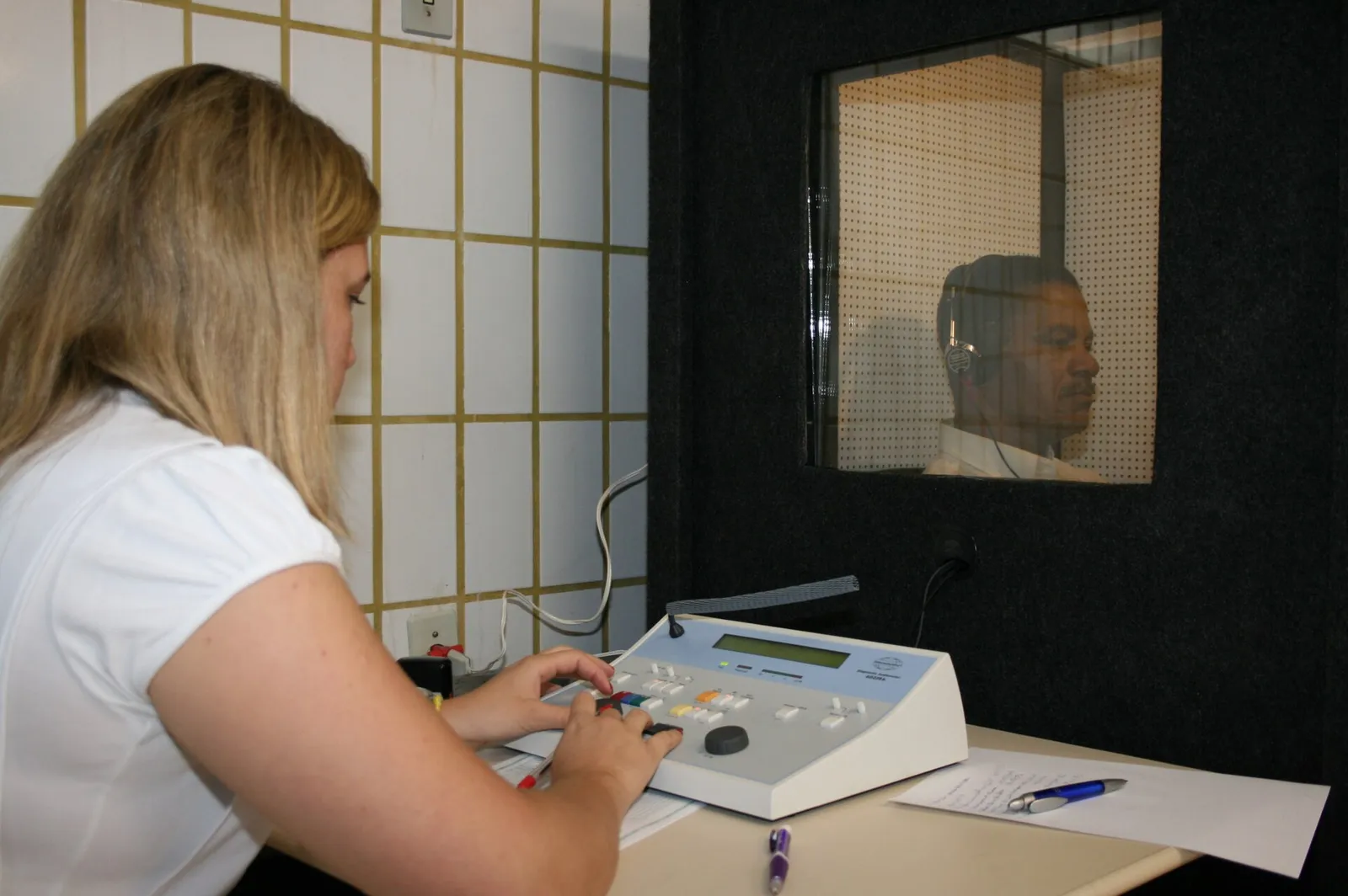
They were testing two things. First, whether these people have unusually sensitive hearing at low frequencies, which would mean they are picking up real sound that others cannot. Second, whether their inner ears produce measurable oto-acoustic emissions, sounds generated by the ear itself, which can sometimes be recorded with a microphone in the ear canal.
What they concluded
The researchers' conclusion is that subjective tinnitus in the low-frequency range is often the cause.
Tinnitus is commonly described as ringing, and is commonly assumed to be high-pitched. The argument here is that it can also present at the low end, where it sounds less like a ring and more like a distant engine, a generator, or a truck idling somewhere out of sight.
They allow that a small number of people may genuinely have unusually acute low-frequency hearing and may be detecting something real. But that is presented as the minority case rather than the general explanation.
The caveats
Twenty-eight participants is a small sample, and the authors say so. A study of this size can indicate where an explanation lies; it cannot establish prevalence or rule out that different people are experiencing different things under the same description.
The authors also note that very small variations in hearing threshold may let some people detect sound within an extremely narrow frequency band, at levels that standard clinical hearing tests are not designed to pick up. That is an important qualification: it means "your hearing test came back normal" does not by itself settle whether someone is hearing something real.
Why this matters to the people affected
For anyone who has spent years being told the noise is imaginary, "it is tinnitus" may not sound like good news. But it is a meaningfully different claim from "there is nothing there."
Tinnitus is a real, measurable and common condition, and low-frequency tinnitus is a recognized clinical description rather than a way of dismissing a complaint. Framing the Hum as a hearing phenomenon rather than an environmental mystery points toward audiological assessment and established management approaches, instead of a search for a machine that may not exist.
It also does not close the file. Environmental low-frequency noise is real, is generated by real infrastructure, and has been documented as a nuisance in specific locations. This study addresses people whose hum has no identifiable external source, which is a narrower group than everyone who has ever complained about a distant drone.