
Colombia's approach to the coca that feeds the world's cocaine supply has, for a decade, rested on a reasonable-sounding proposition: pay farmers to grow something else. The results argue that the proposition is harder than it sounds.
The trend line
The United Nations Office on Drugs and Crime found that coca cultivation in Colombia reached 253,000 hectares in 2023, a 10 percent rise on the previous year. Potential cocaine production rose far faster, by 53 percent, to 2,664 metric tons. It was the tenth consecutive year in which the production estimate had gone up.
Cultivation expanded in 16 of the 19 departments that grow coca. Two of them, Cauca and Nariño, accounted for half of the increase.
Those are the most recent full figures published by the UNODC, and they describe the situation the current substitution effort inherited.
What was promised
After the 2016 peace accord, Colombia launched a national programme to substitute illicit crops, known by its Spanish initials PNIS. More than 99,000 rural families signed up, agreeing to destroy their coca in return for monthly payments, technical help and support in reaching legal markets.
The programme did not deliver at the scale promised. Funding tightened, administration bottlenecked, and political priorities shifted with a change of government in 2018. Many families who uprooted their coca never received the payments they had been promised, leaving them without either the old income or the new one.
Reporting by Mongabay also found that the programme did not achieve its environmental aims: deforestation increased in areas covered by it rather than falling.
The damage was not only financial. A household that destroys its only reliable crop on a government promise, and then watches the promise go unmet, is unlikely to accept the same offer twice. That is the deficit any later scheme starts from.
The arithmetic at the farm gate
The core problem is that coca is not merely more profitable. It is more certain.
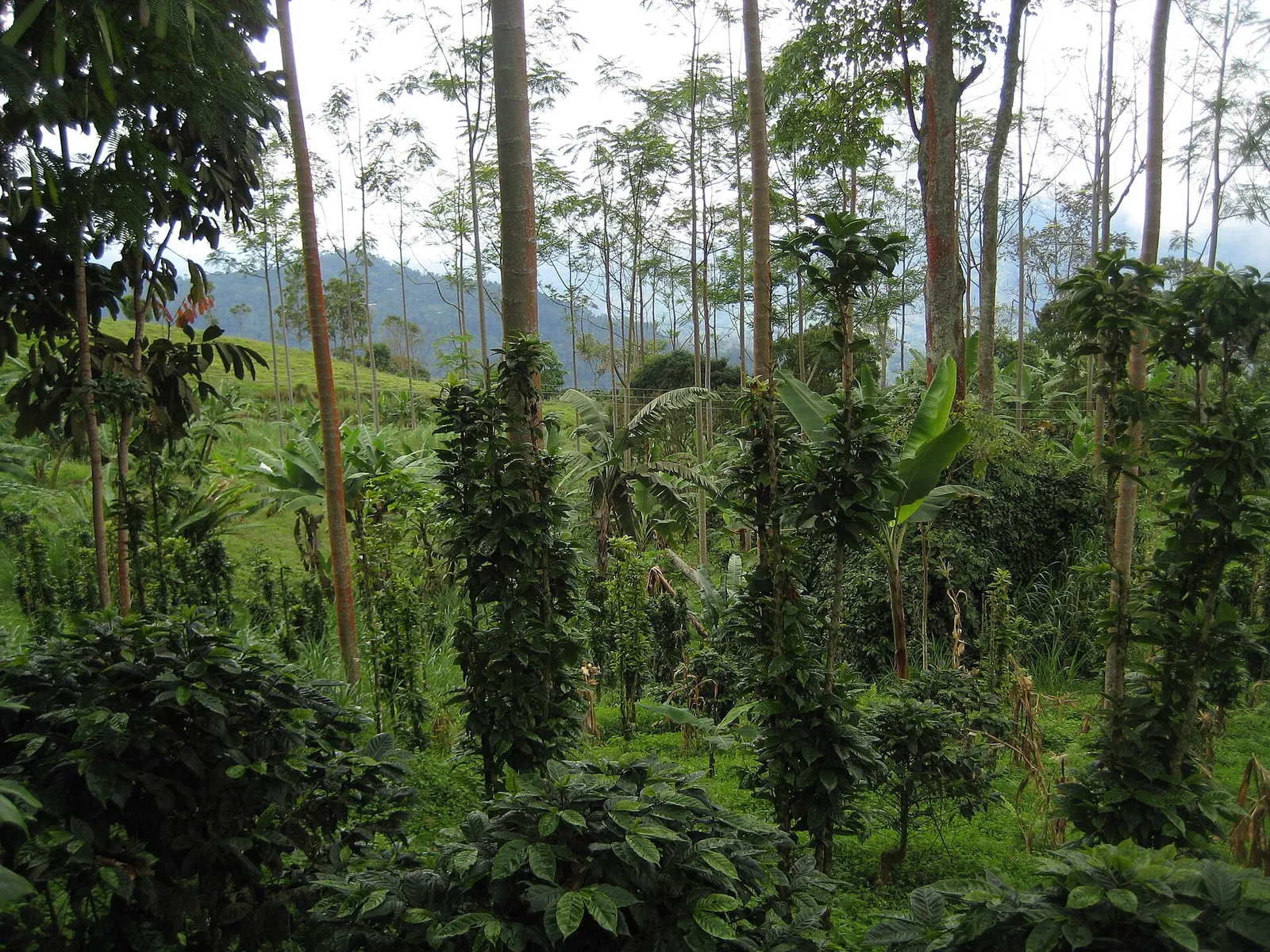
Al Jazeera, reporting in June 2025 on a smaller successor scheme, followed growers in Cauca being paid to switch to coffee and described the gap they face. Coca provides a steady monthly income because the armed groups that control the territory collect the harvest and pay for it at the farm gate.
Coffee and cocoa offer no such guarantee. The bushes take years to yield. The farmer must then get the crop to a buyer, over roads that in much of rural Cauca are poor or absent, and accept whatever the market pays on arrival.
A grower weighing the two is not choosing between legality and crime so much as between a buyer who comes to the farm and a buyer who may not exist.
What would have to change
The lesson most often drawn by researchers is that substitution fails when it is treated as a transaction rather than as rural development. Paying a family to remove a plant addresses the symptom. Roads, storage, extension services, reliable buyers and physical security address the reason the plant was planted.
There is also a cost to trying. Killings of community leaders who promote substitution have risen sharply, according to Mongabay's reporting, because armed groups financed by cocaine have a direct interest in preventing growers from leaving.
Colombia continues to run substitution programmes, now at smaller scale and with tighter targeting. Whether they work will depend less on the size of the payment than on whether the state can offer what the traffickers already provide: someone who turns up to buy the harvest.