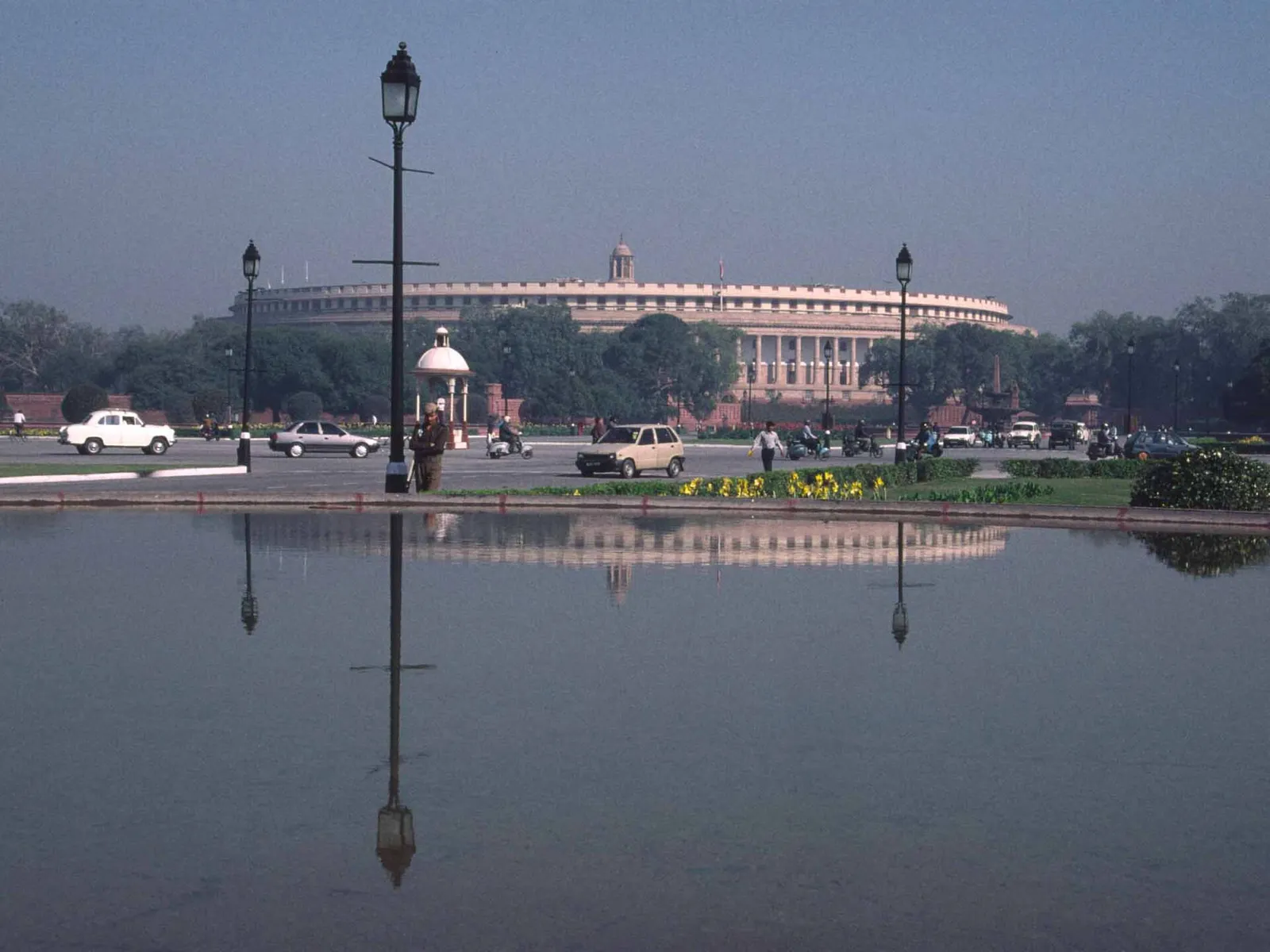
Thousands of demonstrators attempted to march on India's parliament in New Delhi on Monday. Police had refused permission for the march, and when protesters tried to push through security barricades, officers used tear gas and struck some demonstrators with batons. Al Jazeera put the crowd at more than 10,000. Police disputed some accounts of what happened at the barricades.
It was the largest mobilization yet by a movement that did not exist three months ago.
An insult, repurposed
The movement began with a remark. In May, India's chief justice, Surya Kant, referred to unemployed young people as "cockroaches" and "parasites of society."
Rather than contest the word, a group of young Indians adopted it. Within a day, a digital strategist named Abhijeet Dipke had registered the Cockroach Janta Party, a name that puns on the governing Bharatiya Janata Party. Supporters began describing themselves as cockroaches.
The tactic is familiar from protest movements elsewhere: taking the term used to dismiss you and wearing it, which removes its usefulness as an insult. Al Jazeera reported that the group gathered hundreds of thousands of sign-ups and a very large social media following within its first week.
The first street protest, at Jantar Mantar in central Delhi in June, drew hundreds. Monday's drew a crowd more than an order of magnitude larger.
What the anger is actually about
The grievance is specific, and it is not really about the chief justice.
India's competitive examinations are the mechanism by which millions of young people attempt to reach secure professions. The stakes are extreme: for medical training, millions of candidates compete for a comparatively small number of college places.
This year the national medical entrance examination was cancelled after investigators found that material circulating before the test matched the real questions. Candidates who had prepared for a year were told the exam was void. Further concerns were raised about the marking of school board examinations.
For a system whose legitimacy rests entirely on being impartial, a leak is not a procedural failure. It means that some candidates bought what others studied for.
The movement's demands have widened accordingly. Alongside the resignation of the education minister, Dharmendra Pradhan, the protesters are calling for changes to how examinations are run, independent audits of the private agencies that administer them, and compensation for the families of students who died by suicide after the leaks.
The government's position
The government has not conceded.
Mr Pradhan has refused to resign and, according to Associated Press reporting, has accused the protesters of acting against the country's interests. Other ministers have acknowledged that students have legitimate concerns while maintaining that there is no need for negotiations with the movement.
Prime Minister Narendra Modi has said his government is working toward youth-led development. A spokesman for the movement dismissed that as evasion, arguing that the prime minister has not addressed the leaks or the student deaths directly.
The government's broader position is that the examination system is being reformed and that the cancellation of a compromised exam demonstrates the system working rather than failing.
Why this is awkward for the government
The protests are a rare sustained public challenge to Mr Modi's government, and the reason is the composition of the crowd.
These are not, for the most part, opposition activists. They are examination candidates, graduates and gig workers, and their complaint is that a system they were told to trust did not hold up. That is difficult to characterize as partisan agitation, which is the usual response to street protest.
An indefinite sit-in has continued at Jantar Mantar since June, joined at one point by the environmental activist Sonam Wangchuk, who began a hunger strike. Opposition parties, rights groups and some public figures have expressed support.
Whether the movement can convert attention into policy is unresolved. What it has already demonstrated is that a grievance about administrative competence, rather than ideology, can mobilize very large numbers of young Indians quickly.