

The conflict between the United States and Iran widened again over the weekend, with the American military announcing the death of a third service member in a matter of days and Washington ordering a fresh round of airstrikes on Iranian targets.
Three deaths in four days
The US military said a service member was killed in Iraq on Saturday during what it described as the controlled detonation of a downed Iranian drone. The announcement came a day after a separate attack in Jordan.
In that earlier assault, Iranian forces struck US military positions in Jordan, killing two American service members and leaving a third missing, according to US Central Command. Four others were treated for injuries and later discharged. Remains found on Sunday were being examined in connection with the missing service member.
By the military's own count, 17 US service members have been killed since the war began.
Washington strikes back
President Trump ordered retaliatory airstrikes on Iran, which the Pentagon said were intended to degrade Iran's capacity to threaten commercial shipping and to punish the Islamic Revolutionary Guard Corps units it blamed for the attack on American forces. US forces targeted command centers, air defense sites and missile and drone facilities.
Defense Secretary Pete Hegseth said the deaths "only stiffen our resolve."
Iran's account of the campaign's toll is very different. The Iranian government has said that at least 50 people were killed and more than 500 injured in US strikes this month, and accuses Washington of hitting civilian infrastructure including bridges, desalination plants and power stations. Iran has itself been reported to have struck civil infrastructure in neighboring Gulf states. Newsparlor has not independently verified the casualty figures given by either government.
A collapsed understanding
The two governments reached a memorandum of understanding in June, but it has since broken down, and each side blames the other.
Iran's Supreme Leader, Ayatollah Ali Khamenei, said the Trump administration's signature on the agreement was "worthless" and warned that Iran had "unforgettable lessons in store" for the United States. An Iranian negotiator has said Tehran now considers its commitments under the memorandum suspended, citing what it calls American violations.
Washington's position is that Iran broke the understanding first by attacking commercial shipping in the Strait of Hormuz. Mr Trump declared the agreement void on July 7.
The chokepoint
The most consequential front is the Strait of Hormuz, the narrow waterway through which roughly a fifth of the world's oil and liquefied natural gas normally passes.
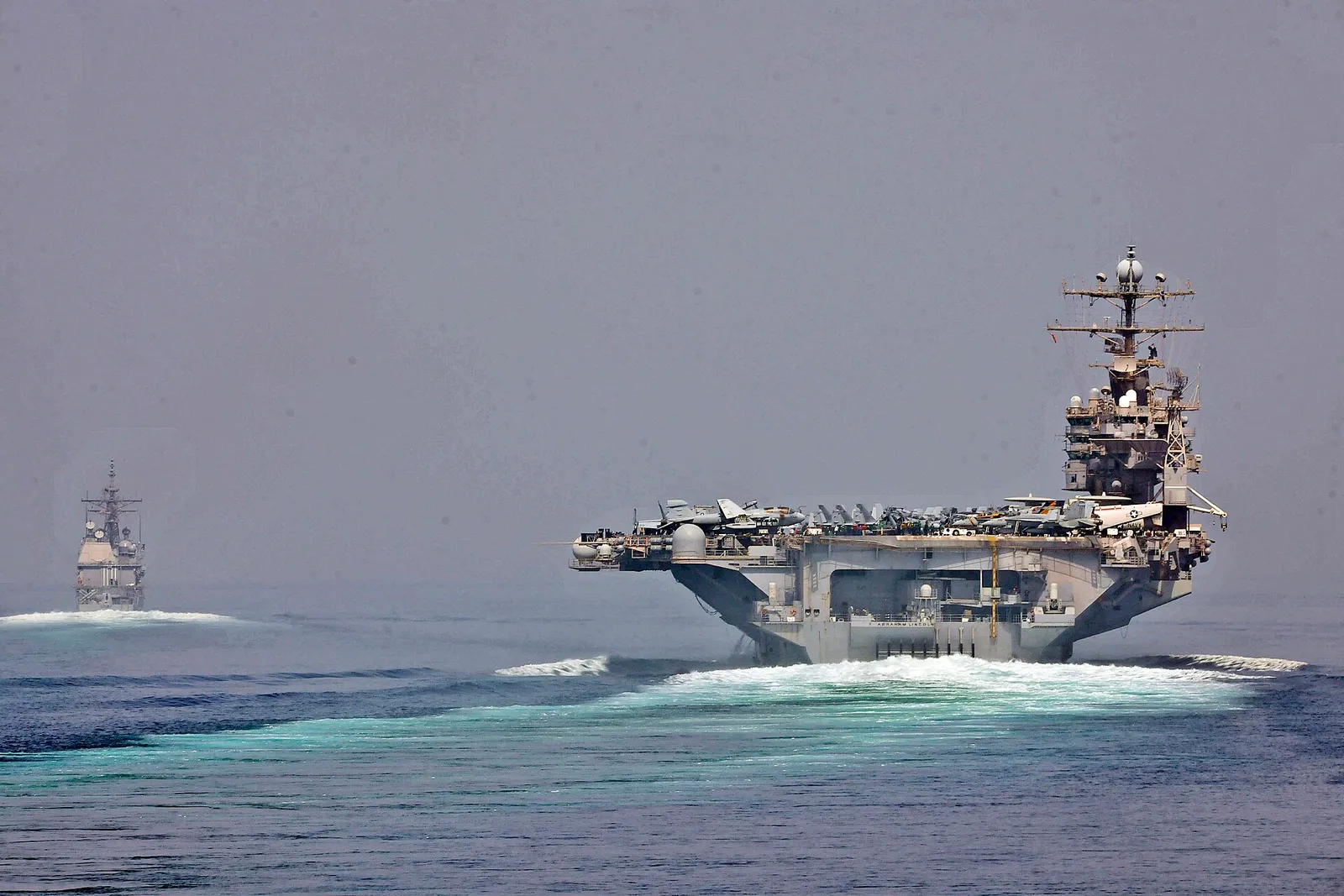
Iran has declared the strait closed and demanded that vessels use a northern route through its territorial waters. The United States has reimposed a naval blockade and says it is keeping the passage open by force.
Traffic has not stopped entirely. US officials reported that more than 8 million barrels of oil transited Hormuz in a single day with military escort, even as fighting continued. But the volume of shipping has fallen sharply, and the disruption has pushed crude prices sharply higher, with Brent approaching $90 a barrel.
No visible exit
The present escalation grew out of a campaign that began in late February, when the United States and Israel launched coordinated operations against Iranian targets. Since then the pattern has been consistent: an attack, a retaliation, and a further hardening of positions on both sides.
Neither government has publicly set out terms it would accept for a halt. Both are reinforcing their military postures in the Gulf.