For decades, exploding stars have been astronomers' most trusted yardstick for measuring the cosmos. Now a wave of new data — and a clever way to read it — could make them sharp enough to probe the universe's deepest mystery.
Cosmic measuring sticks
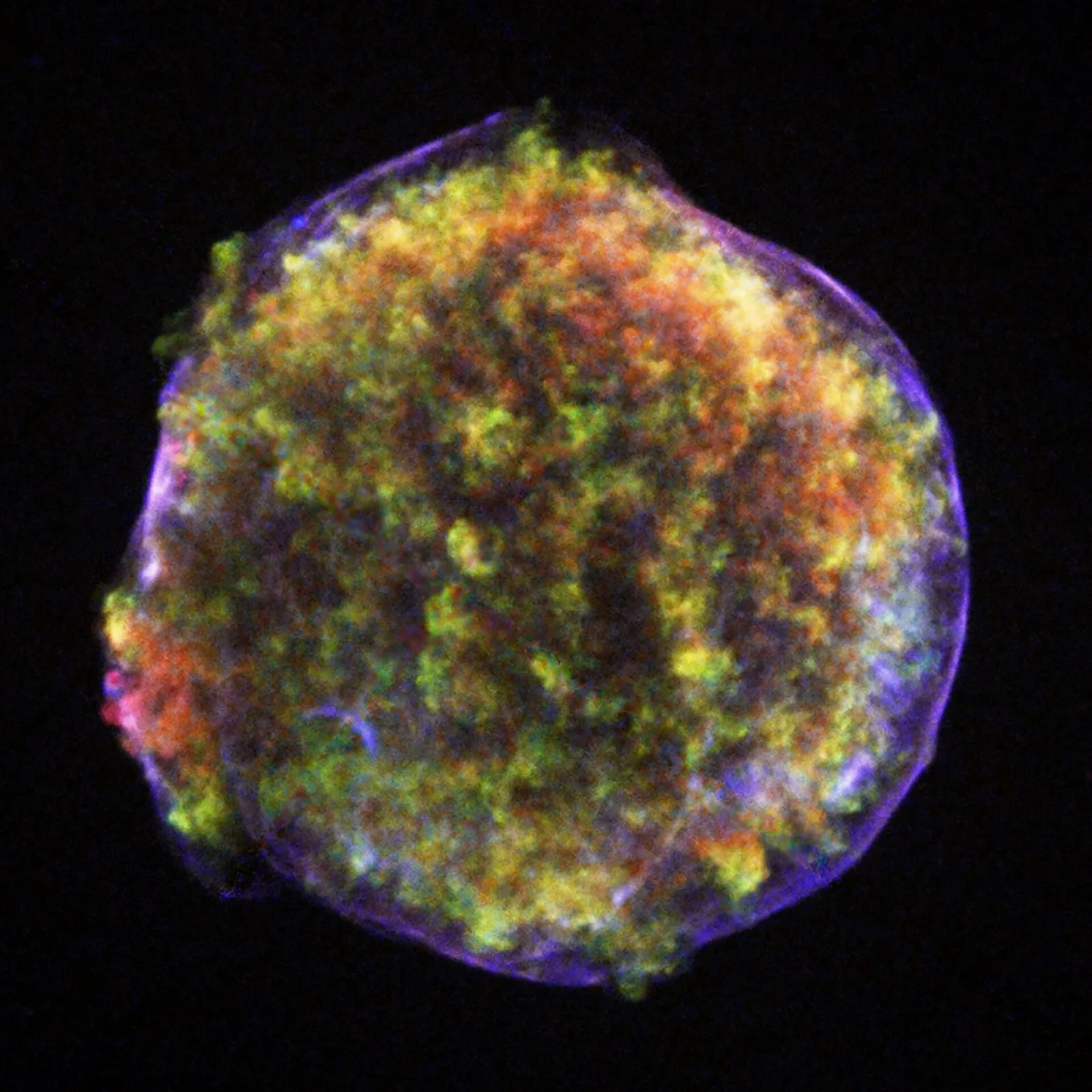
A particular kind of stellar explosion, the Type Ia supernova, detonates with a remarkably consistent brightness, which lets astronomers use it as a "standard candle": compare how bright it truly is with how bright it looks from Earth, and you can work out how far away it is. It was precisely these explosions that revealed, in the late 1990s, that the expansion of the universe is not slowing but speeding up — a Nobel Prize-winning discovery that gave rise to the idea of dark energy, now thought to make up around 70% of everything in the cosmos.
The puzzle deepening
What dark energy actually is remains physics' great unsolved problem. The simplest picture treats it as a constant — Albert Einstein's "cosmological constant," an unchanging property of empty space. But recent results from the DESI survey have hinted that dark energy might instead be weakening over cosmic time, a finding that, if confirmed, would force a rewrite of the standard model of cosmology. Settling the question requires mapping far more supernovae, across far more of cosmic history, than astronomers have ever had.
A flood of data — and an AI to read it
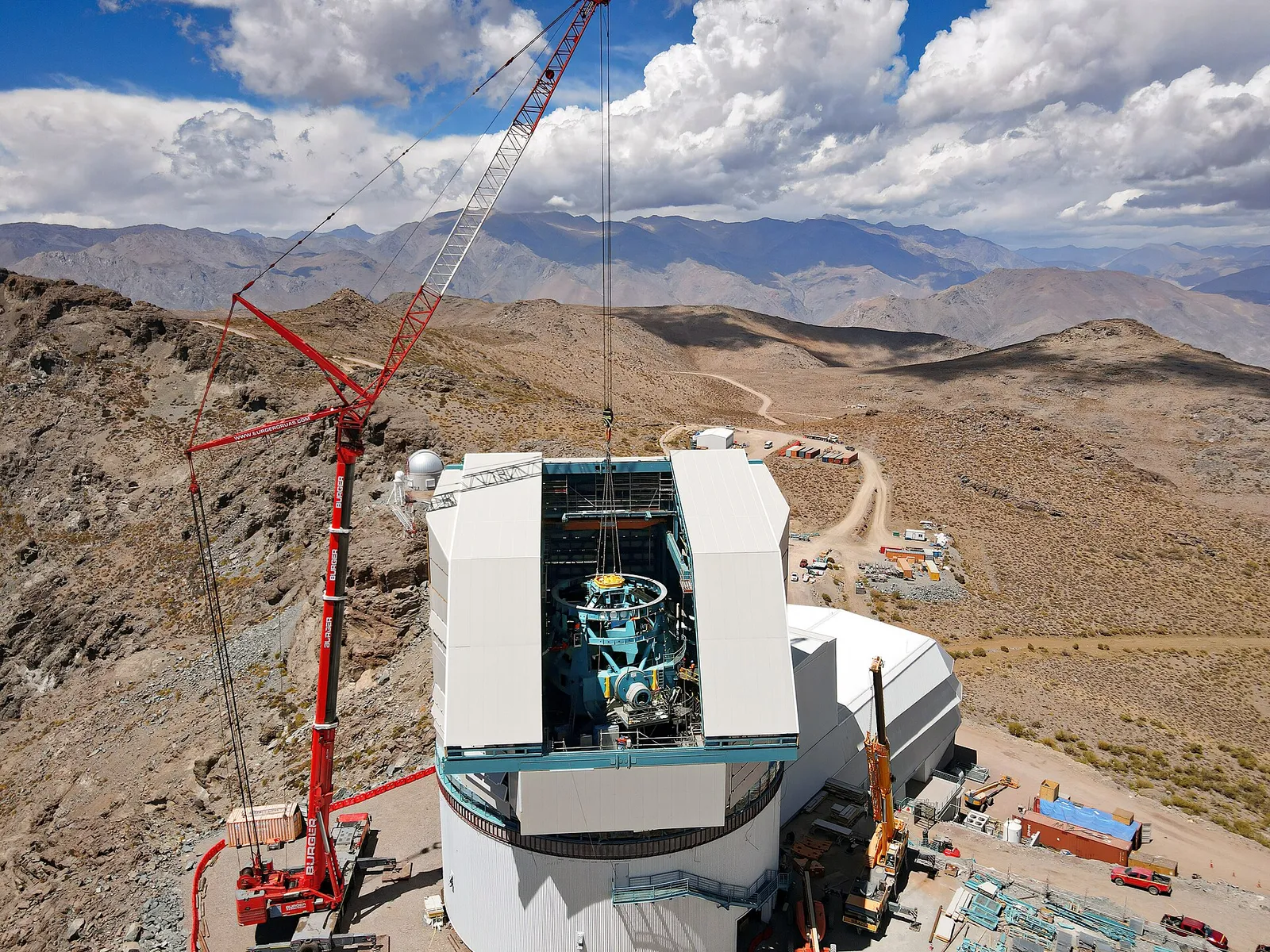
That flood is coming. The Vera C. Rubin Observatory in Chile, now beginning a decade-long survey of the southern sky, is expected to detect supernovae in vast numbers — but roughly 99% of them will be captured only as images, without the detailed spectra that astronomers have traditionally relied on to nail down distances.
To exploit that, researchers at the Institute of Cosmos Sciences at the University of Barcelona have developed a method called CIGaRS, published in Nature Astronomy. Rather than studying each supernova in isolation, it uses "simulation-based inference" — training neural networks on simulated universes — to model the explosions together with their host galaxies and the dust between, and to extract cosmological information from images alone. According to the team, the approach could tighten constraints on dark energy by up to a factor of four compared with traditional techniques.
Early days
The researchers caution that these are early, simulation-based results; the real test will come when the method is turned loose on actual Rubin observations. Cosmology has a long history of surprises hiding in large datasets. But if it works, the coming years could see millions of exploding stars deliver an answer to a question that has unsettled physicists for a quarter-century: whether dark energy is steady and eternal, or slowly changing — and, with it, what kind of fate awaits the universe.