
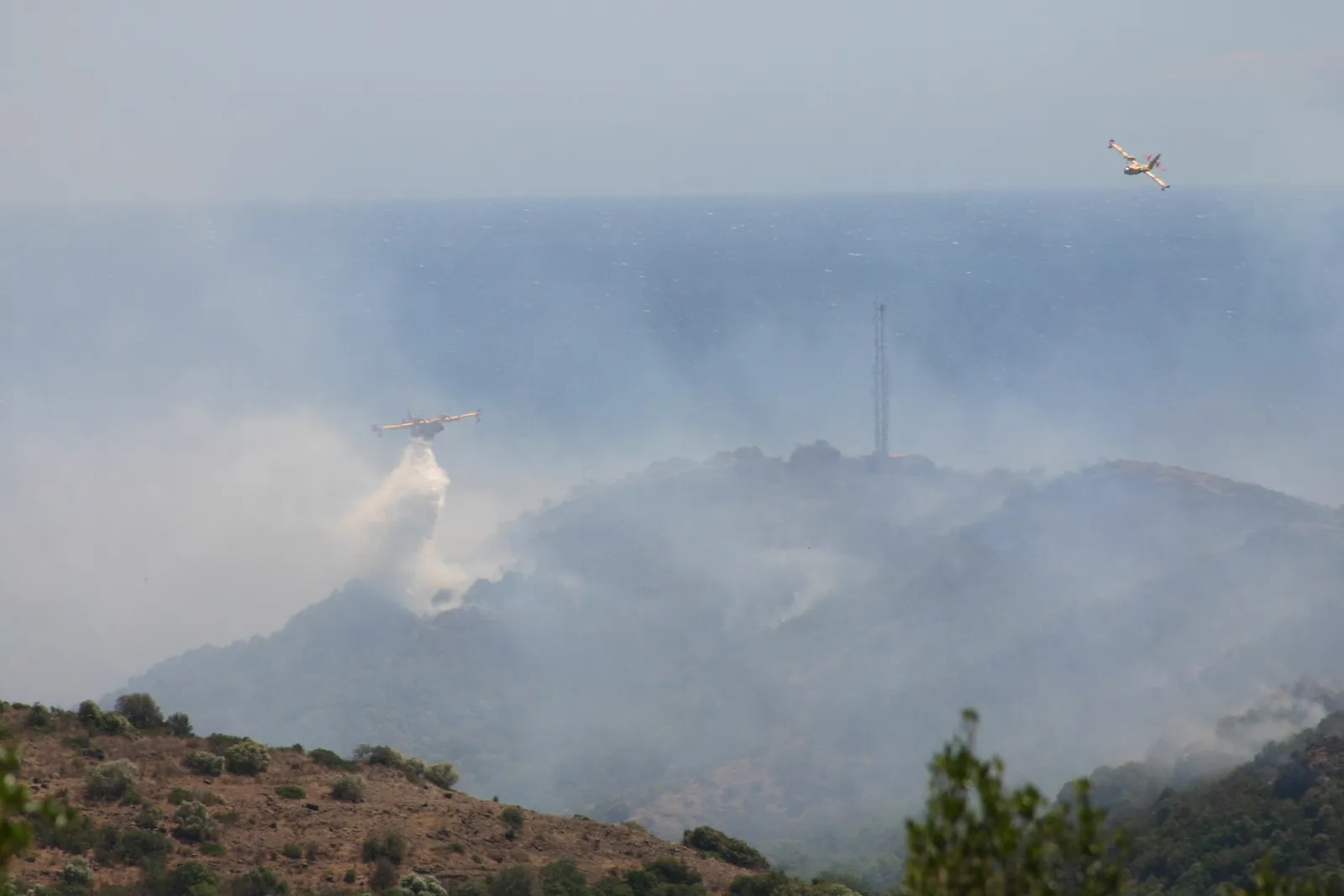
Serbia is fighting wildfires with help from two directions at once. Four Black Hawk helicopters sent by Romania, Slovakia and the Czech Republic are working over the Deliblatska Pescara nature reserve near Belgrade, while a Russian Ilyushin Il-76 water bomber has been deployed to the Stolovi range in the country's southwest, Al Jazeera reports.
Aircraft have dropped 168 tonnes of water in total, 126 of them on Deliblatska Pescara and 42 on Stolovi. The Stolovi fire has been brought under control. The reserve near Belgrade has been burning for weeks.
The president's own explanation
Aleksandar Vucic put the dual request plainly: "The very second we realised that our own forces were no longer sufficient, we immediately requested urgent assistance from Russia and the European mechanism."
That sentence is the story in miniature, and it is worth reading without cynicism. Serbia is a candidate for EU membership that has maintained close ties with Moscow, a position it has held through considerable pressure from both directions. In an emergency, that posture produces exactly this: two sets of aircraft from two blocs over the same country in the same week.
Whether it is a diplomatic balancing act or simply a government calling everyone with a water bomber is not something the source settles, and the two are not mutually exclusive.
The mechanism, and the reciprocity
Serbia made a formal request on Friday to the EU Civil Protection Mechanism, which lets non-member states draw on pooled emergency resources. Germany and Romania have sent firefighting teams and vehicles, with a German ground team due by Monday.
Earlier in the season Serbia sent a firefighting helicopter and crew to Spain. That is how the mechanism is designed to work: countries contribute when they can spare capacity and draw on it when they cannot, and the season moves across Europe rather than hitting everywhere at once.
The wider fire season
The fires are not confined to Serbia. A blaze near Strumica in North Macedonia damaged at least one home. A fire on the Bosnia and Croatia border spread across 16km and closed the main road to Dubrovnik.
Ivica Dacic, the interior minister, called conditions "extremely difficult", with more than 400 personnel deployed each day. An unusually hot, dry summer has left the ground primed, and strong winds have at times overwhelmed the aircraft, which cannot fly usefully in the conditions that spread fires fastest.
What we could not establish
We could not establish the total area burned, whether anyone has been killed or injured, how many people have been evacuated, or how the fires started. We verified this account from a single publication.