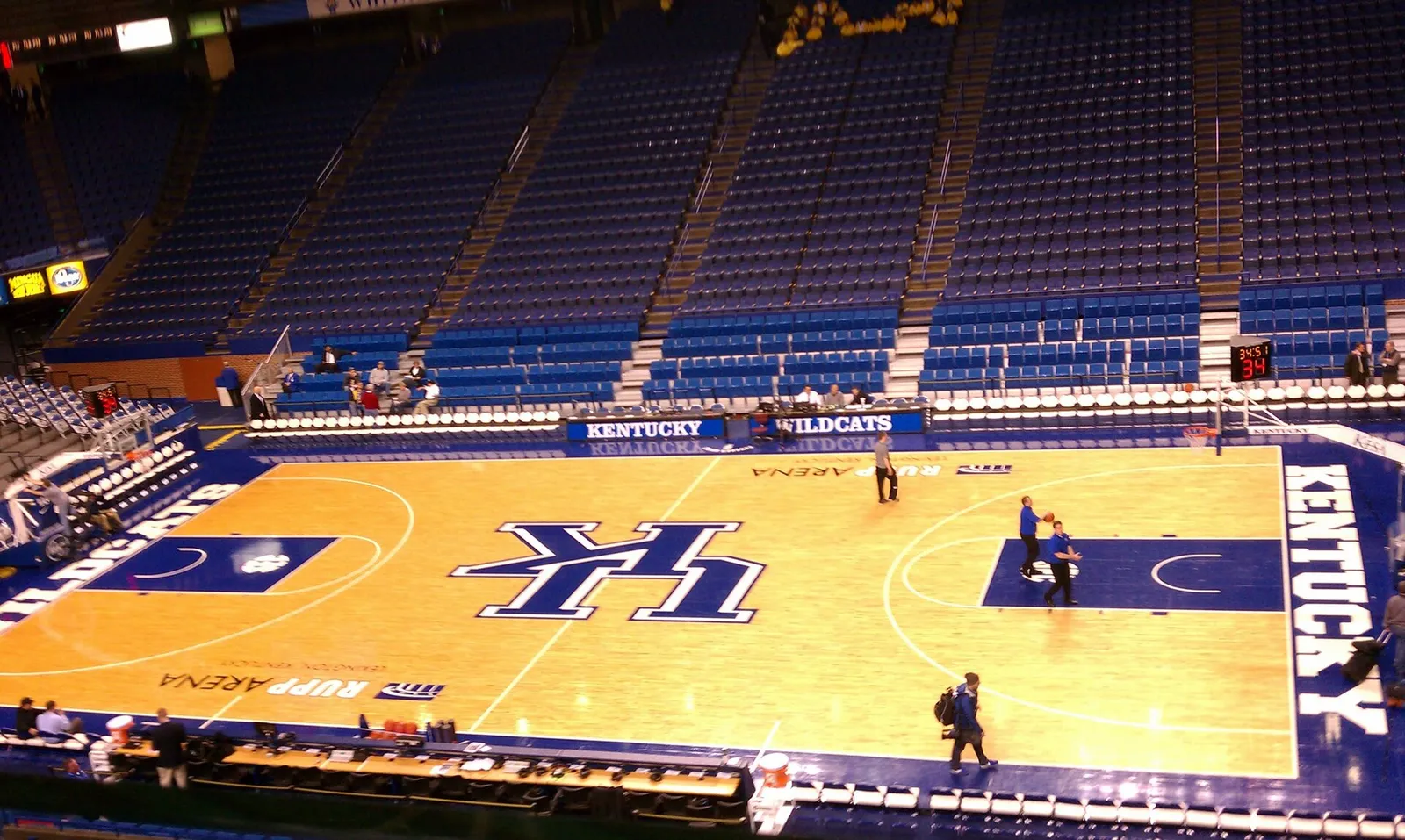
Mark Mitchell has committed to Kentucky after a state court judge cleared him to play a fifth college season, ESPN reports. He averaged 18.3 points a game at Missouri last season and shot 39 percent from three.
Judge Brian Edwards of the Kentucky state court granted a temporary restraining order earlier in the week, allowing Mitchell to transfer and to play. Skyy Clark, formerly of UCLA and now committed to LSU, was also involved in the case.
Why a judge is deciding who can play basketball
This is the part that deserves explaining, because it is genuinely unusual and it is not obvious.
The NCAA is a private association. Its eligibility rules, including the one at issue here restricting how long after high school a player may compete, are its own rules rather than law. But a private association's rules can be challenged in court when they are said to restrain someone's ability to earn or to compete, and since college athletes began being paid, the amount at stake in an extra year has become substantial. A rule that once cost a player a season of amateur sport now costs them a year of income.
That is what has brought the courts in, and what a temporary restraining order does is hold the position while the argument continues. It lets Mitchell play now. It does not decide whether the rule is lawful.
What the judge said
Edwards was not narrow in his reasoning. "Courts throughout the United States have consistently held in favor of student-athletes' rights in cases involving challenges to NCAA rules and regulations," he wrote.
He went on: "Likewise, this Court cannot reconcile the NCAA's attempts to preclude the student-athletes involved in this action from attending the schools of their choice and competing for the same duration of time as their competitors with the NCAA's purported mission of supporting the right of student-athletes to compete against each other on a level playing field."
The second sentence turns the association's own justification against it. The NCAA defends eligibility limits as protecting a level playing field; the judge's point is that a rule under which some players get five years and others four does not obviously produce one.
The unstable part
Mitchell's position is not secure, and the reporting is explicit about that. The NCAA has vowed to fight every federal and state case seeking a fifth year, which means his eligibility could be rescinded.
ESPN's broader survey of the litigation describes roughly a dozen trial courts having examined the question, with only one siding with the association so far, and several players in comparable positions.
A dozen separate courts producing mostly one-way results, none of them binding on the others, is not a settled legal position. It is a rule that is failing case by case, in different jurisdictions, on different timetables, while remaining formally in force. Players are making transfer decisions and universities are building rosters on orders that could be reversed on appeal.
We verified the Mitchell ruling from ESPN's report of it and have not read the order itself. The exact date of the ruling is not given beyond earlier in the week, and Mitchell's position on the floor is not stated.