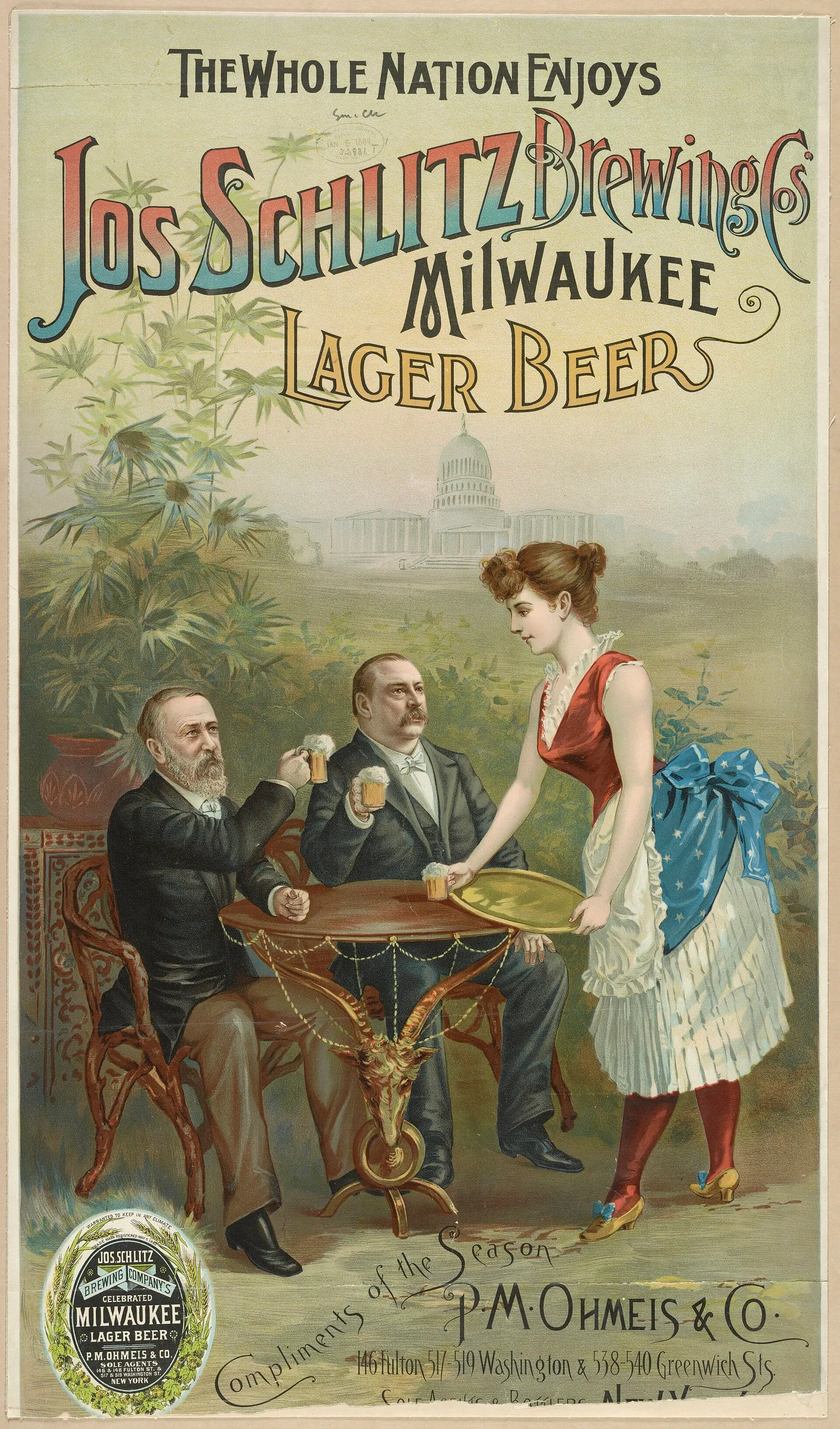
One of America's most storied beer brands is being put to rest. Pabst Brewing Company is discontinuing Schlitz, the Milwaukee lager that once outsold every other beer in the country, NPR reported — closing the book on a 177-year story, even if the owner has left a small door open.
A giant of American brewing
The Joseph Schlitz Brewing Company traces to 1849 in Milwaukee, and by the early 20th century it had grown into one of the largest brewers in the United States, vying for the top spot in sales. Its slogan — "the beer that made Milwaukee famous" — became one of advertising's most enduring lines, and the company was an industry innovator, among those that popularized brown glass bottles to protect beer from light. For decades, Schlitz stood shoulder to shoulder with the city's other brewing giants, Pabst, Miller and Blatz, in what was then the beer capital of America.
The self-inflicted wound
Schlitz's downfall is now a textbook case. In the mid-1970s, as outlets including NBC News have recounted, the company changed its recipe to cut costs and speed production — substituting cheaper ingredients and shortening the brewing process. The new formula proved unstable, and efforts to fix it backfired, at one point reportedly leaving visible particles in the bottle. Drinkers noticed, and the brand's reputation for quality collapsed. A bruising labor strike that shut its Milwaukee brewery in the early 1980s compounded the damage. Schlitz, weakened, was sold to the Stroh Brewery in 1982, and the brand later passed to Pabst in 1999.
Why it is ending now
Pabst, which had kept Schlitz alive as a heritage label, said it was retiring the brand — describing it as a "hiatus" rather than a definitive end — and pointed to rising storage and shipping costs. A final run was brewed in Wisconsin in late June, with the last bottles going out to drinkers, according to NPR's account. Whether "hiatus" ever becomes a revival is unclear.
What Milwaukee loses
Schlitz's retirement is another fading of Milwaukee's brewing identity, a heritage that helped define the city for more than a century. But its larger resonance is as a lesson that has outlived the beer itself: a dominant brand, confident in its lead, cut corners on quality to save money — and discovered that the customer loyalty it had spent generations building could drain away far faster than it was earned. After 177 years, that may be Schlitz's most lasting legacy.