How the conflict began
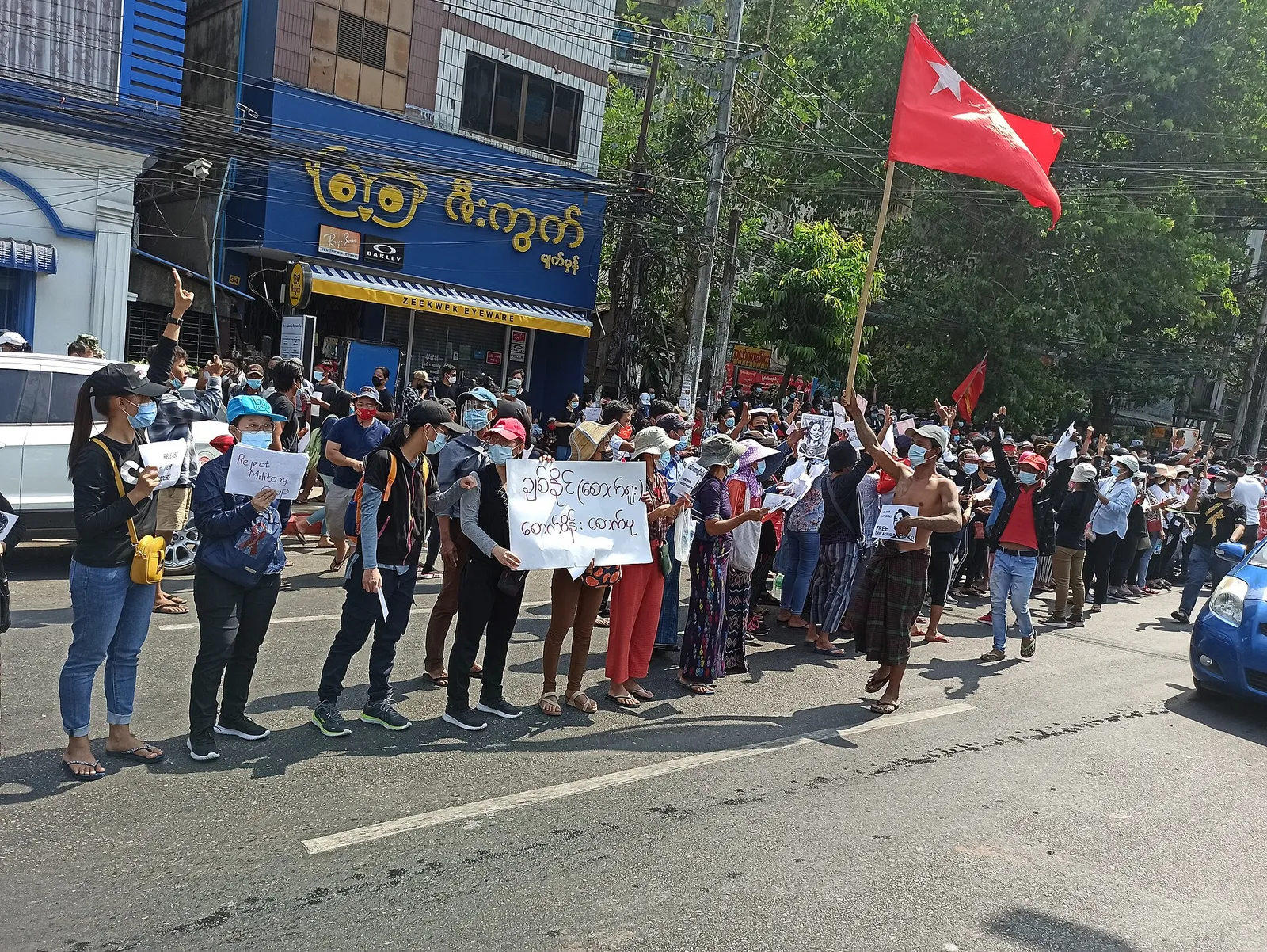
On February 1, 2021, Myanmar's military, known as the Tatmadaw, seized power in a coup, detaining civilian leaders and ending the country's brief period of partial democratic rule. The move overthrew an elected government led by Aung San Suu Kyi's National League for Democracy (NLD), which had won a landslide in the November 2020 election. The military, which formed a State Administration Council, alleged electoral fraud; independent observers had reported no evidence of irregularities on a scale that would have changed the outcome.
Large street protests followed across the country. Security forces responded with force, and the standoff escalated over the following months into a broader armed conflict.
Who is fighting
The conflict pits the military government against an array of opponents that are not a single unified force. Opposition to the coup gave rise to civilian-led People's Defense Forces (PDFs), many loosely linked to the National Unity Government (NUG), a body formed by ousted lawmakers and allies that presents itself as a parallel administration. These newer armed groups operate alongside long-established ethnic armed organizations that have fought the central state for decades in border regions — some of which have aligned with the resistance, others pursuing their own objectives.
The relationships among these actors are complex and shifting, and they do not share a single command. newsparlor takes no side between the military government and its opponents.
The scale of the humanitarian crisis
The human cost has been severe. The UN Office for the Coordination of Humanitarian Affairs (OCHA) estimated that close to 3.6 million people were internally displaced across Myanmar as of late 2025, with the northwest described as the epicenter of displacement, according to OCHA. Many people, it notes, have been displaced multiple times.
Death-toll figures vary by source and methodology, and all should be treated as estimates. The Assistance Association for Political Prisoners, a monitoring group, has verified more than 6,000 civilians killed by the military in the roughly four years to January 2025. The Armed Conflict Location and Event Data Project (ACLED) gives a far higher figure for total conflict deaths — an estimated 50,000 or more since the coup — because it counts deaths among all combatants and uses a different methodology. Marking four years since the coup in January 2025, the UN human rights office said violations had reached "unprecedented levels."
Operation 1027 and the turning of the tide
The conflict's most significant military shift came in late 2023. On October 27, 2023, the Three Brotherhood Alliance — comprising the Arakan Army, the Myanmar National Democratic Alliance Army and the Ta'ang National Liberation Army — launched a coordinated offensive in northern Shan State known as Operation 1027. The alliance and allied forces captured numerous towns and military positions near the Chinese border in the following weeks, in what analysts described as one of the gravest challenges to the military since the coup, Brookings reported.
After a China-mediated pause, a second phase in mid-2024 saw resistance forces capture further towns, including Lashio, which hosted a regional military command headquarters. The military lost control of significant territory, though front lines have remained fluid and contested, and claims by all parties are difficult to verify independently.
A compounding disaster
On March 28, 2025, a powerful earthquake — measured at magnitude 7.7 or higher — struck near Sagaing and Mandalay, the strongest to hit Myanmar in over a century. Casualty estimates diverged sharply: the military-led council reported around 3,770 deaths, while some independent monitors cited higher figures, and observers cautioned the true toll may be greater given restricted access to affected areas. The disaster compounded an already acute humanitarian emergency in a conflict zone.
Elections and what comes next
The military government held general elections in phases beginning on December 28, 2025, presenting the vote as a step toward returning power to a civilian administration. Independent analysts and a range of foreign governments and bodies — including the United Nations, the United Kingdom, the European Parliament and rights groups such as Human Rights Watch — characterized the process as neither free nor fair, noting that most opposition parties were banned and tens of thousands of political prisoners remained jailed. The UN special rapporteur Tom Andrews called it "not a free, fair nor legitimate election." Supporters of the government framed it as a return to a constitutional roadmap. With the conflict still active, the country's path forward remains deeply uncertain.