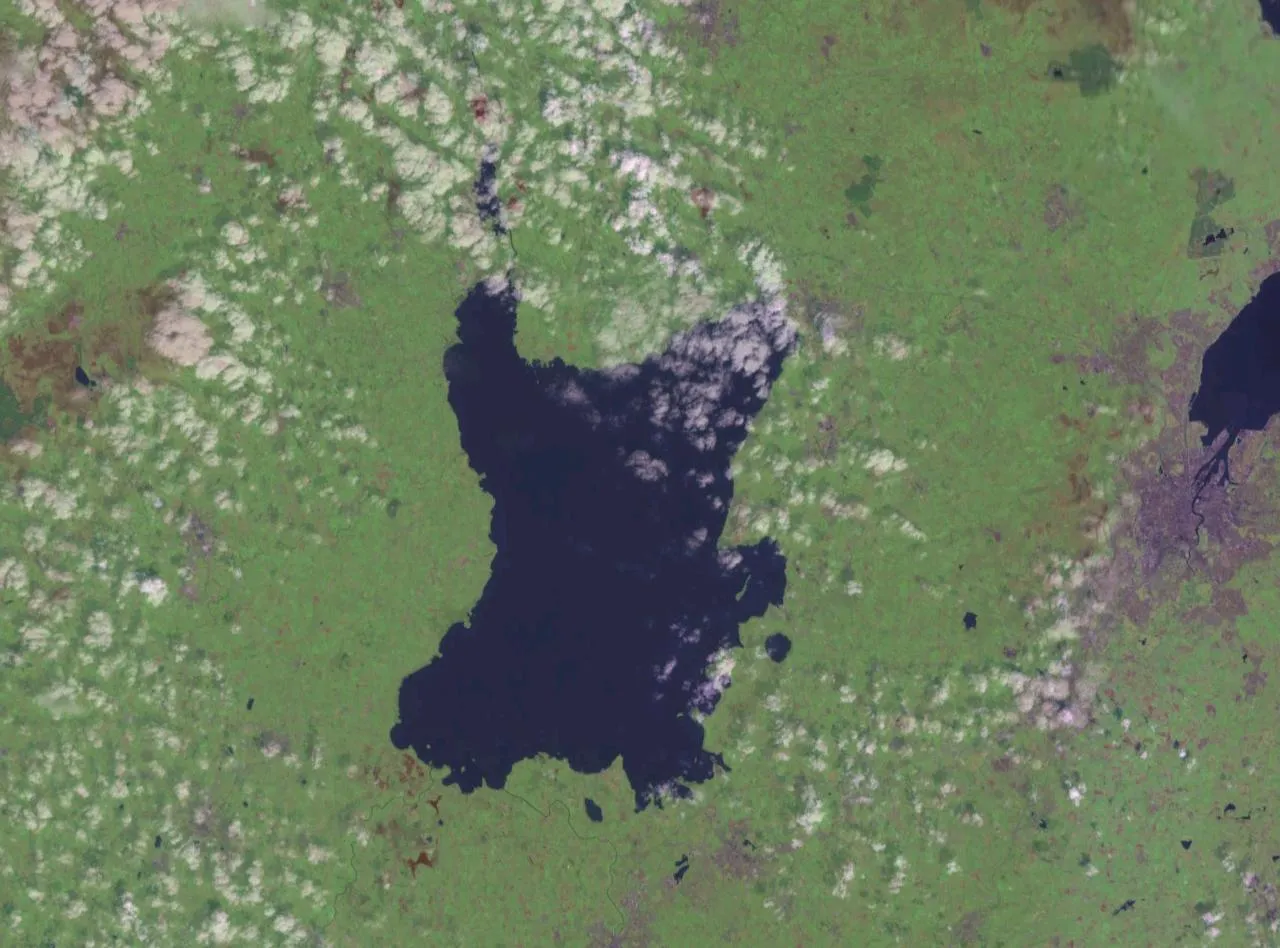
Lough Neagh sits at the heart of Northern Ireland — about 383 square kilometers of freshwater, the largest lake in the British Isles by area, supplying a large share of the region's drinking water and home to a centuries-old eel fishery. And it is in deep ecological trouble.
A lake in crisis
Since the summer of 2023, the lough has been smothered by blooms of blue-green algae (cyanobacteria) dense enough to be seen from space, closing beaches and sickening dogs that swam in it. Scientists classify the lake as hypereutrophic — so overloaded with nutrients that oxygen is depleted and toxic algae thrive. The drivers are well documented: the great majority of the nutrient pollution comes from agricultural runoff, with wastewater treatment and septic tanks adding more, while invasive zebra mussels and a warming, shallow lake compound the problem. Northern Ireland's Executive approved a multi-point action plan in 2024, but campaigners say change on the ground has been slow.
A different kind of protection
Against that backdrop, some environmental lawyers and campaigners are asking a more radical question: what if the lough itself held legal rights? The idea, known as "rights of nature," grants an ecosystem a legal standing similar to that of a company, allowing appointed guardians to represent it — and sue on its behalf — in court.
The concept has spread over two decades. Ecuador wrote the rights of nature into its 2008 constitution, and courts in India have recognized legal status for the Ganges and Yamuna rivers, though enforcement proved contested. By 2024, researchers counted close to 500 rights-of-nature measures across some 40 countries. The most cited model is the Whanganui River in New Zealand, which under a 2017 law became a legal person represented by two guardians — one named by Māori, one by the Crown — ending a 140-year dispute over its status.
The case for Lough Neagh
Supporters argue existing environmental law has plainly failed to protect the lough: rules on runoff and discharge have long been on the books, yet the lake's condition has worsened. A personhood framework, they say, would create a body — potentially including local fishing communities, scientists and others with a long relationship to the water — with both the standing and the motivation to challenge polluters or government inaction in court. The Whanganui case, they add, shows the approach can at least change the political conversation around a threatened ecosystem.
The skeptics' view
Critics are unconvinced. Rights-of-nature frameworks, they note, repeatedly run into the same practical questions: who appoints the guardians, what powers they hold, and whether courts will enforce rulings that demand costly changes from farming, industry or government. India's Ganges decision was stayed by a higher court within months. Others argue the real problem at Lough Neagh is not a lack of legal rights but a lack of political will to use the powers regulators already have. What the debate has done, whatever its legal fate, is force a sharper question about who Lough Neagh belongs to — and who is responsible for keeping it alive.