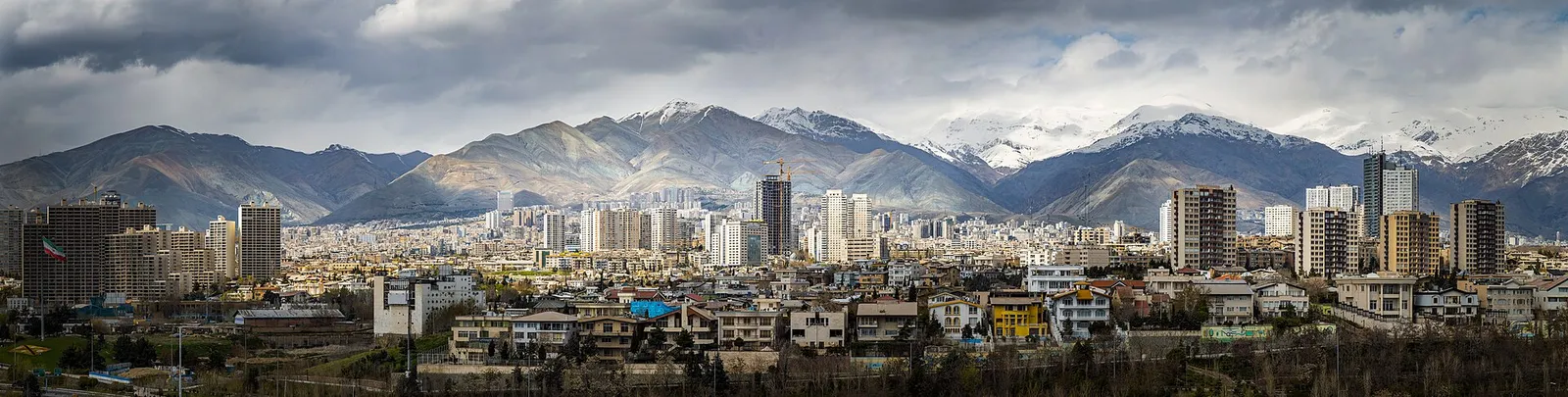
Iran has told its neighbours that taking part in the American economic campaign against it will make them enemies.
"We're telling all nearby countries not to join the US economic war," Mohsen Rezaei, secretary of Iran's Supreme National Security Council, said in an interview with the state broadcaster IRIB on Saturday. "Otherwise, we will consider them as enemies." Al Jazeera reported the remarks.
No country was named.
The threat beneath the warning
Rezaei went further than rhetoric. He said Iran would target the interests of countries that took part, and specifically that it would strike alternative oil-shipping routes out of the Gulf if regional states joined the American plans.
That sentence is the substance of the story, and it is worth unpacking because of what we reported earlier today. Iran has partially closed the Strait of Hormuz and has just granted a narrow exception for some Iraqi cargo. Producers who cannot use the strait rely on pipelines and terminals that run overland to the Red Sea and the Mediterranean, which is exactly the infrastructure Rezaei is describing.
A threat to those routes is therefore a threat to the workaround. It is aimed less at the United States than at the Gulf states that own the pipelines and would have to decide whether to keep pumping.
What Iran is responding to
President Donald Trump announced on Wednesday that his government would mount what he called the most crushing economic operation yet against Iran, a campaign that has been referred to as an economic D-Day. He warned of "tremendous economic consequences" for any country giving Iran "any type of lifeline".
Treasury Secretary Scott Bessent put the same point in a single sentence the following day: "You're either with us or against us."
Set against Rezaei's warning, the two positions describe an identical demand from opposite directions. Washington is telling third countries that neutrality will be treated as assistance to Iran. Tehran is telling them that compliance will be treated as hostility. The countries in question are mostly Gulf states with American security relationships, Iranian neighbours, and economies built on shipping hydrocarbons through a waterway both sides are now discussing as a target.
The gap between this and the president
It is worth noting what this is not. On Friday, Iran's president, Masoud Pezeshkian, was publicly arguing that the war should be brought to an end while Iran is in a position of strength, and defending a lapsed memorandum agreed with Washington against domestic critics.
Both men speak for the Iranian state. Whether the distance between them reflects a division, a division of labour, or simply two audiences is not something we can establish, and we are not going to guess.
What we do not have
No government named in the warning has responded on the record, and Washington has not answered Rezaei directly, at least not in the account we read. There is no indication that any regional state has changed its position.
We verified this from a single publication.