
Dig deep enough anywhere on Earth and the rock turns hot. The planet's interior has been radiating heat since it formed some 4.5 billion years ago — a mix of warmth left over from its violent birth and the steady decay of radioactive elements in the crust and mantle. In any practical sense, that heat is inexhaustible. So why does geothermal energy still supply only a tiny fraction of the world's power?
A clean source that never sleeps
Geothermal generation burns no fuel and emits virtually no carbon dioxide. Unlike wind and solar, a geothermal plant produces electricity day and night, in every season, regardless of the weather. Engineers prize this quality — what they call "firm" power — because it can anchor a grid that is increasingly reliant on intermittent renewables. The U.S. Department of Energy describes geothermal simply as heat energy drawn from the Earth, and projects that next-generation approaches could eventually unlock a large share of America's electricity needs.
The catch has always been getting to the heat.
Why geography has limited it
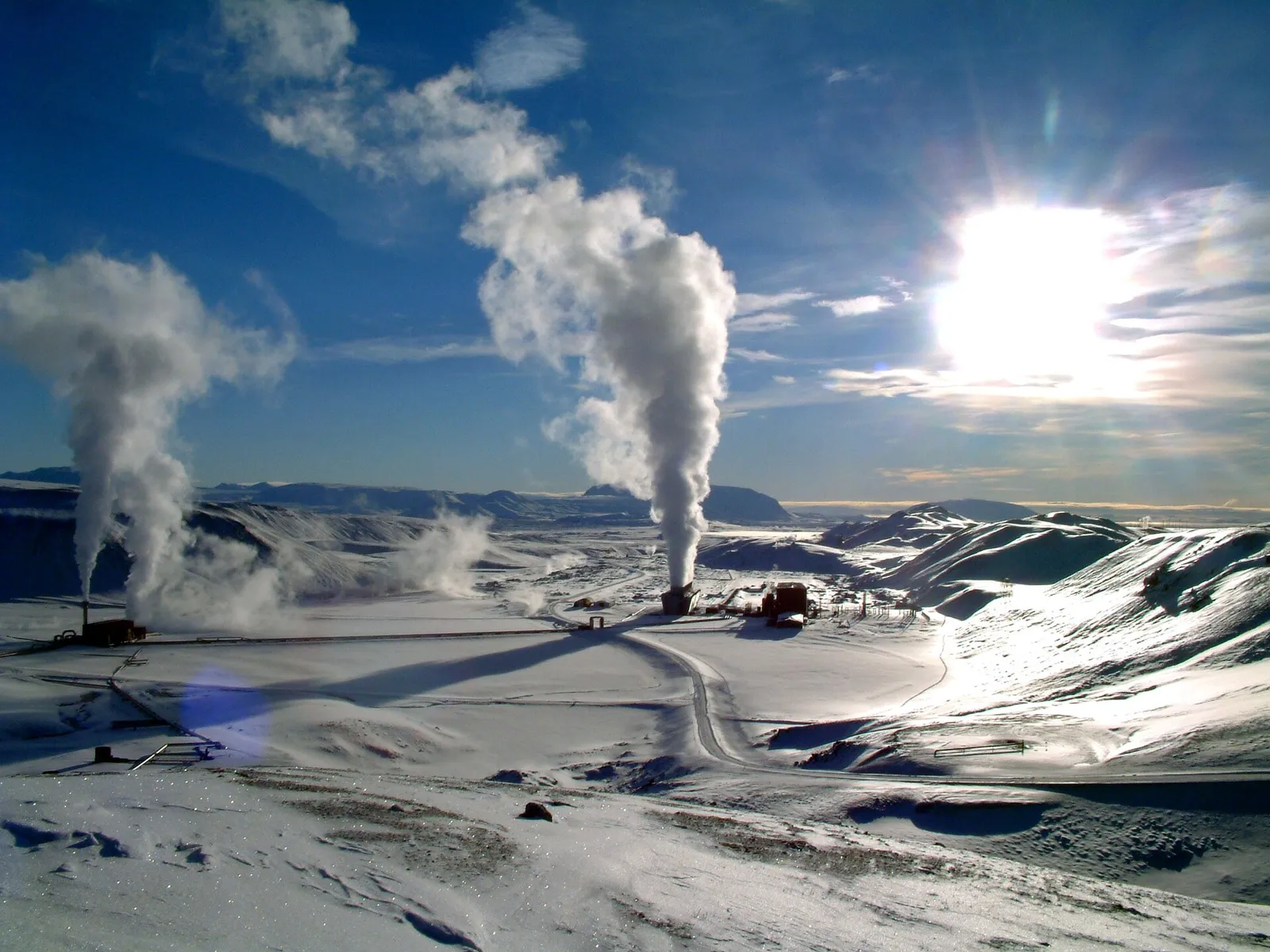
Conventional geothermal works where the Earth's heat sits close to the surface — in volcanic zones where hot water or steam is already available to tap. Iceland draws a substantial share of its electricity this way, and Kenya, the Philippines, New Zealand and parts of the western United States have built significant capacity for the same geological reason: they sit near the boundaries of tectonic plates.
Everywhere else, the heat is still there — just far deeper. Reaching usable temperatures beneath a stable continental interior can mean drilling several kilometers down, and drilling is expensive. The Department of Energy notes that the casing and cementing of a well alone can account for 30% to 40% or more of its total cost. The result is a paradox: a resource that is everywhere, yet economical in only a few places.
Engineering a reservoir
The most promising answer is a technology called Enhanced Geothermal Systems, or EGS. Rather than relying on nature to supply hot, water-bearing rock, EGS manufactures the reservoir. Fluid is injected underground to open fractures in hot but dry, impermeable rock, the Department of Energy explains, creating the permeability needed for water to circulate, absorb heat, and return to the surface to drive a turbine. In principle, EGS can work almost anywhere the rock is hot enough — which, deep enough down, is almost everywhere.
A landmark U.S. Geological Survey assessment estimated that enhanced geothermal techniques could one day unlock more than 500,000 megawatts of generating capacity in the United States alone — many times the country's identified conventional geothermal resources.
Borrowing the oil industry's tools
Making EGS pay is, in large part, a drilling problem, and here the oil and gas industry's hard-won expertise is proving useful. Horizontal drilling — perfected during the shale revolution — is now being applied to geothermal wells, exposing far more hot rock to circulating fluid than a simple vertical bore can. Companies in the United States have demonstrated that the approach can sharply improve how much heat a well extracts.
Others are pursuing more radical designs: "closed-loop" systems that circulate fluid through sealed underground pipes, like a giant radiator, without fracturing the rock at all; and "superhot" concepts that target rock above 375°C, which the Department of Energy says can yield several times the power of conventional wells.
A slow burn with a long horizon
Geothermal has spent decades on the margins of the clean-energy conversation, overshadowed by the plunging costs of solar and wind. But those technologies share a weakness — their output rises and falls with the sun and wind — and grids increasingly need sources that can fill the gaps. Geothermal can. The resource under our feet is not going anywhere; the open question is whether engineers can reach it cheaply and quickly enough to matter in the energy transition now under way.