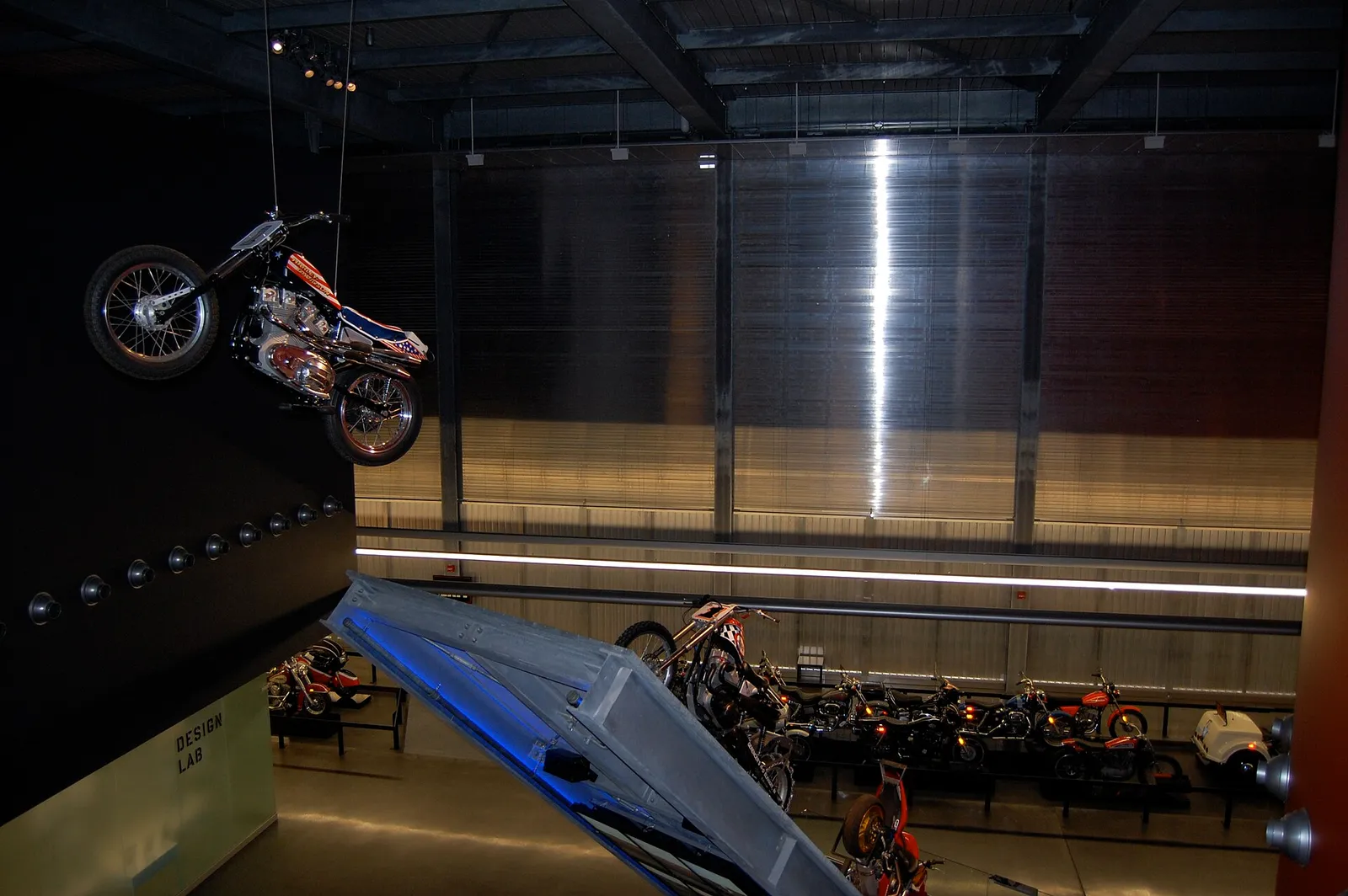
Robert Craig Knievel — Evel to everyone — was born in Butte, Montana, in 1938 and died in 2007, but the dates matter less than the image: a lean man in a star-spangled white jumpsuit, revving at the top of a ramp, about to fling himself and his motorcycle over a row of buses while a stadium held its breath.
A showman for his moment
Knievel arrived just as American television was hungry for spectacle, and he gave it a hero who seemed to defy physics. Over a career that included more than 300 jumps, he dressed risk in red, white and blue and made it look like a national pastime. The persona — part stuntman, part carnival barker, part patriot — was as carefully built as any of his ramps.
The jumps that made the myth
His fame was forged, paradoxically, in failure. On December 31, 1967, Knievel tried to clear the fountains outside Caesars Palace in Las Vegas. He came up short, was thrown over the handlebars, and suffered a catalogue of fractures that put him in hospital for weeks — a crash, captured for television, that turned a regional daredevil into a national name.
Seven years later, in September 1974, he attempted his most audacious feat: leaping Idaho's Snake River Canyon not on a motorcycle but in a rocket-powered "Skycycle." A parachute deployed too early, and the craft drifted back to the canyon floor near where it started. He survived. In 1975, before a vast crowd at London's Wembley Stadium, he cleared a line of buses but crashed on landing and broke his pelvis — then insisted, characteristically, on walking away under his own power.
A body, and a brand
What set Knievel apart was his willingness to be broken in the attempt. Guinness World Records lists him for one of the most broken-bones tallies of any lifetime, a grim statistic he wore almost as a badge. And he was an industry as much as an act: a line of Ideal Toys action figures and the hand-cranked Stunt Cycle, launched in the 1970s, sold by the millions and let a generation of children play at being fearless.
The lineage of risk
His influence outlived him. His son, Robbie Knievel, became a stunt performer in his own right and, in 1989, finally cleared the Caesars Palace fountains his father had not. The broader bloodline runs through the X Games and modern action sports, where stars such as Travis Pastrana speak of Knievel as a founding figure.
That is perhaps why he still resonates as the country turns 250. Knievel's appeal was never really about motorcycles. It was about a very American faith — that spectacle, reinvention and a willingness to risk it all in front of a crowd are virtues in themselves. He sold that idea, jump after jump, fall after fall, and a good part of the country bought it.