
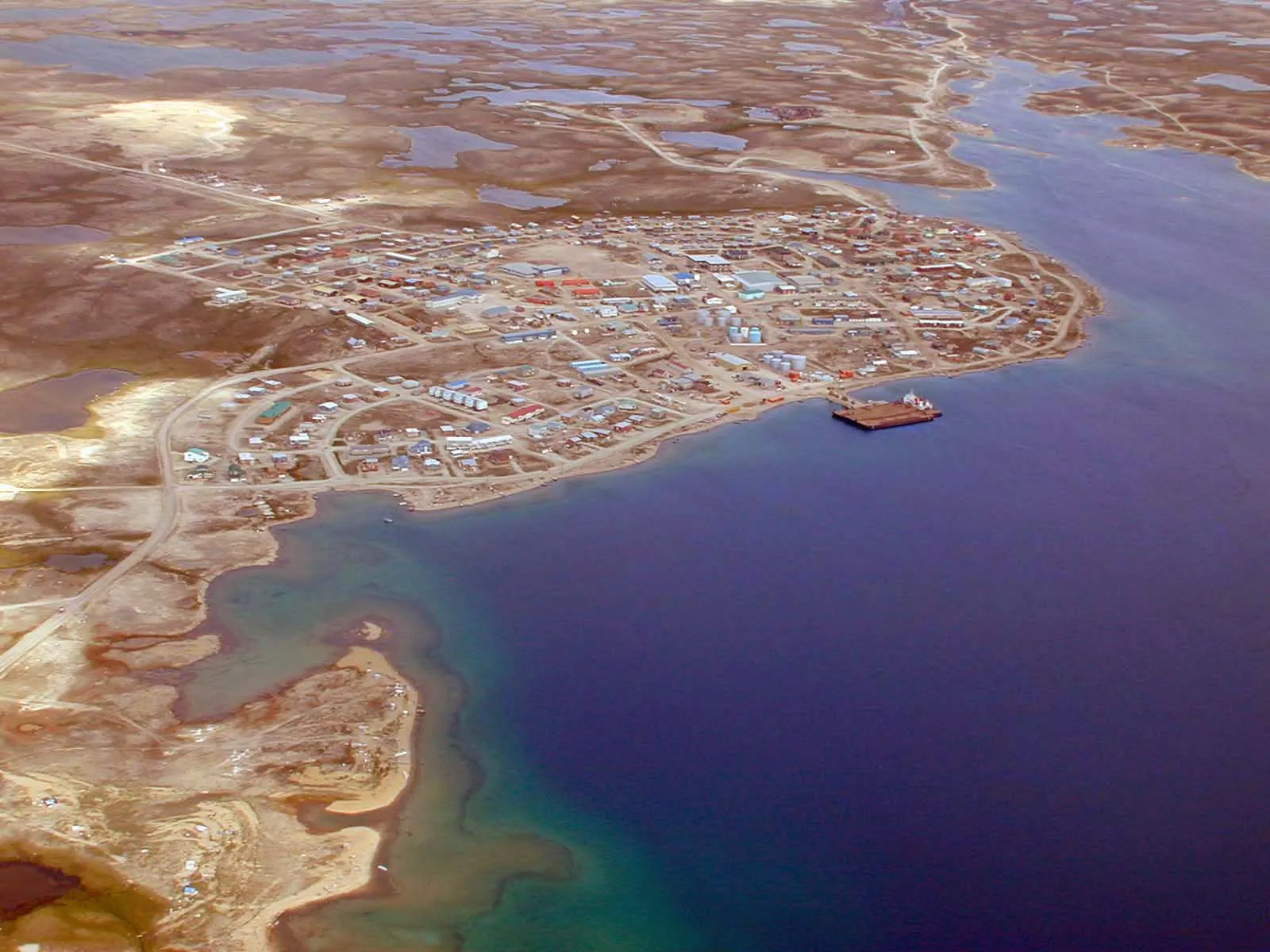
Cambridge Bay sits at about 69 degrees north on Victoria Island, in Nunavut's Kitikmeot region. No road connects it to the rest of Canada; supplies come by an annual sealift or by air through Yellowknife. Its Inuinnaqtun name, Iqaluktuuttiaq, means "good fishing place," and the Inuit have lived and fished here for thousands of years. Today around 1,900 people call it home, roughly four in five of them Inuit — and the remaining fifth, arriving from far beyond the Arctic, are changing what shows up on the table.
A kitchen on Victoria Island
One of the clearest examples is Salma's Kitchen. Salma Easmin came to Canada from Bangladesh and, after years in Montreal, moved north with her husband when his government work brought the family to Cambridge Bay. She turned their apartment into what Nunatsiaq News described as a home restaurant serving Bangladeshi and South Asian dishes — korma, spiced chickpea soup, paratha — cooked to order in the evenings and on weekends. The obstacles are real: many spices are nearly impossible to buy locally, and staple ingredients are costly to bring in. Even so, the venture took root, and the family stayed.
A small wave with an outsized presence
Hers is not an isolated story. Across Nunavut, newcomers from the Philippines, Nigeria, India and elsewhere have arrived to fill gaps in health care, education, construction and government — sectors the territory struggles to staff from its small, dispersed population. Foreign-born residents make up only a few percent of Nunavut's population, Nunatsiaq News reported, but in a hamlet where nearly everyone is known by name, each arrival is felt. The opening of the Canadian High Arctic Research Station in Cambridge Bay in 2019 added another international current, drawing scientists from across Canada and abroad.
The price of a pepper
The texture of food life here is shaped above all by cost. Nunavut has the highest rate of food insecurity in Canada — close to 60% of households in 2024 — and grocery prices that startle southern visitors, with the cost of a standard basket rising far faster than the national average. The federal Nutrition North subsidy is meant to soften the blow, but researchers have found only a fraction of each subsidized dollar reaches shoppers. For a cook trying to recreate a dish from home, importing the right rice or spice means paying a steep premium.
Country food holds its ground
Against that backdrop, traditional Inuit foodways are not in retreat — and remain, in many ways, the most practical answer to the Arctic's economics. Caribou, muskox, Arctic char and seal provide nutrition no subsidy can match at store prices; researchers have valued the country food harvested around Cambridge Bay at millions of dollars a year in replaced protein. Local enterprises process and sell muskox and char, and the town's best-known café has built part of its reputation on muskox. Country food is identity as much as sustenance, woven into kinship, land knowledge and a way of life carried down through generations.
A wider table
What is happening in Cambridge Bay mirrors a broader shift across the Canadian North: demographic change that is gradual by southern standards but striking against what came before, unfolding where supply chains are fragile and communities are tight-knit. The arrival of new cooking traditions in a hamlet above the Arctic Circle does not displace Inuit culture so much as add another layer to a long history of contact and adaptation. The Inuit who still fish the char-rich waters their ancestors named are watching a new chapter take shape — around the kitchen table.