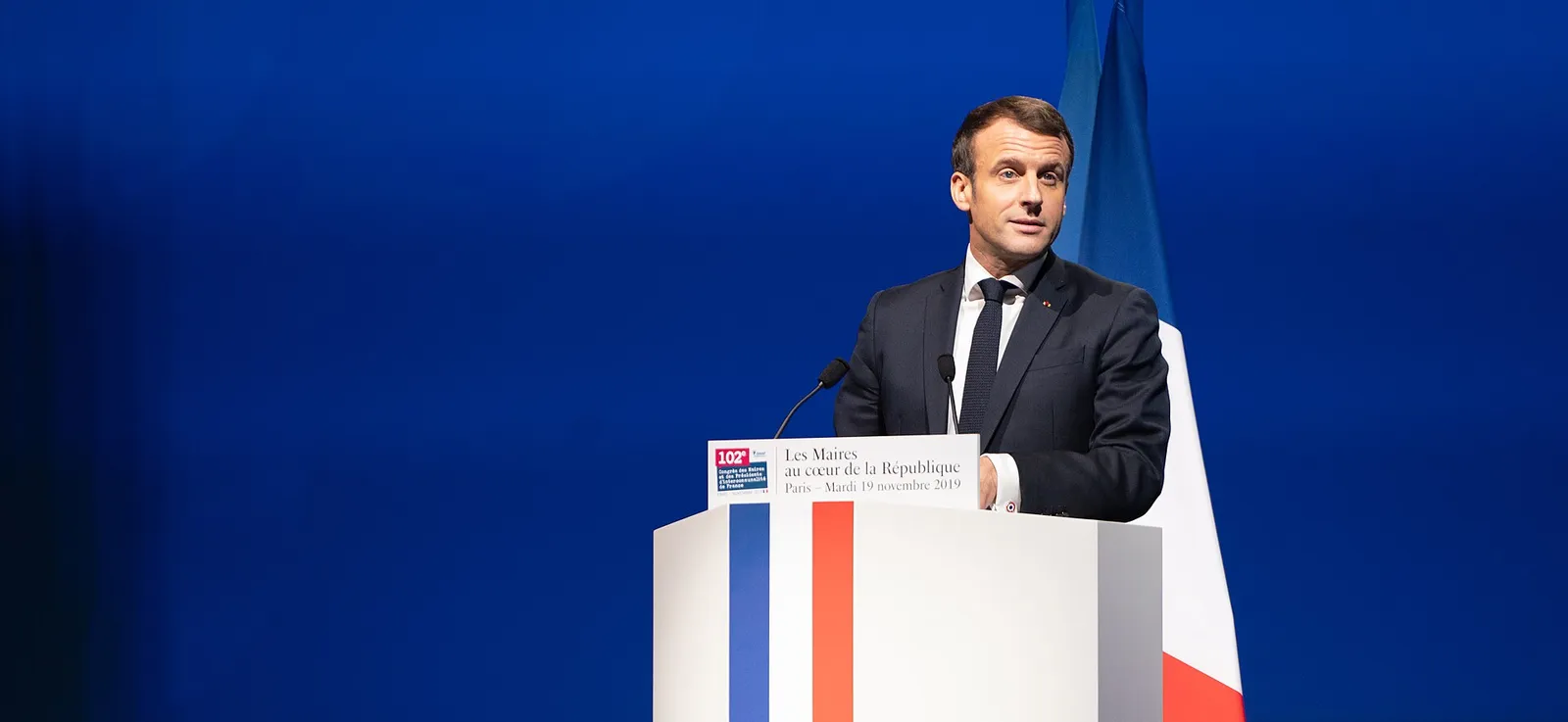
The countdown to the end of the Macron era has formally begun.
The dates
France has set the timetable for its next presidential election, with the first round scheduled for April 2027 and a runoff two weeks later if no candidate wins an outright majority, under the country's standard two-round system, France 24 reported. The vote, expected in mid-April with a second round in early May, is a regularly scheduled election: President Emmanuel Macron's second term runs until mid-May 2027.
Why Macron must step aside
Macron, in office since 2017, cannot seek a third consecutive term. The French constitution limits presidents to two terms in a row, as noted in coverage of the 2027 race, and he has said he intends to serve out his mandate rather than leave early. His departure throws the race open, with no incumbent on the ballot for the first time in a decade.
A crowded, divided field
The contest is taking shape as a fragmented one, with contenders expected from across the political spectrum. On the right, the National Rally — France's main far-right force — has been buoyed by strong polling, with the party's Jordan Bardella widely seen as an early frontrunner. The party's long-time figurehead, Marine Le Pen, faces uncertainty over whether she can run at all: she was convicted last year in a case involving the misuse of European Parliament funds and handed a penalty barring her from office, a ruling she is appealing.
The center and center-right are likely to field several heavyweight names, among them veteran centrist François Bayrou and former prime ministers Gabriel Attal and Édouard Philippe, while the conservative Republicans look to Bruno Retailleau. On the left, fractured since the 2024 legislative elections, Jean-Luc Mélenchon of the hard-left France Unbowed is running, and parts of the left have floated a primary to try to unite behind a single candidate — an effort whose success is far from assured. Most candidacies remain declared intentions or expectations rather than certainties, and the field will keep shifting in the months ahead.
The backdrop
Whoever wins will inherit a country under strain. France has struggled with sluggish growth and a heavy public debt burden well above European Union norms, and its politics have been gridlocked since the 2024 elections left no party with a majority in parliament. Surveys point to deep public pessimism about the economy and living costs, while immigration and security have become central themes — issues the far right has sought to make its own.
Why it matters
As one of the European Union's two largest economies and a nuclear power with a permanent seat on the UN Security Council, France's direction matters well beyond its borders. With Macron leaving the stage and the field still forming, the 2027 race promises to be one of the most consequential — and unpredictable — in years.