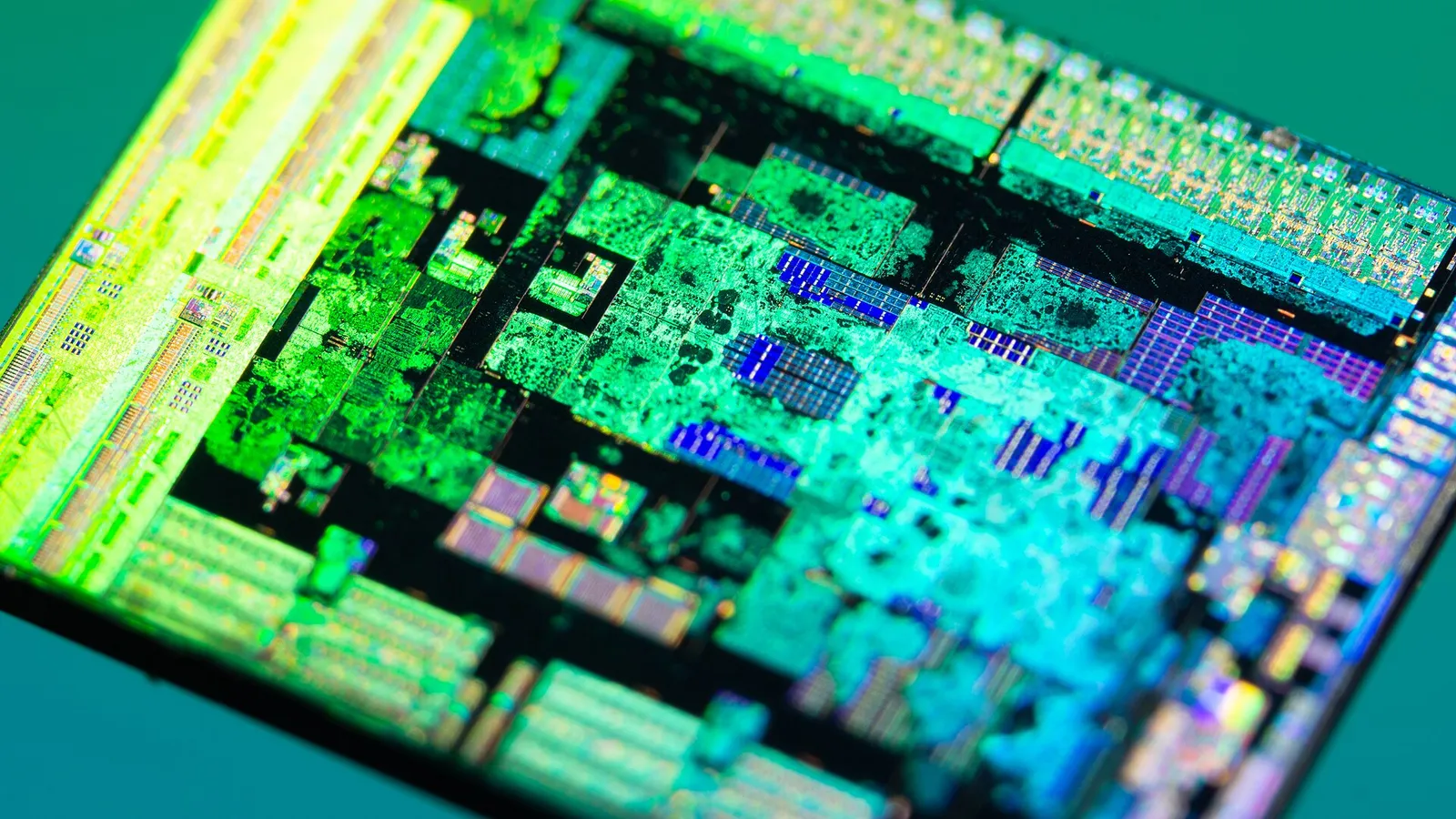
Apple has announced two processors, the M5 Ultra and the M6, TechCrunch reports. They go into new Mac Studio and Mac Mini models, with the Mac Mini starting at $899 and shipping after September 22.
The M5 Ultra is Apple's first quad-die chip, joining two dual-die M5 Max chips into a single package. It offers up to a 36-core CPU and an 80-core GPU, with 1.2 TB/s of unified memory bandwidth, which Apple says is 50 percent more than the M3 Ultra.
The M6 is built on a 2nm process, with a 12-core CPU, two more than the M5, a dual 16-core neural engine, and what Apple describes as nearly 30 percent more peak GPU compute for AI work.
The number that matters is the bandwidth
For most computing tasks, core counts are the headline. For running large AI models locally, memory bandwidth is usually the constraint: the processor spends its time waiting for model weights to arrive rather than calculating.
At 1.2 TB/s, the M5 Ultra is aimed squarely at that bottleneck, and it explains what these chips are for. Apple is pitching both at running and fine-tuning models on the machine itself, and arguing this is better for privacy and security than sending data to a cloud service.
That argument is sound as far as it goes. Data that never leaves a desk cannot be intercepted in transit or retained by a provider. It is also, conveniently, an argument for buying expensive hardware, which is worth noting when a manufacturer makes it.
What "most powerful ever" means here
It means most powerful chip Apple has made, which is the only claim being made and the only one that can be checked against its own previous parts.
Apple's own comparison is with the M3 Ultra rather than a competitor's product, and all the performance figures in this account are the company's. An Apple vice president said the M6 will "power through workloads with amazing energy efficiency", which is marketing language rather than a measurement.
The genuinely notable technical fact is the 2nm process on the M6. Moving to a smaller manufacturing node is expensive, constrained by fab capacity, and increasingly hard, and being early to one is a real advantage rather than a claim about it.
What we could not establish
We could not establish Mac Studio pricing, memory and storage configurations, independent benchmarks, who manufactures the chips, or the vice president's name. We verified this account from a single publication, and every performance figure is Apple's own.