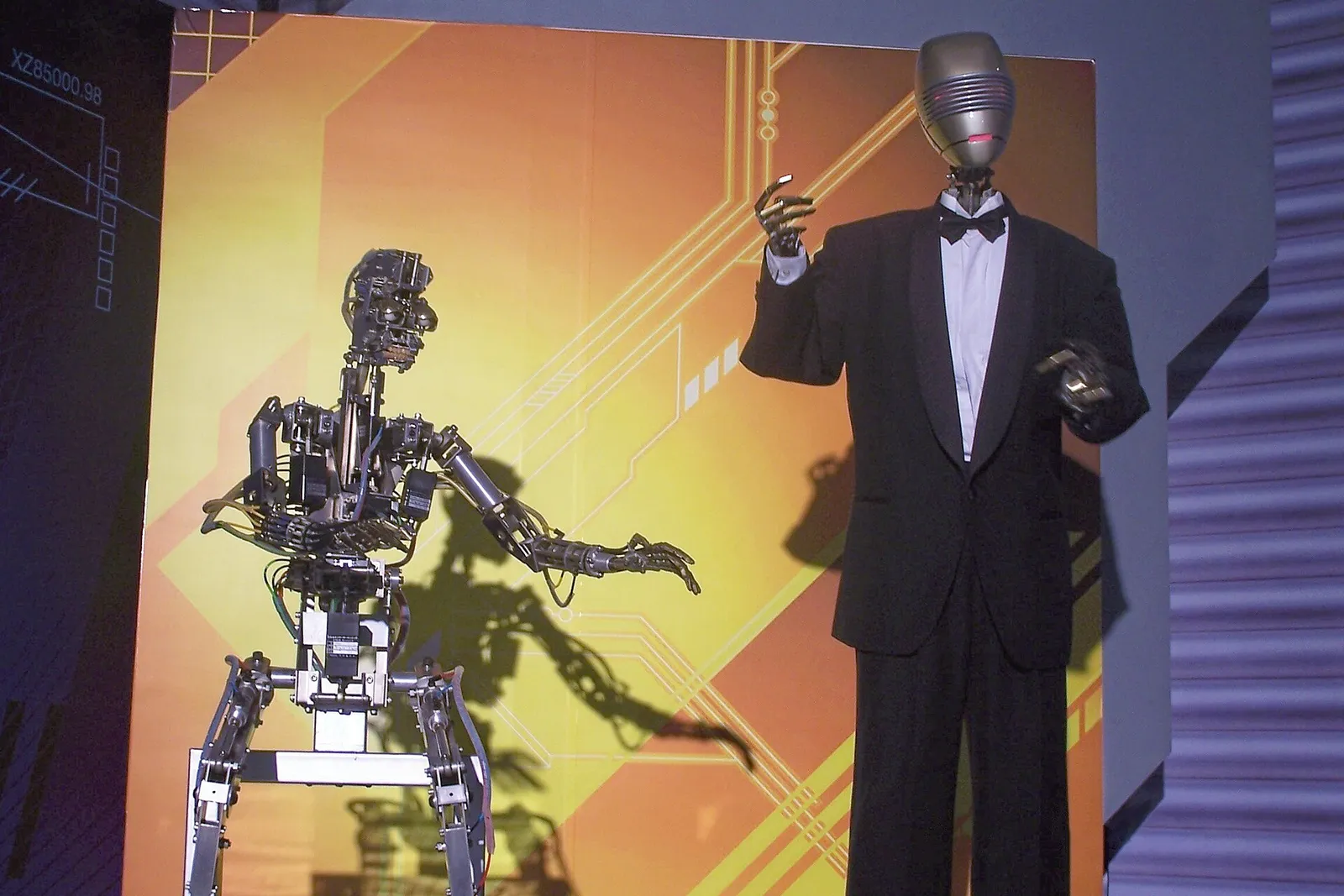
A humanoid robot named Lightning has run 100 meters in 9.32 seconds, according to Al Jazeera, reaching a peak speed of 14.5 meters per second. Usain Bolt's men's world record, set at the World Athletics Championships in Berlin in 2009, is 9.58 seconds.
The number is real. The comparison needs handling.
What actually happened
The run took place at a preparatory test event for the second World Humanoid Robot Games, which opened in Beijing on Saturday. Lightning was built by Honor, the Chinese smartphone manufacturer.
The machine stood 169 centimeters tall with 95-centimeter legs. Before the games, its researchers lengthened the legs by 10 centimeters, to 1.05 meters.
That last detail is the whole story in miniature, and it is to the report's credit that it is included. A sprinter's stride length is fixed by their skeleton. A robot's is a design parameter you can change on a Tuesday. Bolt's record stands as the outcome of a competition in which everyone is constrained by the same biology; Lightning's time is the outcome of an engineering exercise in which the constraint was chosen.
Why the two numbers are not the same kind of thing
Athletics records exist inside an apparatus built to make performances comparable: a standardized distance, a legal wind limit, an approved surface, starting-block sensors, drug testing, and a governing body that ratifies or refuses each mark. Strip any of that away and the number stops meaning what a record means.
Nothing here suggests Lightning's run was measured carelessly. But a preparatory test event before a robotics competition is not that apparatus, and the report gives no wind reading, no surface specification, and no ratifying body. It is a demonstration, and the honest way to describe it is a machine doing something impressive, not a machine beating a man.
There is also the question of what is being compared. A legged robot sprinting is a control and actuation problem: keeping an unstable inverted pendulum upright while pushing it as hard as the motors allow. A human sprinting is a physiological problem operating under an entirely different set of limits. Both take about nine and a half seconds over 100 meters. That is a coincidence of magnitude, not a like-for-like result.
The more interesting result
Lightning's other achievement is the one that is harder to engineer around. It won the 21-kilometer Beijing half marathon in April in 50 minutes and 26 seconds, which the report notes is faster than the elite men's human world-record pace.
Sustaining legged locomotion over 21 kilometers is a far more demanding test of a machine than covering 100 meters. It requires the balance controller to hold up over tens of thousands of steps, the actuators to survive the thermal load, and the batteries to last. Longer legs will not get you through that on their own.
What we could and could not check
The report names no engineers, gives no team or country count for the games, and quotes nobody. A photo caption on the page refers to staff preparing humanoid robots made by Booster Robotics, a different company from the one that built Lightning.
We were able to verify this from one publication only, and the details above are as that report states them. We have not seen a technical specification for the run, and we would want one before treating 9.32 seconds as a comparable figure rather than a demonstration result.