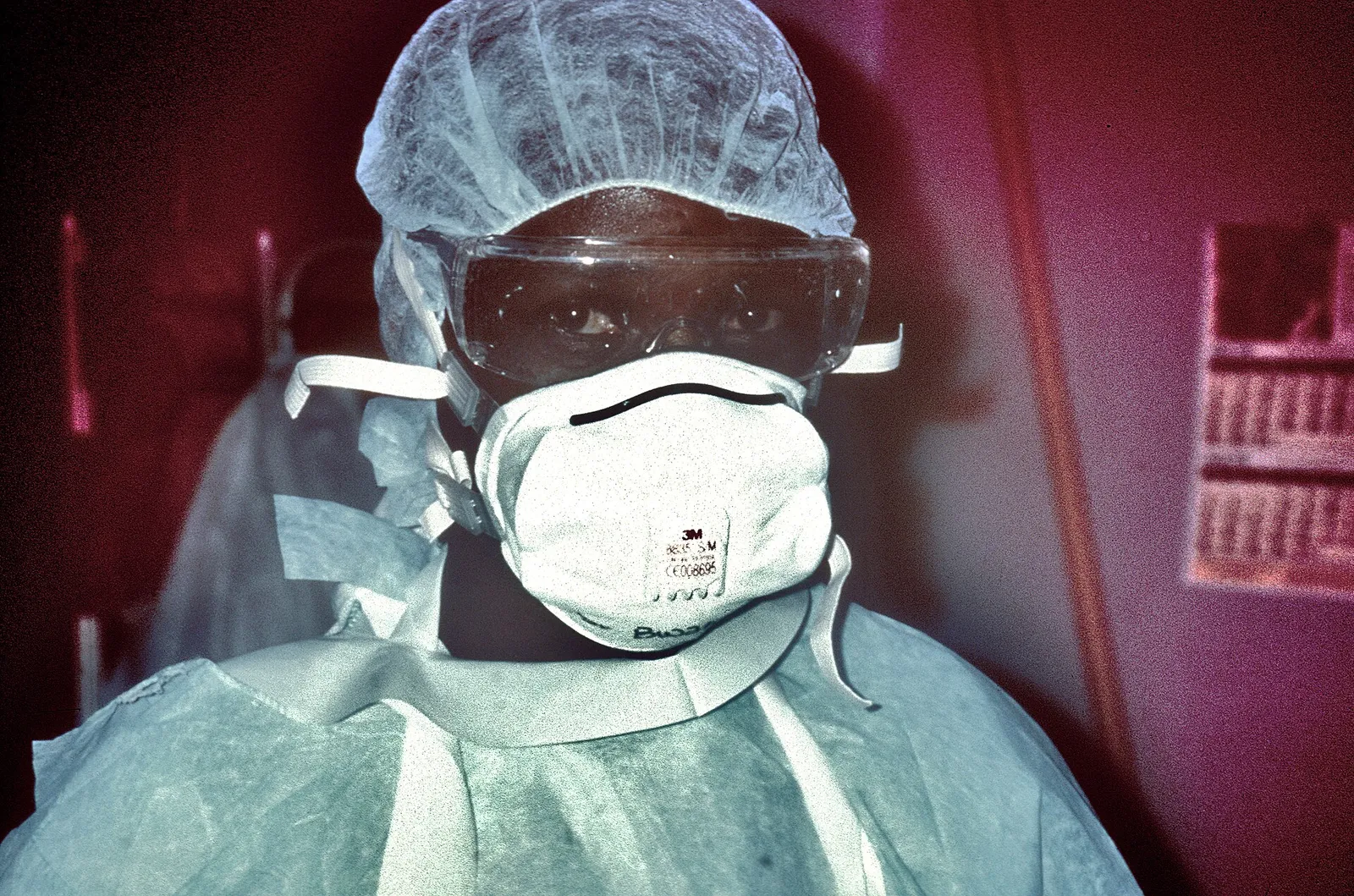
The Ebola outbreak in the Democratic Republic of the Congo is still spreading, and the first 16,000 vaccine doses have reached the country. Al Jazeera reports that roughly one person has been dying of the disease every thirty minutes, in the eastern and northeastern parts of the country.
We should be clear about what that figure is and is not. It is a rate, not a total. Neither the report nor the WHO material we could reach gives a current case count or death toll, or names the affected health zones, and we are not going to estimate either.
The vaccine problem
The doses now arriving are part of a larger allocation, and the detail that matters is in how it has been divided.
The World Health Organization and the Africa Centres for Disease Control and Prevention announced on August 20 that 70,000 doses of the Ervebo vaccine have been allocated to the DRC. Of those, 50,000 are for frontline and health workers. The other 20,000 are for a Phase 3 clinical trial.
The reason for the trial is the strain. This outbreak is Bundibugyo virus disease, and Ervebo is not licensed for it. Ebola is not one virus but a group of related species, and a vaccine developed against one of them does not automatically protect against another. Whether Ervebo offers useful cross-protection against Bundibugyo is an open question, and the 20,000 doses set aside for the trial exist to answer it.
That is an uncomfortable position for a response to be in. The people being vaccinated first are the ones most exposed, and the vaccine they are receiving has not been shown to protect against the virus they are exposed to. It may. It is being deployed because the alternative is deploying nothing, and because the trial is the only way the answer gets established.
Where the doses come from
The doses are drawn from a global Ebola vaccine stockpile, which the WHO says is funded by Gavi, the Vaccine Alliance. A stockpile exists precisely because outbreaks of this kind are unpredictable and the vaccine cannot be manufactured on demand, which also means that every allocation to one country is supply not available to the next.
The WHO release names no individual officials, carries no quotes, and gives no date for the start of vaccination.
What we could not establish
Quite a lot, and it is worth listing rather than papering over.
We do not have a confirmed number of cases or deaths in this outbreak from any source we were able to read directly. We do not have the names of the affected provinces or health zones beyond "eastern and northeastern". We do not have a date on which the outbreak was formally declared, nor a start date for the vaccination campaign, nor any named official speaking on the record.
Figures for this outbreak are circulating, and some are large. We have not printed them because we could not trace them to a document we had read. When the WHO's disease outbreak reporting for this event becomes reachable to us, we will publish the counts and say where they came from.
What is established is the shape of the thing: a spreading outbreak of a strain for which there is no licensed vaccine, a stockpile drawn down on the hope of cross-protection, and a trial running inside an emergency response because there was no opportunity to run it before one.