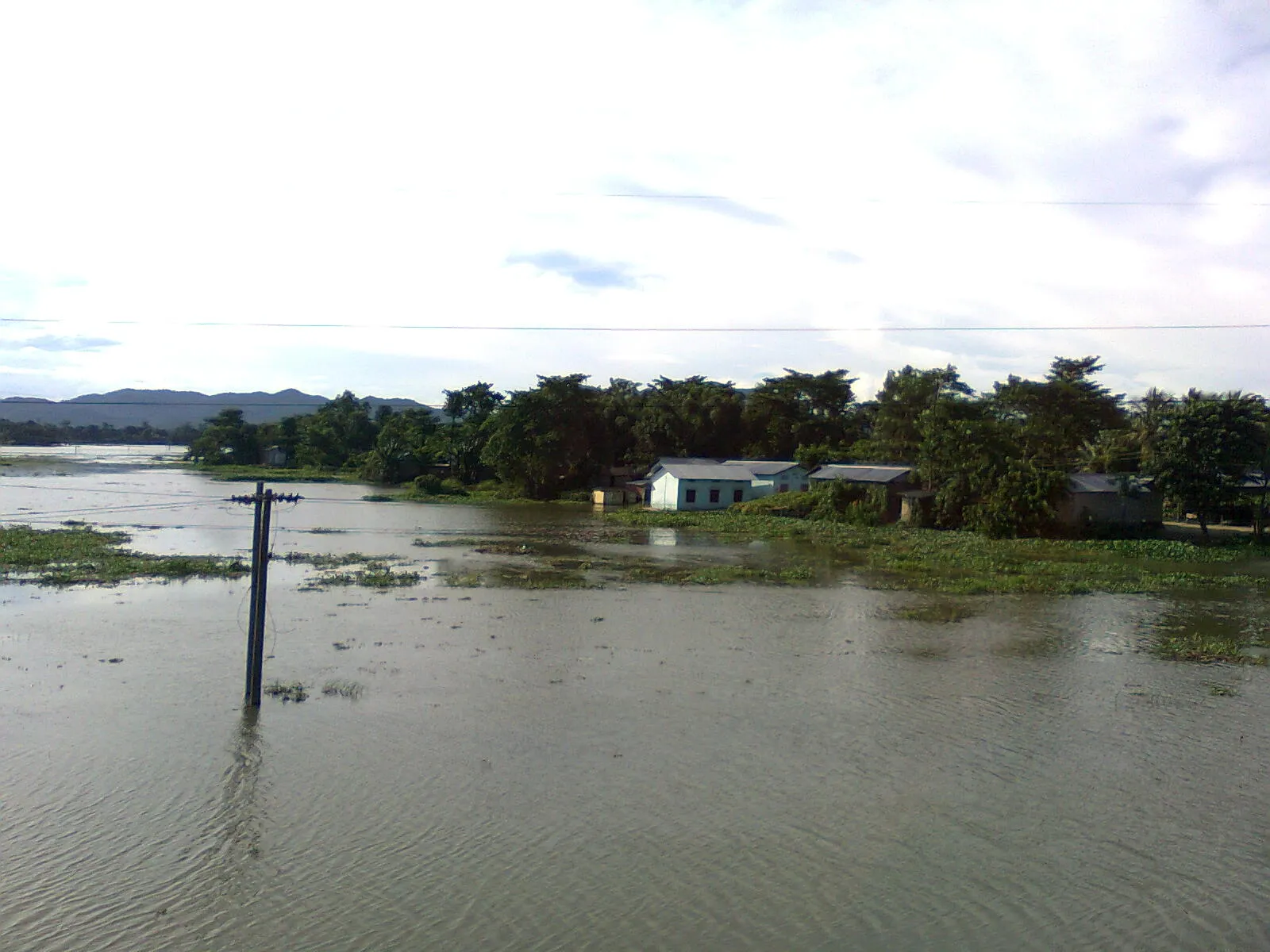
Between July 18 and July 20 the rain over Upper Assam and the Naga Hills did not stop. When it finally did, the Dikhow river and the streams feeding it had killed more than 100 people, destroyed 2,700 villages and pushed 700,000 people out of their homes, according to Al Jazeera's account of the disaster. Around 1.2 million people were affected in all.
A month on, the water is gone and the argument is not.
What the survivors describe
The people who lived through it in Sivasagar district reach for the vocabulary of other catastrophes. Kukil Das, a 30-year-old vlogger who filmed the aftermath, told Al Jazeera that the torrent "was like an apocalyptic event" and that in the villages he reached, "There is no home left. It was a tsunami."
Debiram Panika, a 37-year-old daily wage laborer, was not there on July 19 when the water took his family. He watched it happen on a video call. "I could only see my wife telling me on the video call, 'This is it for us. We are going to die,'" he said. His wife Dipika was 30. "I look for Radhika every day," he said.
Asor Ali, who is 75, put the scale of it in the only terms that matter in a place where floods are annual: "Even the generations preceding me have not seen a flood like this."
Some of the story is of rescue rather than loss. Shravan Prasad is credited with pulling at least 1,000 people out of the water. Laxmi Sharma, 46, kept at least 60 people on her terrace until it receded. "It was humanity that won in a disaster," said Aminul Haque, one of those caught up in it.
Rain, or something else
Assam's chief minister, Himanta Biswa Sarma, attributed the flooding to excessive rainfall in neighboring Nagaland. Cabinet minister Ranoj Pegu said on August 14 that the cause was erratic rainfall driven by climate change.
That explanation is not disputed so much as considered incomplete by the people who study the catchment. Mirza Zulfiqur Rahman, a researcher who has examined the disaster, describes it as "purely human-made." Debabrata Saikia, a Congress legislator and therefore an opponent of the state government, is blunter: "This unchecked plundering has engineered this into a man-made disaster."
The plundering they mean is extraction. Sand and stone are taken from the beds of rivers including the Dikhow, and coal is mined in Nagaland's Mon district. Both change how a river behaves when it is suddenly asked to carry far more water than usual: a scoured, deepened, destabilized channel moves water faster and holds it less.
The forest numbers give the argument its weight. Nagaland lost 14 percent of its tree cover between 2002 and 2025, on figures from Global Nature Watch cited in the reporting, and the Forest Survey of India's 2023 report recorded a loss of 794.88 square kilometers of forest cover between 2013 and 2023. Mon district, where much of the coal is, was the worst affected. Forest cover is what slows rain on a hillside before it reaches a river.
The official rebuttal
Not everyone in the affected areas accepts the mining explanation. Wennyei Konyak, the deputy commissioner of Mon district, rejected it outright: "I would not blame mining activities for the flood. It was just the wrath of nature."
Both claims are, at this stage, contested rather than settled. No published attribution study has yet apportioned the July flood between rainfall intensity, deforestation and riverbed extraction, and the figures on tree cover establish that the landscape changed, not by how much that changed the flood. What is not in dispute is that the two explanations point at different remedies. If the cause is rain, the response is better forecasting, embankments and evacuation. If the cause is also what has been removed from the hills and the riverbeds, the response is regulation of an industry that employs people and generates revenue in one of India's poorer regions.
Assam has a long memory for disaster. The 1950 earthquake, which reshaped the course of rivers across the state, killed nearly 5,000 people. What the survivors of July are saying, in a state that floods every single year, is that this one did not feel like weather.