It was meant to be an ordinary start to the day. A woman stepped out from Mount Engadine Lodge in Alberta's Kananaskis Country, dog at her side, for a walk along the gravel drive. What followed on June 24 was anything but.
A tense standoff
A grizzly bear appeared and began advancing. Rather than drop her phone, the woman — identified by Canadian outlets as Jessie Oakes — kept filming, capturing a multi-minute encounter that spread quickly online. The bear circled the pair, reared up on its hind legs to get a better look and at one point closed to within about a metre, as she shouted commands and kept herself between the animal and her dog. Eventually it broke off into the forest. Both were unharmed. "Not letting him murder my dog," she later told CTV News Calgary.
A wilderness guide who reviewed the footage told Global News the bear's attention seemed fixed on the dog. Alberta Forestry and Parks later issued a bear warning for the area, citing the animal's persistent, dog-focused behavior and repeated close approaches.
What experts say to do
The woman's response tracked closely with official guidance — though agencies stress every encounter is different and outcomes are never guaranteed. Parks Canada advises that the cardinal rule with a grizzly is: do not run, which can trigger a chase. Instead, stay calm, speak in a firm low voice, make yourself look large and back away slowly without turning your back. Bear spray, carried on the body rather than buried in a pack, is considered the most effective close-range deterrent.
A bear rearing onto its hind legs is not necessarily aggression — it may just be trying to see or smell you better, Alberta Parks notes. The crucial distinction is whether an approach is defensive or predatory: experts advise playing dead in a defensive attack, but fighting back in a rare predatory one.
Grizzlies in Alberta
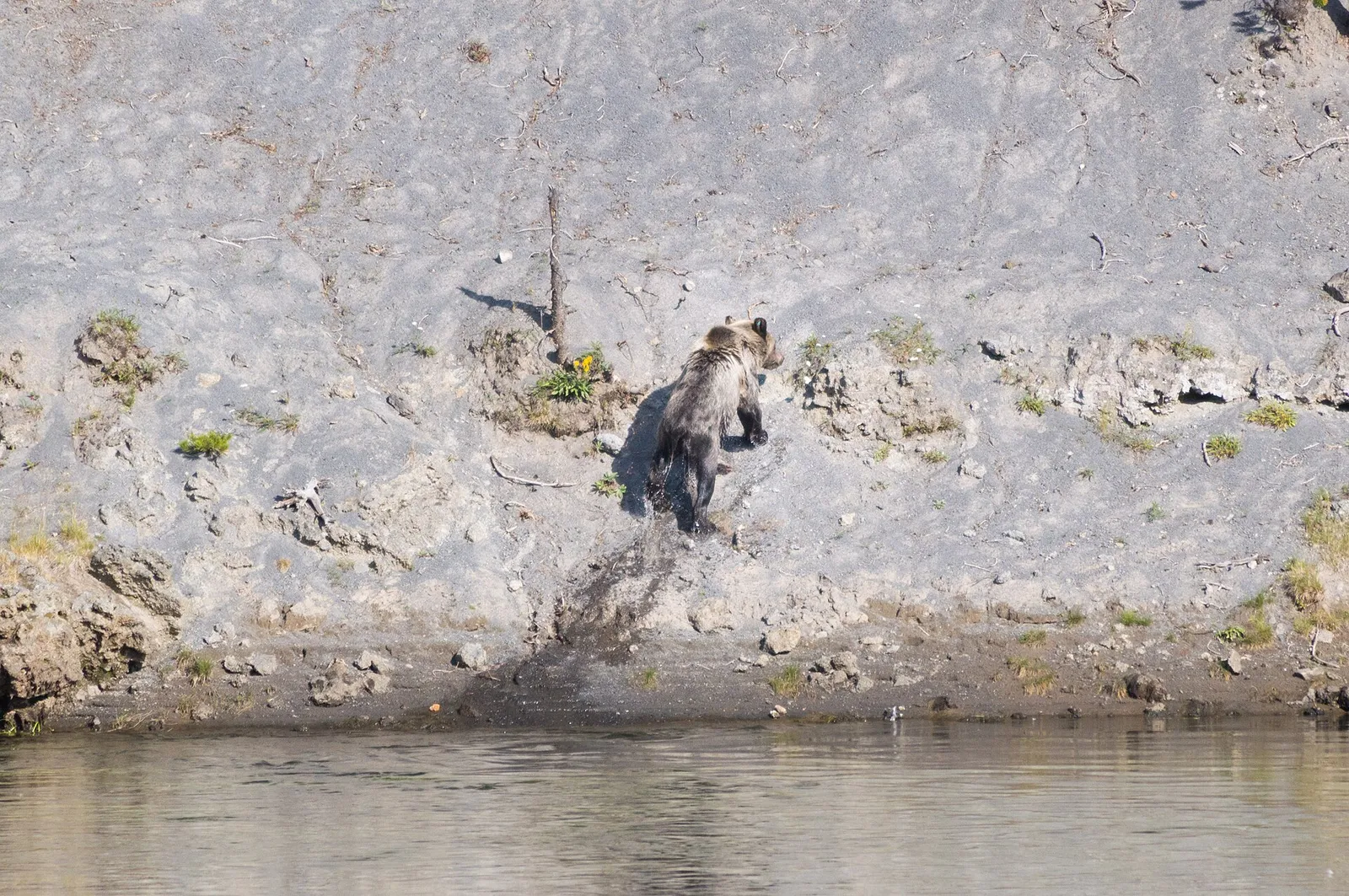
The encounter is a reminder of how closely bear country and recreation areas overlap in western Alberta, where grizzlies are confined largely to the Rocky Mountains and foothills. The animals have been listed as Threatened in the province since 2010. Population estimates vary — recent DNA-based counts put the figure in the high hundreds, while the provincial government has cited numbers above 1,150, up from an estimated 700 to 800 in 2010. With summer hiking season under way, agencies are urging backcountry visitors to carry bear spray, keep dogs leashed, travel in groups and make noise on the trail.