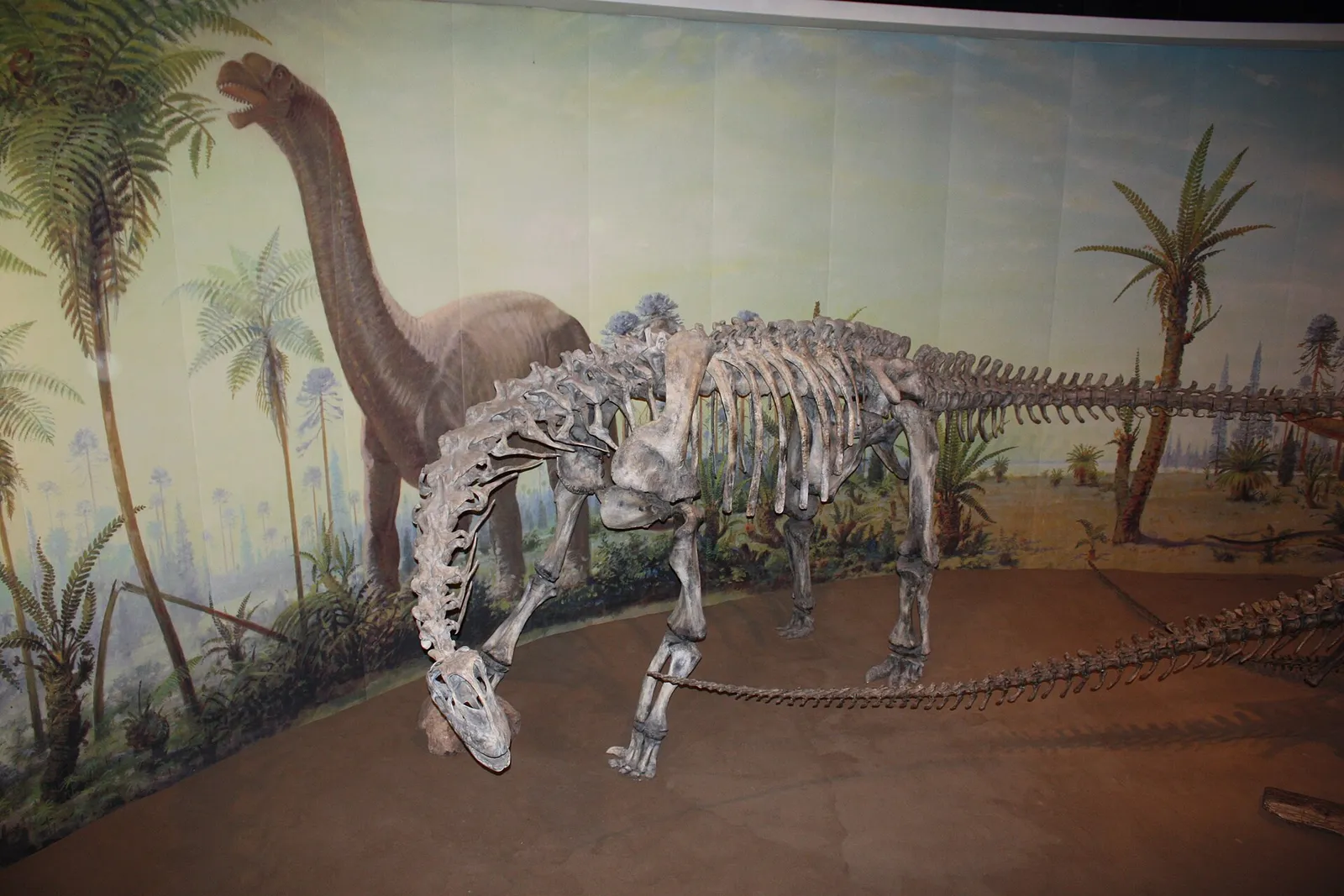
Paleontologists in Thailand have identified a new species of long-necked dinosaur, naming it Uragasaurus kalasinensis, from a single, remarkably well-preserved bone. The find, reported by Sci.News, belongs to a group of sauropods renowned for necks of extraordinary length, and it is the first of that group to be formally named from Thailand.
An exceptionally long-necked family
Uragasaurus was a mamenchisaurid, a family of plant-eating sauropods celebrated for having some of the longest necks of any creatures ever to live, a feature so pronounced that news reports have likened the neck's reach to the length of a cricket pitch. These were giants of the late dinosaur age, using their enormous necks to sweep across vegetation without moving their heavy bodies. The new species lived in the latest part of the Jurassic period, roughly 145 to 150 million years ago, Khaosod English reported.
Named from a single bone
Remarkably, the species was described from just one fossil: a single, well-preserved vertebra from just behind the animal's neck, recovered from the Phu Noi fossil site in northeastern Thailand. Identifying a new species from so little is possible because such bones can carry distinctive features that set one animal apart from its relatives. The research, led by scientists at a Thai university, was published in the journal Scientific Reports. Precise measurements of the living animal are necessarily estimates, extrapolated from the single bone and from what is known of its close relatives.
Why it matters
The significance of Uragasaurus lies partly in where it was found. Mamenchisaurids had long been thought of as an almost exclusively East Asian group, most familiar from China. A confirmed member from Thailand extends their known range into mainland Southeast Asia, suggesting these long-necked giants roamed more widely across the region than the fossil record had shown. Each such find helps redraw the map of where these animals lived and how they spread.
A growing fossil record
The discovery also adds to a run of notable dinosaur finds emerging from Southeast Asia, a part of the world whose rocks are yielding a richer picture of prehistoric life than they once did. For Thailand, Uragasaurus is another entry in a slowly lengthening national list of named dinosaurs. It is a reminder, too, of how much can still be learned from a single fossil in the right hands: one carefully studied bone, dug from a hillside, is enough to add a new creature to the catalogue of life and to nudge, a little, our sense of the ancient world.