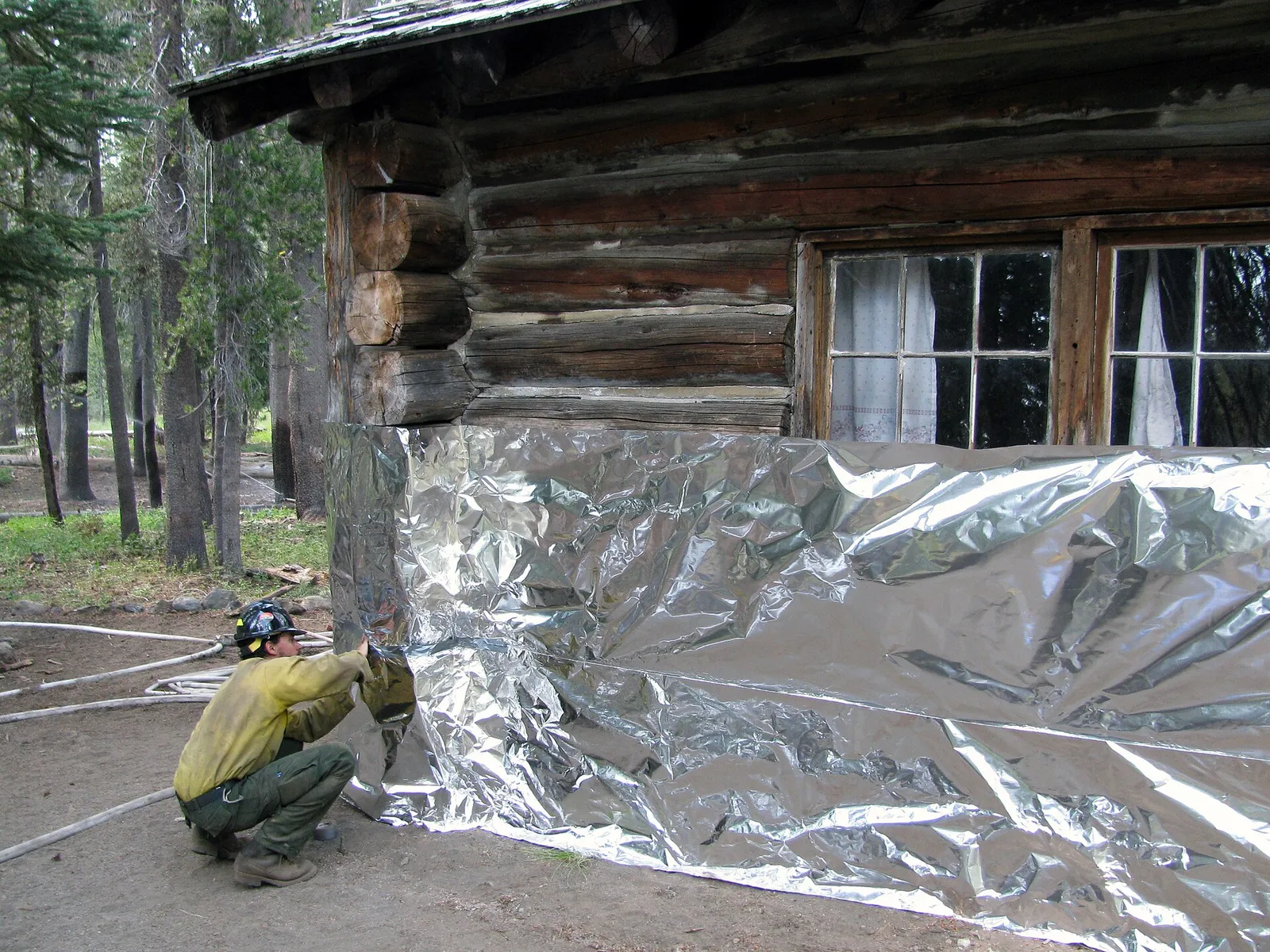
To understand how a wildfire destroys a house, it helps to build one and try to burn it down on purpose. That, in effect, is what fire-science laboratories are doing, subjecting structures and building materials to the specific conditions of a wildfire, showers of glowing embers, fierce radiant heat and strong winds, in order to learn what makes the difference between a home that survives and one that does not. The work is increasingly urgent as fire seasons in Canada, the United States and elsewhere grow longer and more severe.
It's the embers, not the flames
The single most important lesson from this research overturns a common assumption. Most homes lost in wildfires are not consumed by the advancing wall of flame at all. They are ignited by embers, the burning fragments a fire hurls ahead of itself, sometimes for great distances, which land on roofs, drift into vents and lodge in gaps and against fences until something catches. Studies of destroyed homes have found that the large majority are lost this way, according to the Insurance Institute for Business and Home Safety. It is a finding that shifts attention from the fire itself to the building's own weak points.
Recreating an ember storm
To study that, researchers need to make embers on demand. In Canada, the National Research Council has developed equipment, nicknamed the "baby dragon," that generates a controlled stream of firebrands to mimic the ember attacks homes face when a wildfire is near, the council reports. By exposing materials and building assemblies to embers and heat together, rather than to each in isolation, such tests come far closer to real conditions than traditional fire testing, and let scientists measure how likely a given roof, vent or wall is to ignite. In the United States, other facilities carry out large-scale burns of test structures to the same end.
Turning findings into codes
The point of all this is not knowledge for its own sake but safer buildings. The research feeds into guidance and, over time, into building codes and standards for homes in the "wildland-urban interface," the zone where houses meet flammable landscape. Measures that emerge repeatedly include ember-resistant vents, non-combustible roofing and siding, and keeping the immediate area around a house, especially the first few feet, clear of anything that can catch, so that a stray ember has nothing to ignite. Small, unglamorous changes, the science suggests, can markedly improve a home's odds.
The limits, honestly stated
Researchers are candid about what their work cannot promise. Under the most extreme conditions, with very high winds and a fast-moving fire, even well-prepared homes and cleared surroundings offer only limited protection; nothing makes a house fireproof. And a warming climate is enlarging the problem, lengthening fire seasons and expanding the areas at risk, which means the guidance itself must keep being revised as the hazard shifts. The lab, in that sense, is chasing a moving target.
Why it matters
Still, the direction of travel is hopeful. Every deliberate burn, every scorched test panel, adds to a body of practical knowledge about how to keep homes standing when fire comes, knowledge that can be written into the rules for how and where people build. As communities from Canada to California confront worsening fire seasons, that translation, from a controlled experiment in a laboratory to a safer house on a real hillside, is among the more tangible defenses available. It will not stop wildfires. But it may yet help more homes, and the people in them, come through them.