Nearly 250 years ago, word that Britain's American colonies had declared themselves independent had to cross an ocean by sail. A document now on display at the National Maritime Museum in Greenwich, London, captures that moment of transmission — and may be one of the earliest accounts of American independence ever to reach British soil, Royal Museums Greenwich announced.
A copy made at sea
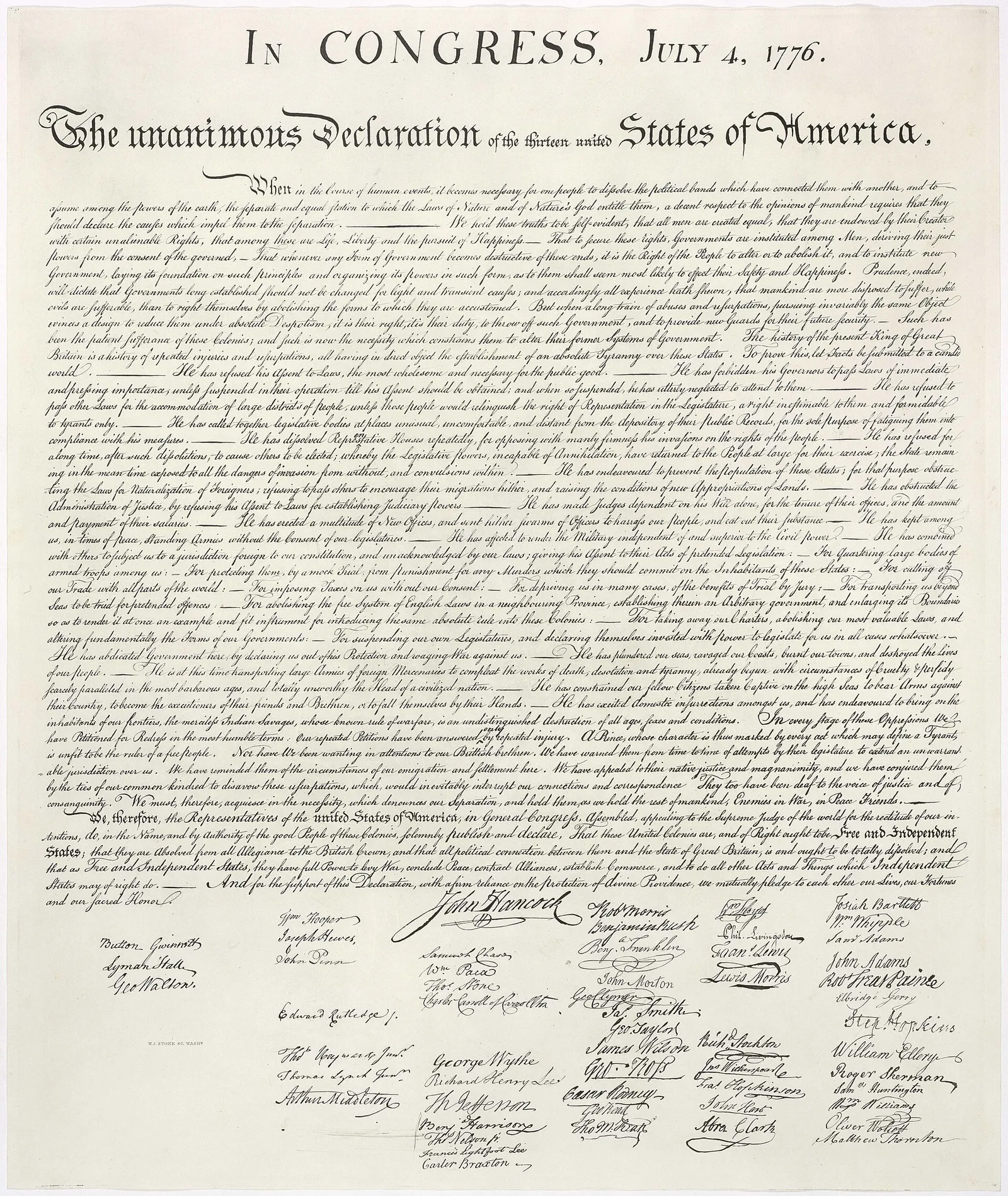
At the center of the display is a handwritten copy of the Declaration of Independence, transcribed in July 1776, together with a covering letter dated July 10 of that year. The papers were sent by Vice-Admiral Molyneux Shuldham, then commanding British naval forces off North America, to John Montagu, the Earl of Sandwich, who as First Lord of the Admiralty sat at the top of Britain's naval establishment.
Shuldham had obtained a printed copy of the Declaration — the version historians call the Dunlap broadside, run off in Philadelphia within days of July 4 — and had it transcribed by hand to send home. Because it traveled with official naval dispatches rather than through slower commercial channels, the copy appears to have reached Britain unusually fast: the first known printed broadside to arrive in the country did not turn up until August 1776, Fine Books Magazine reported.
That timing is the reason for the museum's careful, qualified claim. "It is just possible this was the very first text of the Declaration of American Independence to reach British shores," said Martin Salmon, the museum's curator of manuscripts, whose measured wording — "just possible" — reflects the difficulty of proving such a superlative.
Hidden in a family's papers
The documents survived not in a great national collection but among the private papers of the Montagu family, which eventually passed into the museum's archive. That is a common fate for records of this kind: significant pieces of history often sit quietly, catalogued in a line or two, until someone recognizes what they are.
For an institution devoted to Britain's maritime past, the copy is a fitting artifact. It is a reminder that the American Revolution was, from London's vantage point, in large part a naval and imperial crisis — and that the news which would eventually cost Britain its thirteen colonies arrived, appropriately, in the dispatch bag of an admiral.
A shared anniversary
The display is timed to the 250th anniversary of the Declaration, which the United States marks on July 4, 2026. It is a distinctly British contribution to that milestone: not a celebration of independence, but a record of the instant when the news landed on the other side, in the hands of the very government the colonists were breaking from.
There is a quiet irony in where it now sits. A document announcing the end of British authority in America was preserved, for two and a half centuries, by a British admiral's family and is displayed today in a British museum — offered up, across the distance of 250 years, as a small act of shared history.
Why it matters
Beyond the anniversary, the copy is a window into how information moved in the 18th century, when the fate of nations could hinge on the speed of a ship. Today the same news would cross the Atlantic instantly; in 1776 it traveled at the pace of wind and canvas, and the weeks it took for London to learn what Philadelphia had done were weeks in which a war's meaning was still settling into place.
That the earliest word may have come not through the press but through a naval officer's careful transcription only underscores the point. Long before it was a fact of history, American independence was a piece of urgent, hand-copied intelligence — and one example of it, remarkably, has survived to be read again at 250.