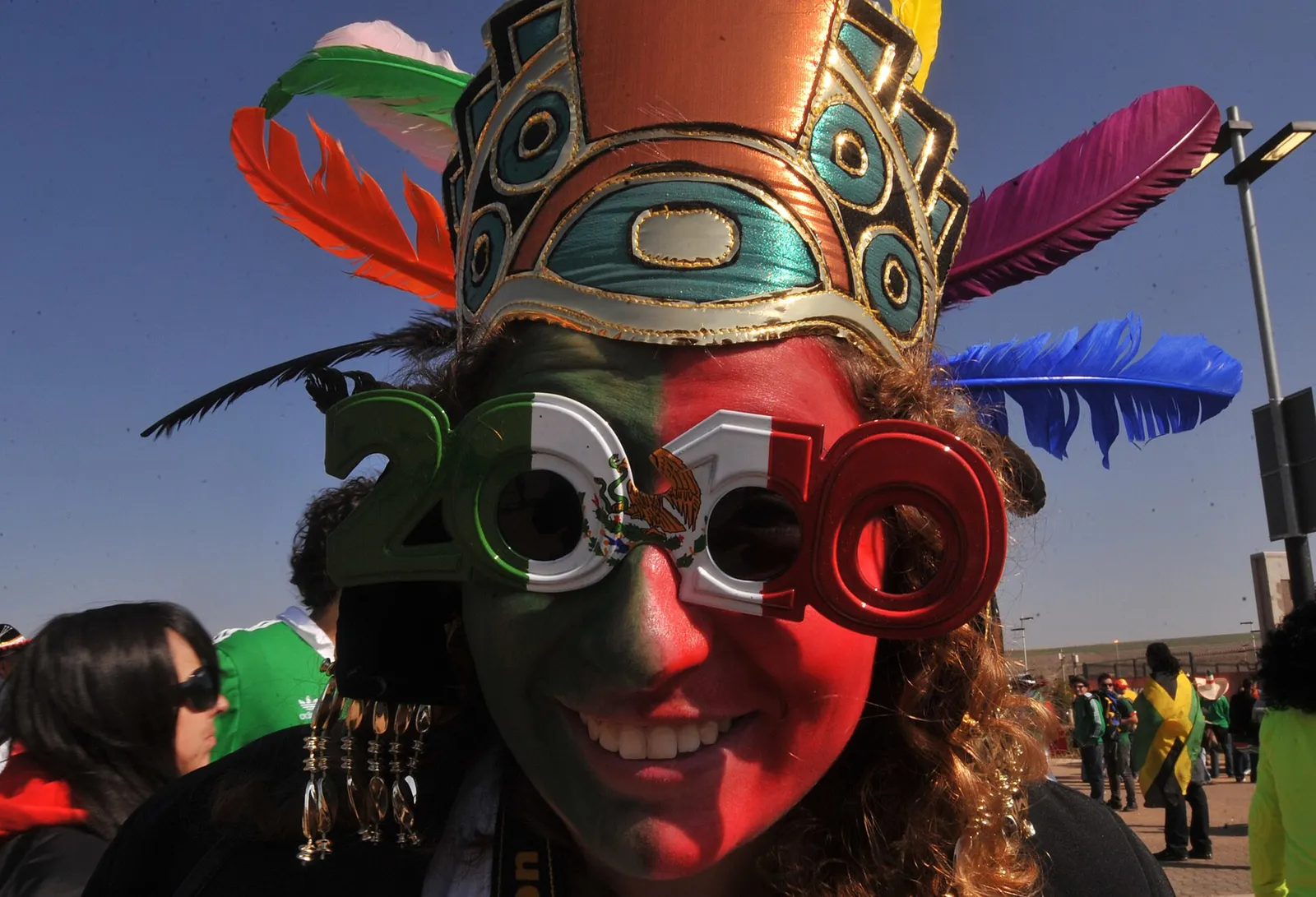
The green, white and red have been everywhere in Woodburn this summer — on jerseys, in windows, painted on the faces of children watching the World Cup on screens set up outside local restaurants.
A town built by migration
Woodburn, a town of about 31,000 in Oregon's Willamette Valley, is one of the most Mexican places in the Pacific Northwest. About 61 percent of its residents are Latino — the highest share of any sizable city in Oregon — and, by the city's own account, some 95 percent of its downtown businesses are Latino-owned. Locals call it "Little Mexico."
The roots run back generations. During the Second World War, with farm labor scarce, the Bracero Program brought more than 15,000 Mexican workers to Oregon between 1942 and 1947. Many came to Woodburn, long known as a berry-growing center, to pick strawberries and other crops. When the program ended, families stayed or returned, turning seasonal work into a permanent home.
Soccer as a common language
In a community like this, soccer is more than a pastime. It is a thread tying American-born children to the country their parents or grandparents left, and the local high school has built a strong soccer tradition over the years. When Mexico plays, the games become shared events — a reason to gather, cook, and cheer for El Tri, the national team, together.
Mexico's appearance at the 2026 World Cup, co-hosted by the United States, Mexico and Canada, gave that feeling a global stage. As Mexico played its way through the tournament, residents packed into restaurants and homes for watch parties, ESPN reported, turning ordinary afternoons into block-party-like celebrations of a country that, for many here, still feels close.
A difficult backdrop
The festivities arrived after an anxious stretch for the town. In late October 2025, immigration agents detained about 31 Woodburn residents, and on November 21 the city council passed a resolution declaring a "local state of emergency" over the economic and humanitarian impact of federal immigration enforcement. A federal judge later found some of the detentions unlawful and ordered several people released. Against that uneasy backdrop, the tournament offered the community a chance to come together around something joyful.
More than a game
For families with roots in Mexico, the World Cup is partly about soccer and partly about identity — a way to honor where they came from while building a life where they are. Younger players watch Mexico's stars and imagine their own futures in the game, which for some has become a route to scholarships and opportunity. In Woodburn, a town a long way from Mexico that has made Mexico part of itself, the tournament has been a reminder of how a single sport can knit a community together.