Travelers heading to Europe this summer are meeting a new kind of border. The European Union's Entry/Exit System, known as EES, is now fully operational — and while it is meant to modernize and tighten the bloc's frontiers, it has also raised the prospect of long waits at airports and ports during the busiest weeks of the year.
What the EES is
The EES is an automated system that registers non-EU nationals each time they enter or leave the Schengen area, the zone of European countries without internal border controls. Instead of a passport being stamped by hand, travelers have their details recorded electronically, including biometric data: on a first crossing, border officers or self-service kiosks capture four fingerprints and a facial image and link them to the traveler's passport.
The goal, the EU says, is to track who is entering and leaving more accurately, enforce the rules on how long visitors can stay, and catch people using fraudulent documents. It replaces manual stamping, which the bloc considered slow and unreliable.
When it started
After years of delays, the system began a phased rollout on October 12, 2025, ramping up gradually so that border posts registered a rising share of travelers over time, Euronews reported. It reached full deployment in April 2026, meaning that, this summer, biometric registration applies across the board.
Who is affected
The EES applies to non-EU nationals traveling for short stays. That includes visitors from countries such as the United States, and — since Brexit — travelers from the United Kingdom, who are now treated as non-EU nationals at Schengen borders. EU citizens and holders of EU residence permits are not subject to the same registration.
The system should not be confused with ETIAS, a separate scheme still to come, under which visa-exempt visitors will apply online for a travel authorization before traveling. EES is about registering people at the border; ETIAS is about pre-screening them beforehand.
Why airports are worried
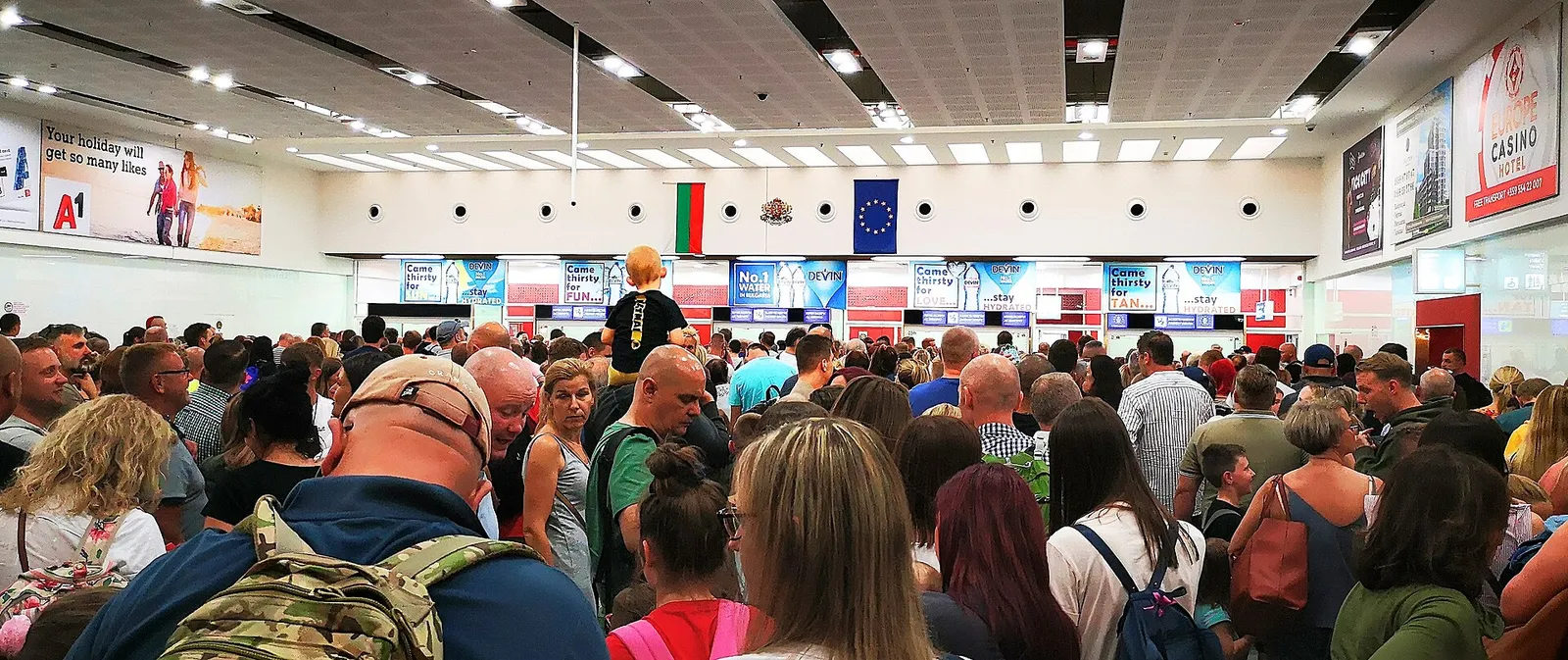
The extra step takes time, and that is the crux of the concern. During the first phase of the rollout in late 2025, some airports reported processing times rising sharply and waits of up to three hours at peak moments, according to Euronews. Airline and airport bodies have since warned that, without fixes, the peak summer months could be worse.
The aviation industry group IATA and airport associations have called for urgent action, IATA said, warning that mandatory registration of all crossings in July and August could push waits to four hours or more at the worst-hit airports. They have pointed to staffing shortages, technical glitches and unreliable self-service kiosks as compounding the problem, and urged wider use of pre-registration tools to spread the load. Airports in countries including France, Germany, Greece, Italy, Portugal and Spain have been flagged as especially exposed.
What travelers can do
For those heading to Europe, the practical advice is familiar but worth repeating: allow extra time at the border, especially on a first trip since the system came in, when biometrics must be captured. Where airports or operators offer pre-registration apps or kiosks, using them in advance can speed things up. And travelers should keep an eye on advice from their airline and destination airport, since the experience varies widely from one border post to another.
The EU maintains that once travelers are enrolled and the system beds in, crossings should eventually become quicker and smoother. For this summer, though, the message from the industry is to prepare for delays.