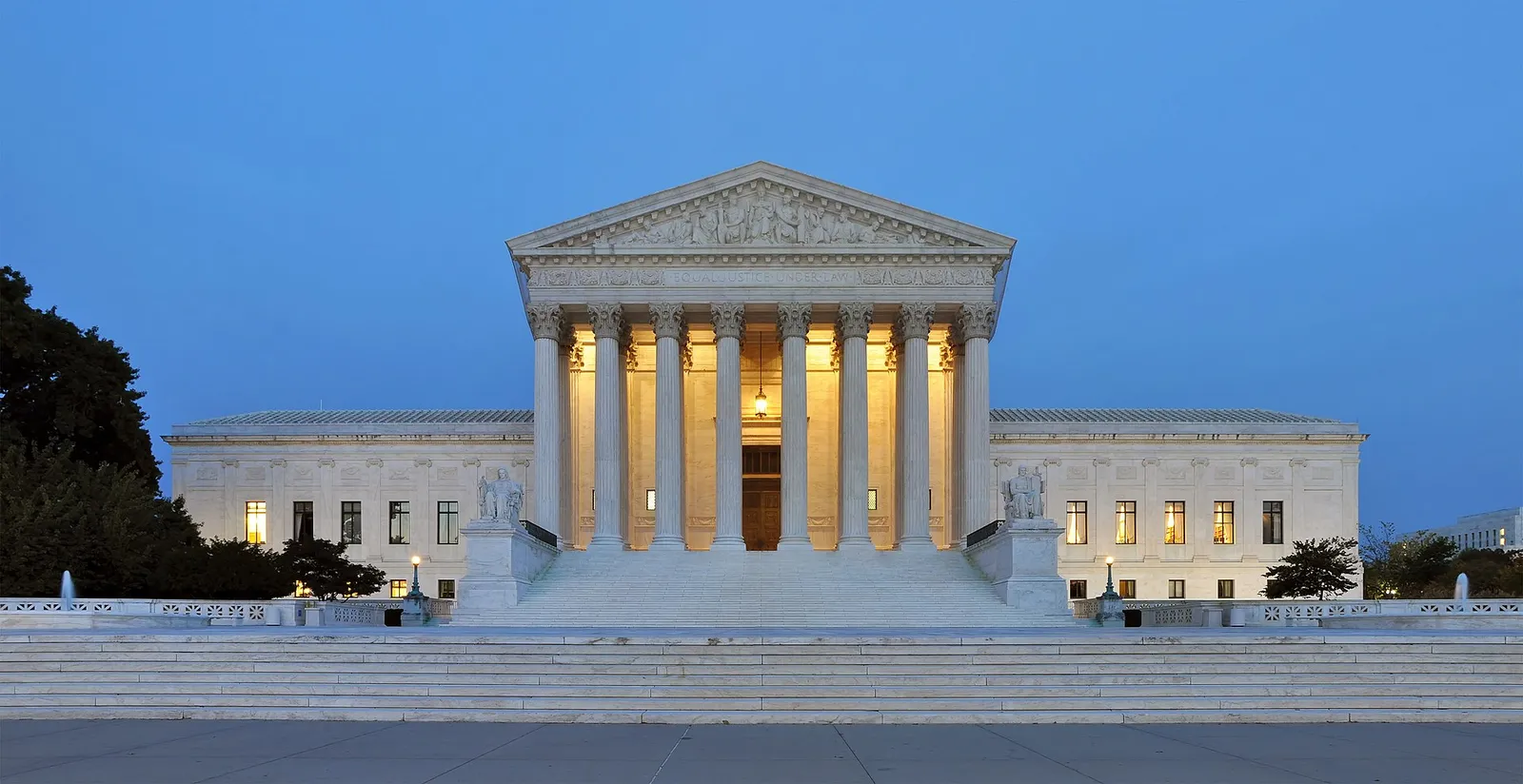
The US Supreme Court delivered two significant immigration decisions on Wednesday, both favoring the Trump administration and both decided 6-3, with the court's conservative majority in agreement and its three liberal justices dissenting.
The asylum ruling
In the first case, a final ruling on the merits, the court upheld the government's practice of stopping asylum seekers at ports of entry before they physically cross into US territory — a policy sometimes called "metering," SCOTUSblog reported.
Writing for the majority, Justice Samuel Alito grounded the decision in the wording of immigration law, which lets a noncitizen apply for asylum upon "arriving in the United States." Alito read that phrase narrowly, reasoning that someone still standing in Mexico has not legally "arrived" and so has no statutory right to request asylum at the line.
Justice Sonia Sotomayor, joined by Justices Elena Kagan and Ketanji Brown Jackson, dissented sharply. "The consequences of today's decision are predictable," she wrote, warning that the ruling would push more people toward dangerous unauthorized crossings and could apply even to someone who is "certain to be persecuted, or killed, if she is turned away," according to Al Jazeera.
The TPS order
The second decision was an emergency order rather than a final ruling. It did not resolve the underlying legal dispute but lifted lower-court injunctions that had blocked the administration from ending Temporary Protected Status (TPS) for Haitian and Syrian nationals, SCOTUSblog reported.
TPS is a humanitarian designation that allows people from countries hit by war, disaster or other crises to live and work in the US without fear of deportation. The administration moved to terminate it for Haiti and Syria; lower courts had initially blocked those terminations. Alito, again writing for the majority, said the law sharply limits courts' ability to review TPS decisions, and that the statutory bar on review "is clear, and its plain meaning is very broad." On a claim that ending Haiti's protection was racially motivated, he noted the administration had ended "every TPS designation that has come up for renewal."
Justice Kagan dissented, arguing the affected people faced "devastating, and indeed life-threatening, injury" and should keep protection while the case proceeds.
What it means in practice
The order affects roughly 350,000 Haitians and a smaller number of Syrians — about 6,100, according to Al Jazeera, a figure that could not be independently confirmed against official data. For them, work permits and protection from deportation could be withdrawn while the underlying litigation continues. Advocates note that many Haitian TPS holders have lived in the US for years and have US-born children, and they point to unstable conditions in Haiti.
On asylum, the ruling gives border officers legal backing to refuse entry to people who present themselves at the border but have not yet crossed. Rights groups have long argued such policies effectively push migrants toward remote and sometimes deadly crossing routes.
The reaction
The administration, which had appealed the lower-court rulings, presented the decisions as confirming its authority to control the southern border and to manage humanitarian programs, consistent with its position that immigration enforcement is primarily an executive responsibility and that courts have limited room to intervene.
Immigrant-rights organizations and legal advocates criticized both outcomes, arguing the metering policy sidesteps US law and international obligations toward people fleeing persecution, and that the TPS terminations were legally flawed. The court's majority did not accept that the discrimination claim was strong enough to keep the protections in place while the case is litigated. A separate federal court order from earlier in June, concerning a broader pause on asylum processing, was not directly addressed, leaving parts of the legal picture unsettled.